check

check

check

check

check

check
In the intricate world of industrial automation and machinery design, space is often a premium. Engineers and system integrators constantly face the challenge of integrating reliable sensing solutions into compact assemblies without compromising performance. This is where the E2E small diameter proximity sensor emerges as a critical component, offering high-precision detection in environments where traditional sensors simply cannot fit.
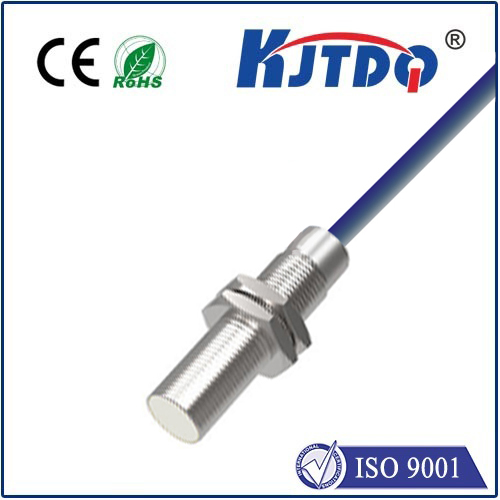
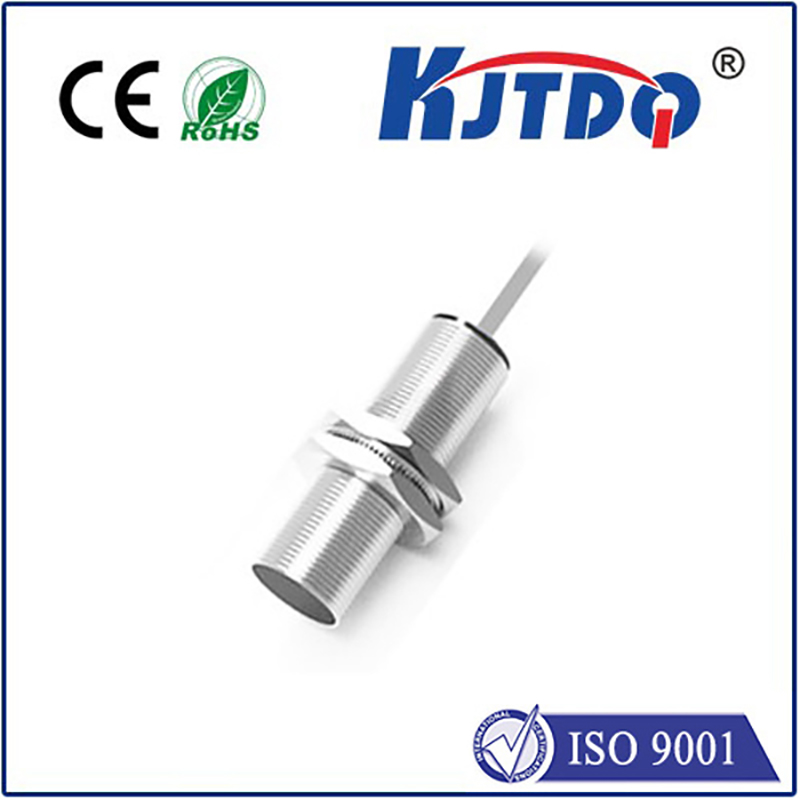
The defining characteristic of an E2E small diameter proximity sensor is its remarkably slim cylindrical housing. Typically available in diameters as small as M3, M4, M5, and M8, these sensors are engineered to be installed in extremely tight locations—within narrow machined bores, on compact robotic end-effectors, or inside miniature assembly fixtures. Despite their reduced physical footprint, they maintain the core inductive sensing principle, capable of detecting the presence or absence of metallic targets (such as steel, aluminum, or brass) with consistent accuracy.
The operational principle is straightforward yet robust. The sensor generates an electromagnetic field from its front face. When a metallic object enters this predefined sensing range, it causes a change in the oscillation amplitude within the sensor's coil. This change is processed by an integrated circuit, triggering a solid-state output switch. The "E2E" designation often refers to a specific series known for their flush-mounting capability, meaning they can be embedded in metal without a reduction in sensing distance, a vital feature for many machine designs.
Key performance advantages of these miniature sensors are numerous. First is their exceptional reliability in harsh conditions. Many models are sealed to IP67 or higher standards, making them resistant to dust, coolants, and temporary immersion. This durability ensures long-term operation in demanding settings like CNC machining centers, automated packaging lines, and semiconductor manufacturing equipment. Second, their high switching frequency allows for the detection of very fast-moving parts, essential for modern high-speed production. Third, the availability of both shielded (flush-mountable) and unshielded versions provides design flexibility. Shielded types allow side-by-side installation without mutual interference, while unshielded types offer a slightly longer sensing range for the same diameter.
Selecting the right E2E small diameter sensor requires careful consideration of several parameters. The sensing distance, though smaller than standard sensors due to the size constraint, must be precisely matched to the application. Material compatibility is crucial; while ferrous metals like iron and steel are detected at the nominal range, non-ferrous metals like aluminum or copper typically require a reduction factor. The electrical output (NPN or PNP, normally open or normally closed) must interface correctly with the controller (PLC). Environmental factors such as temperature extremes, presence of strong magnetic fields, or conductive dust also influence the selection.
Real-world applications are diverse and impactful. In the electronics industry, these sensors verify the placement of tiny components on circuit boards. In miniature robotic systems, they provide precise end-position feedback for grippers and actuators. Within medical device manufacturing, they ensure the correct positioning of small parts in automated assembly. They are also indispensable in precision tooling, monitoring tool breakage or presence in ultra-compact spindle heads.
Installation and maintenance, while straightforward, demand attention to detail. Ensuring the correct mounting torque is applied to the sensor's threaded body prevents damage. Adequate clearance around the sensing face is necessary for unshielded models. Regular checks for accumulation of metallic swarf or debris on the active face help maintain consistent performance. Wiring should follow manufacturer guidelines, often recommending the use of flexible cables with proper strain relief to withstand constant motion in cable carriers.
The evolution of E2E small diameter proximity sensors continues, with trends pointing toward enhanced functionality. Some advanced models now incorporate IO-Link communication, enabling digital parameter setting, real-time diagnostics, and condition monitoring data directly to the control system. This smart sensor capability transforms them from simple binary switches into intelligent data points within Industry 4.0 networks. Other developments include increased resistance to welding fields and the use of more robust housing materials for extreme chemical environments.
In conclusion, the E2E small diameter proximity sensor is a testament to engineering ingenuity, solving a fundamental spatial constraint in automation. It delivers the unwavering reliability and precision expected from industrial-grade sensing, packaged in a form factor that unlocks new possibilities in machine design. For any project where every millimeter counts, specifying these miniature workhorses is a step toward achieving greater efficiency, reliability, and density in automated systems. Their role is pivotal in the ongoing push toward more compact, smarter, and more agile manufacturing solutions.