check

check

check

check

check

check
In the realm of industrial automation and machine safety, the precise detection of objects is paramount. Among the various technologies employed, the proximity sensor stands out for its reliability and non-contact operation. Specifically, sensors configured with an NPN (Negative-Positive-Negative) transistor output in a normally open (NO) switching mode are a cornerstone in countless control systems. Understanding the principles, advantages, and typical applications of an NPN NO proximity sensor is crucial for engineers, technicians, and procurement specialists.
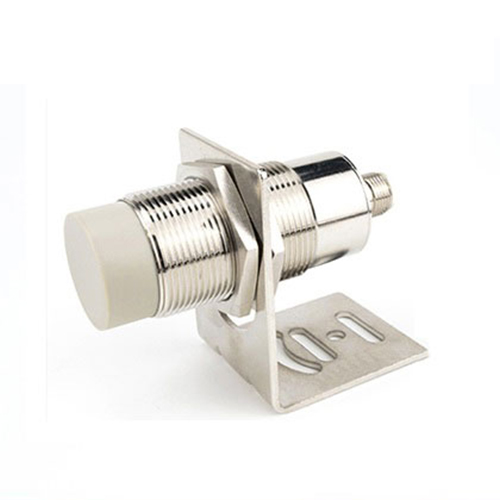
At its core, a proximity sensor detects the presence or absence of a metallic object without physical contact. It generates an electromagnetic field, and when a target enters this field, it causes a change in the sensor's oscillation, which is then processed by its internal circuitry. The output signal of this detection is what differentiates sensor types. An NPN sensor uses an NPN bipolar transistor to switch the output. In a normally open (NO) configuration, the output circuit is open (non-conducting) when no target is present. When a target is detected, the transistor switches on, closing the circuit and allowing current to flow from the load to the common negative (0V) terminal. This is often described as a "sinking" output because the sensor sinks current to ground to activate the load.
The choice of an NPN NO configuration is frequently dictated by regional standards and the design of the Programmable Logic Controller (PLC) or control system input card. In many regions, including Europe and Asia, NPN sensors are the standard. They are designed to interface seamlessly with PLCs that have sourcing-type input modules (where the PLC provides a positive voltage, and the input card expects the sensor to connect it to ground). When the NPN NO sensor detects an object, it completes the circuit to ground, allowing current to flow into the PLC input, signaling a TRUE or ON state. This design offers inherent safety benefits; a broken wire in an NPN circuit typically results in an "off" signal, which can be programmed as a safe state in many machinery safety protocols.
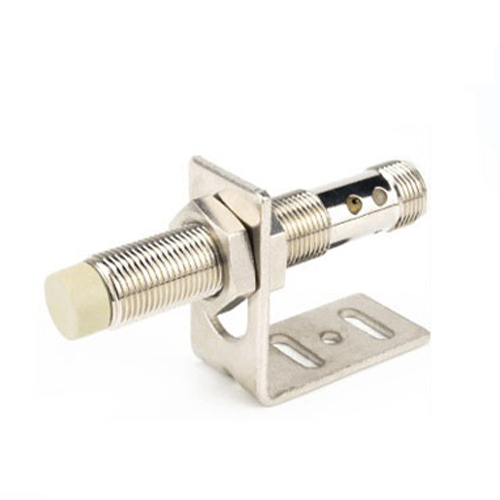
The applications for NPN NO proximity sensors are vast and varied. They are ubiquitous in packaging machinery for counting products, on assembly lines for verifying part presence or position, in robotic cells for end-of-arm tooling feedback, and within material handling systems for pallet detection. Their robust, solid-state design makes them ideal for harsh environments with vibration, dust, or moisture (many are available in IP67 or higher enclosures). Since they have no moving mechanical parts, they offer exceptionally long service life and high switching frequencies, capable of detecting objects thousands of times per minute without wear.
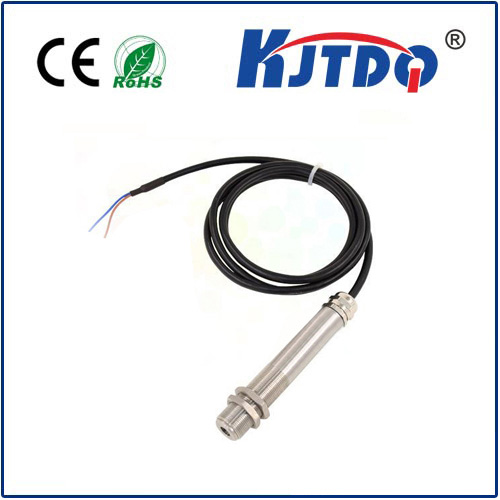
When selecting an NPN NO proximity sensor, several key specifications must be considered. Sensing range, which varies from a few millimeters to several tens of millimeters, must be appropriate for the application to avoid false triggers. The housing material, typically nickel-plated brass or stainless steel, determines environmental resilience. The electrical connection style, such as pre-wired cables or quick-disconnect plugs, affects installation and maintenance ease. Furthermore, ensuring the sensor's output current rating matches or exceeds the requirement of the connected load (like a PLC input, relay, or indicator lamp) is essential for reliable operation.
Installation and wiring are straightforward but require attention to detail. The sensor must be securely mounted, with careful consideration given to the sensing face's orientation and the avoidance of mutual interference between multiple sensors placed in close proximity. The standard three-wire connection involves a brown wire for positive DC supply voltage (typically 10-30V DC), a blue wire for the common negative (0V), and a black wire for the switched output signal. In an NPN NO sensor, the black wire will have 0V (or a low voltage) present when a target is detected, switching the load on.
Troubleshooting common issues often involves a systematic approach. Failure to detect a target can stem from an insufficient supply voltage, a target outside the specified sensing range, or accumulation of debris on the sensor face. False triggering might be caused by a nearby metallic object in the environment or electrical noise interference, which can be mitigated by using shielded cables and proper grounding. A simple diagnostic step is to observe the sensor's built-in LED indicator (if available), which lights up upon detection, providing immediate visual feedback.
In conclusion, the NPN NO proximity sensor is a fundamental, versatile component in modern industrial electronics. Its sinking output, normally open logic, and robust construction make it a preferred choice for interfacing with a wide array of control systems, ensuring precise, reliable, and safe object detection. By comprehending its operating principle and application nuances, professionals can optimize machine performance, enhance safety protocols, and ensure seamless integration within complex automated processes.