check

check

check

check

check

check
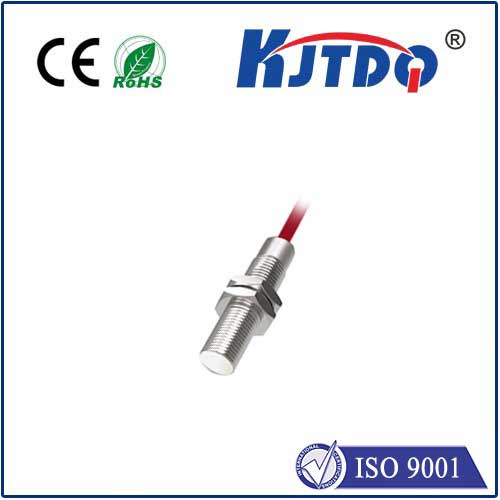
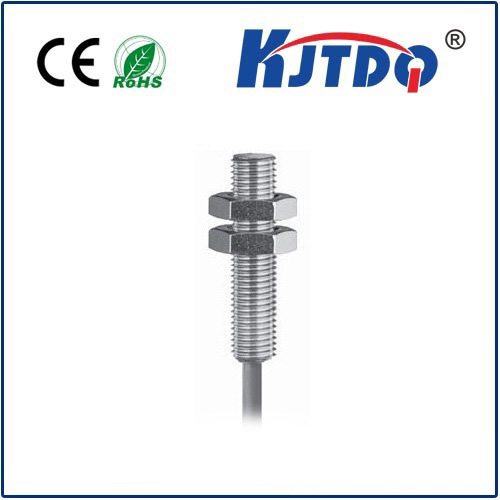
In the realm of industrial automation and smart device integration, the demand for reliable, non-contact detection solutions is paramount. Among the various technologies available, the analog capacitive proximity sensor stands out as a versatile and critical component. Unlike its digital counterparts that provide a simple on/off signal, an analog capacitive sensor offers a continuous output signal proportional to the distance or presence of a target object. This capability unlocks a higher level of control and precision for complex applications.
The fundamental operating principle is based on changes in capacitance. The sensor forms one plate of a capacitor, with the target object acting as the other plate. As the object approaches the sensor's active face, the dielectric between them changes, altering the capacitance of the system. An internal oscillator circuit detects this minute change. The key differentiator of the analog version is its sophisticated circuitry that converts this capacitance variation into a smoothly varying analog output signal, typically 0-10V or 4-20mA. This linear output allows systems to not just detect an object's presence, but to precisely gauge its distance, thickness, or material composition within its sensing range.
This analog functionality brings substantial advantages to numerous sectors. In packaging and material handling, these sensors can accurately monitor the fill level of liquids, powders, or granular materials through non-metallic container walls, enabling precise inventory control and preventing overfills. In the automotive industry, they are indispensable for robotic assembly, where the continuous feedback allows for delicate part placement and alignment checks. Furthermore, in wood processing or plastics manufacturing, analog capacitive sensors can measure material thickness or detect subtle differences in material density with remarkable consistency, ensuring product quality.
Selecting the right analog capacitive proximity sensor requires careful consideration of several parameters. The sensing range is crucial and must be matched to the application. The target material also significantly influences performance; while capacitive sensors can detect nearly any material, the sensor must be calibrated for the specific dielectric constant of the target, be it plastic, glass, wood, or a liquid. Environmental factors like temperature fluctuations, humidity, and the presence of dust or contaminants can affect stability, making the choice of housing rating (e.g., IP67) vital. Lastly, the output type (voltage or current) must be compatible with the downstream programmable logic controller (PLC) or data acquisition system.
A primary challenge in deployment is dealing with unwanted influences from the surrounding environment. Stray capacitance from mounting brackets, conveyor belts, or even the operator's hand can interfere with the signal. Modern analog capacitive sensors address this through advanced features like effective grounding rings, robust shielding, and programmable compensation functions that allow tuning out background noise. This ensures that the output signal reflects only the intended target, maintaining measurement integrity.
The integration of analog capacitive sensors into the Industrial Internet of Things (IIoT) framework represents the next evolutionary step. By providing continuous, high-resolution data, these sensors become rich data points for predictive maintenance and process optimization algorithms. For instance, a gradual drift in the analog signal from a level sensor might indicate residue buildup, triggering a cleaning cycle before a failure occurs. This proactive approach minimizes downtime and enhances overall operational efficiency.
In conclusion, the analog capacitive proximity sensor is far more than a simple detection switch. It is a precision measurement tool that provides the nuanced, continuous data necessary for advanced automation and quality control. Its ability to operate through non-metallic barriers and detect a wide array of materials makes it uniquely flexible. As industries continue to push for greater efficiency, smarter processes, and tighter tolerances, the role of the reliable analog capacitive sensor, symbolized by identifiers like KJTDQ, will only become more central, driving innovation and precision on the factory floor and beyond.