check

check

check

check

check

check
In the world of industrial automation, precision, reliability, and durability are non-negotiable. Among the myriad of sensing technologies available, the Factor 1 inductive proximity sensor stands out as a cornerstone for countless applications. This robust device operates on a simple yet profoundly effective principle: it generates an electromagnetic field. When a metallic target enters this field, eddy currents are induced within the target, causing a change in the sensor's oscillation amplitude. This change is detected, processed, and converted into a clear output signal, typically switching a load on or off. What truly defines a Factor 1 sensor is its standardized sensing distance. For a standard target, the rated operating distance is precisely calibrated, ensuring consistent and repeatable performance right out of the box, without the need for complex calibration.
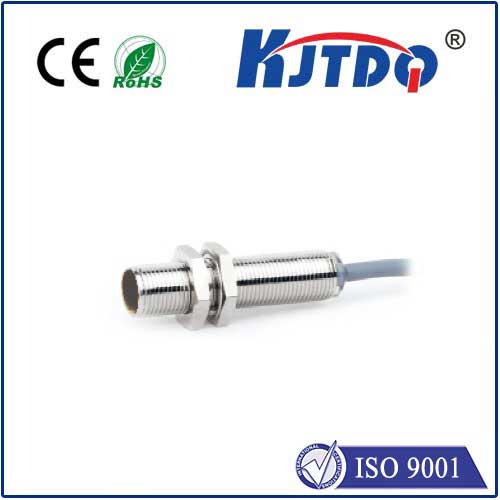
The design and construction of these sensors are where their legendary resilience originates. Encased in materials like nickel-plated brass, stainless steel, or high-grade PBT plastic, they are built to withstand harsh environments. They are inherently immune to common industrial nuisances such as dust, dirt, oil, coolant, and non-metallic debris. Unlike optical sensors, they are unaffected by ambient light or opaque fluids. This makes them the undisputed choice for challenging settings like machine tools, welding cells, material handling systems, and heavy-duty automotive assembly lines. Their solid-state design, with no moving mechanical parts, translates to a exceptionally long operational life with minimal maintenance.
When selecting a Factor 1 inductive sensor, several key specifications demand attention. The sensing distance, defined for a standard iron target, is paramount. The housing style—barrel, rectangular, or ring-shaped—must suit the mechanical installation. The output type, whether NPN or PNP, sinking or sourcing, must be compatible with the control system's PLC. Shielded (flush-mountable) models allow installation in metal without affecting the sensing field, while unshielded versions offer a longer sensing range. Environmental ratings, particularly Ingress Protection (IP) codes like IP67 or IP69K, guarantee performance under conditions involving water, steam, or high-pressure washdowns.
The practical applications are vast and critical. They are used for precise position detection of metal parts, such as confirming a cylinder has fully extended or retracted. They serve as end-of-travel limit switches on conveyors and actuators. In rotary applications, they can detect the presence of gear teeth or holes for speed monitoring. Within automated storage and retrieval systems, they ensure accurate pallet positioning. Their speed and reliability make them ideal for simple part counting tasks on high-speed production lines. In safety interlocks, they verify that metal guards are securely in place before machinery can operate.
Installation and wiring, while straightforward, require careful consideration for optimal performance. Ensuring a stable mounting, free from excessive vibration, is crucial. Maintaining the specified gap between the sensor face and the target is essential for reliable switching. For flush-mounted shielded sensors, adjacent metal must not extend into the sensing field area. Electrical wiring should follow manufacturer guidelines, paying close attention to polarity for DC models and incorporating protective devices like surge suppressors in applications with inductive loads (e.g., solenoids, relays) to protect the sensor's output circuit from voltage spikes.
Looking ahead, the evolution of the inductive proximity sensor continues. Modern variants integrate advanced diagnostics via IO-Link communication, providing real-time data on operational status, temperature, and even signal strength for predictive maintenance. Miniaturization has led to incredibly small sensors for tight spaces, while high-temperature models now function reliably in foundries or near furnaces. The core Factor 1 principle remains unchanged, but enhanced materials and electronics are pushing the boundaries of performance, temperature range, and connectivity, securing their indispensable role in the smart factories of Industry 4.0.
In conclusion, the Factor 1 inductive proximity sensor is more than just a component; it is a fundamental enabler of automated efficiency. Its blend of simple physics, rugged construction, and versatile application provides a reliable and cost-effective solution for detecting metallic objects. By understanding its operating principles, key selection criteria, and proper installation practices, engineers and technicians can leverage this workhorse sensor to build more robust, reliable, and productive automated systems. Its unwavering performance in the face of industrial adversity continues to make it a trusted default choice for metal detection tasks worldwide.