check

check

check

check

check

check
In the evolving landscape of industrial automation and smart systems, the demand for reliable, accurate, and cost-effective sensing solutions continues to grow. Among the various technologies available, the analog proximity sensor stands out as a fundamental component for countless applications. This article delves into the core principles, advantages, and practical implementations of analog proximity sensors, with a focus on how KJTDQ's innovative approach is setting new standards in the field.
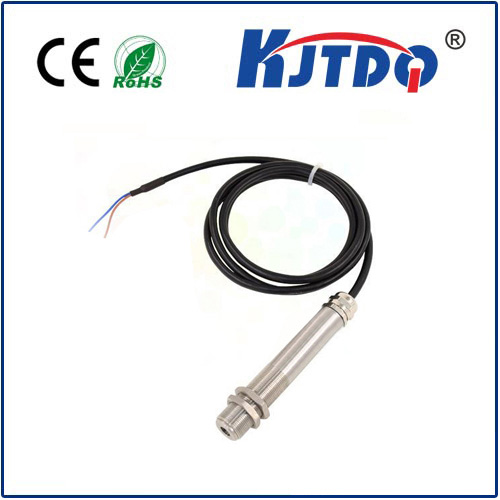
At its heart, an analog proximity sensor is a device that detects the presence or absence of a nearby object without physical contact. Unlike its digital counterpart, which provides a simple on/off signal, an analog sensor outputs a continuous signal—typically a voltage or current—that varies proportionally with the distance to the target. This continuous output allows for precise measurement of position, displacement, or even the thickness of materials, offering a granularity that binary sensors cannot match. Common technologies employed include inductive sensors for metallic objects, capacitive sensors for both metallic and non-metallic materials, and ultrasonic sensors for longer ranges and diverse surface types.
The operational principle is elegantly straightforward. For instance, an inductive analog proximity sensor generates an electromagnetic field. When a metallic object enters this field, it causes eddy currents that alter the oscillation amplitude within the sensor's coil. This change is then converted into a linearly proportional analog output signal. The key benefit here is the continuous data stream, enabling systems to not just detect an object's presence but to monitor its exact position in real-time. This capability is crucial for applications requiring fine control, such as in robotic arm positioning, valve control, or monitoring roll diameters in winding machines.
Implementing KJTDQ analog proximity sensors brings several tangible benefits to industrial and commercial operations. First and foremost is enhanced precision. The linear output allows for exact measurements, reducing errors and improving the quality control processes in manufacturing. Secondly, they offer remarkable versatility. With various sensing ranges, housing materials (like nickel-plated brass or stainless steel), and output options (0-10V, 4-20mA), they can be tailored to specific environmental challenges, including harsh conditions with dust, moisture, or temperature extremes. Furthermore, their non-contact nature ensures minimal wear and tear, leading to lower maintenance costs and higher long-term reliability compared to mechanical limit switches.
Safety and efficiency are significantly boosted through their application. In automated assembly lines, these sensors ensure components are correctly positioned before a critical operation, preventing collisions and product damage. In mobile machinery, they can provide precise feedback on cylinder rod position, optimizing hydraulic system performance. The analog signal can be directly fed into a PLC (Programmable Logic Controller) or other control systems, enabling sophisticated feedback loops and predictive maintenance algorithms. By providing more data than a simple switch, they help create smarter, more responsive automated environments.
Choosing the right sensor involves careful consideration of several factors. The material of the target object is paramount; inductive sensors are ideal for metals, while capacitive sensors are needed for plastics, liquids, or other materials. The required sensing distance, environmental conditions (like temperature or presence of chemicals), and the necessary electrical output for the control system must all be evaluated. KJTDQ's product line addresses these diverse needs with robust designs, stable performance over temperature variations, and high immunity to electrical noise, ensuring consistent and accurate readings in demanding applications.
Looking ahead, the integration of analog proximity sensors with Industry 4.0 and IoT (Internet of Things) platforms is a natural progression. The continuous analog signal is a rich data source that can be digitized and analyzed for trends, predicting equipment failure or optimizing production flow. KJTDQ is at the forefront of this integration, developing sensors that not only provide exceptional analog accuracy but also feature easier connectivity for modern digital factory networks. This fusion of reliable analog sensing with digital intelligence is paving the way for more autonomous and efficient industrial operations.
In conclusion, the analog proximity sensor remains an indispensable tool for modern engineering. Its ability to provide continuous, precise distance information makes it superior for complex control and measurement tasks. KJTDQ's commitment to quality, durability, and technological innovation in this domain provides engineers and system integrators with a trusted solution to enhance machine precision, operational safety, and overall productivity. By understanding their principles and applications, businesses can leverage these powerful devices to build more intelligent and reliable automated systems for the future.