check

check

check

check

check

check
In the world of industrial automation and precision engineering, the ability to detect objects without physical contact is not just a convenience—it's a necessity. Among the various sensing solutions available, the 4mm proximity sensor stands out for its unique balance of size, range, and reliability. This compact device has become a cornerstone in countless applications, from intricate assembly lines to robust machinery. But what exactly makes this specific sensing distance so critical, and how does it function to deliver such consistent performance?
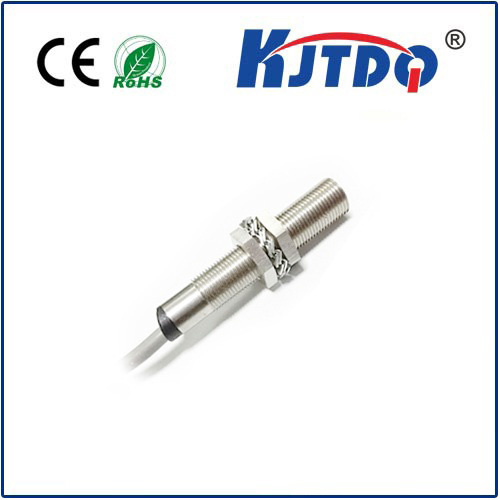
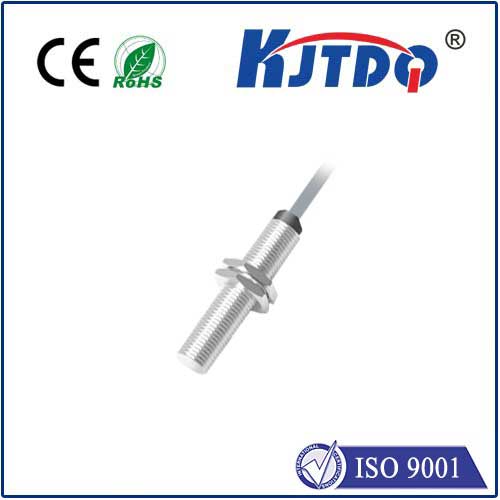
A 4mm proximity sensor is a non-contact electronic device designed to detect the presence or absence of a metallic object within a nominal range of 4 millimeters. Operating primarily on the principle of electromagnetic induction or capacitive sensing, these sensors generate an oscillating electromagnetic field. When a metallic target enters this field, it causes a change in the oscillation amplitude or frequency. The sensor's internal circuitry detects this disturbance and triggers a solid-state switch, sending a clear signal to the connected control system, such as a PLC. This entire process happens in microseconds, enabling real-time monitoring and control. The "4mm" specification refers to the standard nominal sensing distance, meaning the sensor is calibrated to reliably detect a standard target at that precise distance. It's crucial to understand that factors like target material, size, and temperature can slightly influence the effective sensing range.
The advantages of opting for a 4mm sensing range are multifaceted. First and foremost is precision. In applications where components are tightly spaced or positioning tolerances are extremely tight, a longer-range sensor might cause false triggers by detecting adjacent objects. The 4mm range provides a focused detection zone, minimizing interference and ensuring that only the intended target is sensed. This precision directly translates to higher accuracy in processes like part counting, position verification, and end-of-travel detection. Secondly, their compact physical size allows for installation in space-constrained environments where larger sensors simply wouldn't fit. This miniaturization does not come at the cost of durability; most 4mm proximity sensors are housed in rugged, often stainless steel or nickel-plated brass barrels, offering high resistance to vibration, shock, and industrial contaminants like coolant or metal shavings.
The application spectrum for these sensors is remarkably broad. In the automotive manufacturing sector, they are indispensable for verifying the presence of pistons in engine blocks, checking gear positions in transmissions, or ensuring robotic welders are in the correct start position. Within the packaging industry, they count bottles on high-speed filling lines or detect the presence of foil lids on containers. Electronics assembly relies on them to confirm the placement of tiny components on circuit boards before soldering. Furthermore, they play a vital safety role as part of interlock systems on machine guards, ensuring a door is fully closed before dangerous machinery can be activated.
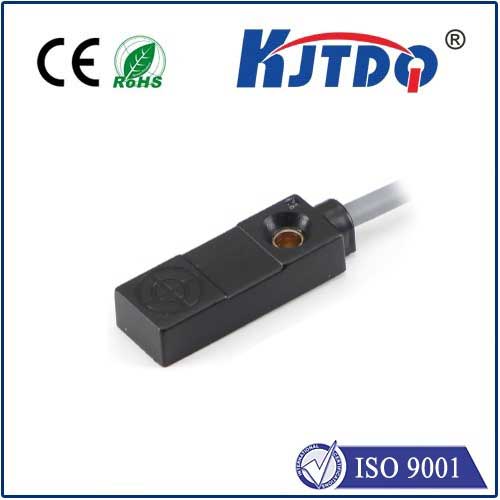
Selecting the right 4mm proximity sensor requires careful consideration of several parameters beyond just the sensing distance. The target material is paramount: standard inductive sensors detect ferrous metals like steel and iron at their rated range, while for non-ferrous metals like aluminum or copper, the effective range is reduced, often necessitating a sensor specifically designed with a factor-1 characteristic. The housing style is another key decision; cylindrical threaded barrels (e.g., M8 or M12) are common, but rectangular or slot-style housings are available for specific mounting needs. Output configuration—whether NPN (sinking) or PNP (sourcing)—must match the input requirements of the controller. Environmental ratings, denoted by IP (Ingress Protection) codes like IP67, indicate the level of protection against dust and water immersion, which is critical for washdown areas or outdoor use.
Installation and maintenance are straightforward but require attention to detail. Ensuring a metal-free zone around the sensor's sensing face is essential to prevent false actuation. The sensor should be mounted securely to avoid vibration-induced misalignment, which could affect the consistent 4mm detection gap. While these devices are largely maintenance-free due to their solid-state design, periodic checks for physical damage, buildup of debris on the sensing face, and verification of output signals are recommended as part of a preventative maintenance routine. This ensures long-term reliability and prevents unexpected downtime in automated processes.
From enhancing the precision of robotic arms to safeguarding operators on the factory floor, the 4mm proximity sensor is a testament to how a small, focused technology can have an outsized impact on efficiency, quality, and safety. Its defined 4mm range offers the perfect solution for applications demanding exact detection without the drawbacks of physical contact. As automation continues to evolve towards greater precision and miniaturization, the role of this reliable sensor is set to become even more integral, forming the invisible yet essential backbone of modern intelligent manufacturing and control systems.