check

check

check

check

check

check
In the rapidly evolving landscape of industrial automation and smart technology, the demand for reliable, precise, and durable sensing components has never been higher. Among the myriad of options available, the KTJHALL proximity sensor stands out as a cornerstone technology for countless applications. This guide delves into the core principles, diverse applications, and significant advantages of integrating KTJHALL proximity sensors into your systems, providing a comprehensive overview for engineers, procurement specialists, and technology integrators.
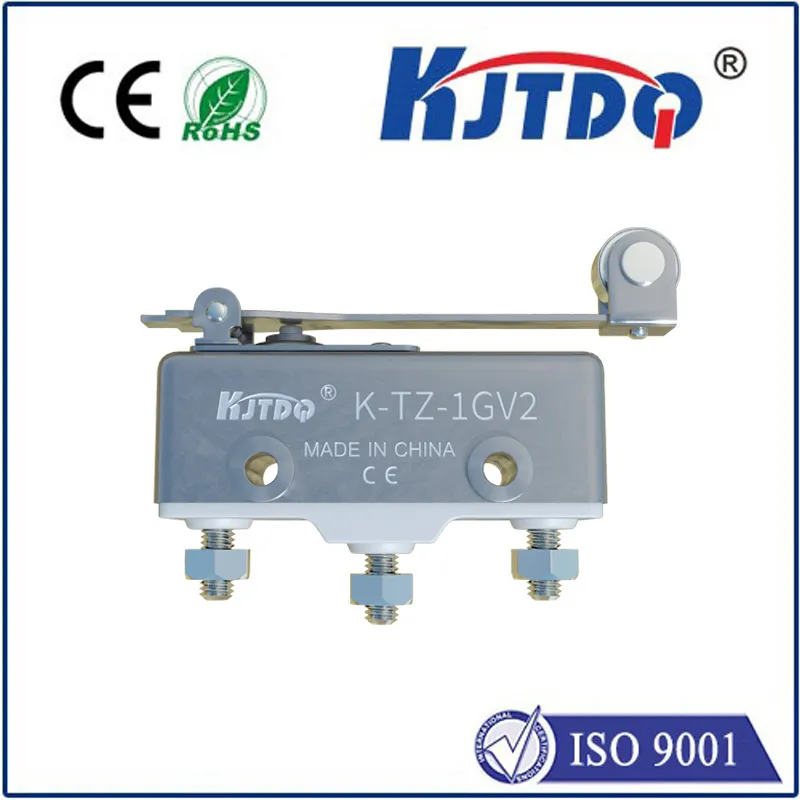
At its heart, a KTJHALL proximity sensor operates on the Hall effect principle. Discovered by Edwin Hall in 1879, this effect describes the generation of a voltage difference (the Hall voltage) across an electrical conductor when a magnetic field is applied perpendicular to the current flow. Modern KTJHALL sensors encapsulate this physics into a compact, solid-state device. They do not require physical contact to detect the presence of a magnetic field, typically from a permanent magnet attached to a target object. This non-contact operation is the foundation of their exceptional durability and reliability, eliminating mechanical wear and tear associated with limit switches.
The applications for KTJHALL proximity sensors are vast and span multiple industries. In automotive systems, they are indispensable for monitoring wheel speed (anti-lock braking systems), detecting gear position in transmissions, and ensuring seatbelt engagement. Within industrial automation, these sensors provide critical feedback for position sensing on linear actuators, rotary encoders, and conveyor systems, enabling precise control in manufacturing lines. They also play a vital role in consumer electronics, found in laptop lids to detect open/closed states, and in various home appliances for door position detection. Their robustness makes them ideal for harsh environments where dust, moisture, or vibrations are present, as they are often housed in sealed packages.
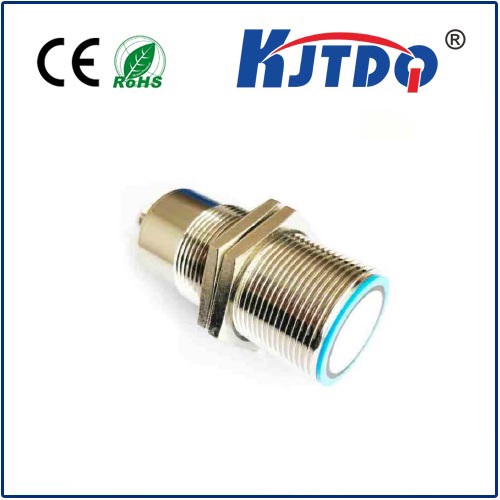
Choosing a KTJHALL sensor offers a multitude of benefits over other sensing technologies like inductive or optical sensors. Firstly, they are inherently immune to environmental contaminants such as oil, dirt, and non-ferrous debris, as they respond solely to magnetic fields. This leads to reduced maintenance and higher system uptime. Secondly, they offer excellent repeatability and long-term stability, with switching points that remain consistent over millions of cycles. Their ability to operate at zero speed is another key advantage, allowing for position detection even when a system is stationary. Furthermore, modern KTJHALL sensors come in various output configurations (digital, analog, PWM) and package styles (tubular, rectangular, ring-shaped) to fit specific design constraints.
When selecting a KTJHALL proximity sensor for a project, several critical parameters must be evaluated. The sensing distance, or the range at which the sensor can reliably detect the target magnet, is paramount. The type of magnetic field (bipolar or unipolar) the sensor is designed for will determine the required magnet orientation. Operating voltage and output current capacity must match the control system's specifications. Environmental ratings, particularly Ingress Protection (IP) codes for dust and water resistance, are crucial for applications exposed to the elements. Finally, considering the temperature range ensures consistent performance from frigid cold storage facilities to hot engine compartments.
Installation and integration are straightforward but require attention to detail. Proper alignment between the sensor and the target magnet is essential for optimal performance. The use of shielded or non-shielded sensor designs affects the magnetic field shape and sensing distance. Electrical noise in industrial settings can sometimes interfere with signal integrity, so following recommended wiring practices, such as using twisted-pair cables and keeping signal lines away from power cables, is advised. Many KTJHALL sensors include built-in protection against reverse polarity, overvoltage, and short circuits, enhancing system robustness.
Looking ahead, the future of KTJHALL sensor technology points towards greater integration, miniaturization, and intelligence. Sensors with integrated signal conditioning and digital interfaces (like I2C or SPI) are becoming more common, simplifying connections to microcontrollers. The development of sensors with ultra-low power consumption is driving their adoption in battery-powered IoT devices. As industries continue to push for smarter, more connected, and efficient operations, the fundamental reliability and versatility of the KTJHALL proximity sensor ensure it will remain a critical component in the backbone of modern electromechanical systems, enabling safer, more precise, and more automated solutions across the globe.