check

check

check

check

check

check
In the world of industrial automation and smart electronics, the ability to detect objects without physical contact is not just a convenience—it's a revolution. At the heart of this revolution lies the proximity sensor, a device that has become indispensable. Among the various technologies available, the Q-W Proximity Sensor stands out for its remarkable blend of precision, reliability, and versatility. This guide delves deep into what makes this sensor a critical component for modern applications.
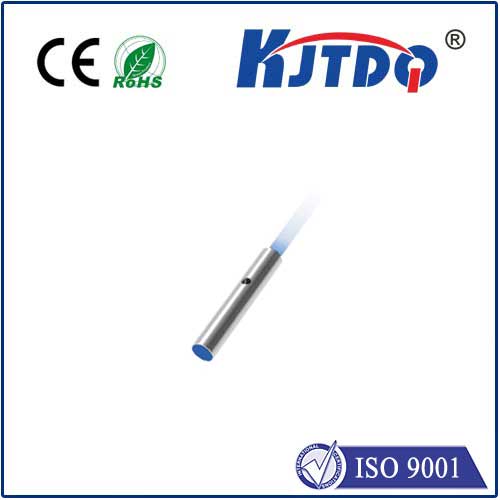
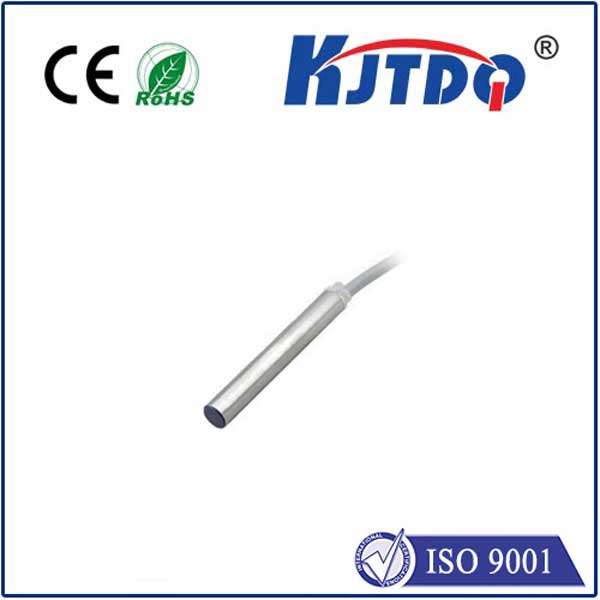
A proximity sensor, fundamentally, is a device that can detect the presence or absence of a nearby object without any physical contact. It does this by emitting an electromagnetic field or a beam of electromagnetic radiation, often infrared light, and then looking for changes in the field or the return signal. The Q-W series represents a specific class of these sensors, engineered for high performance in demanding environments. Its design typically focuses on a robust housing, consistent sensing ranges, and immunity to environmental factors like dust, oil, or ambient light interference that can plague lesser models.
The core technology behind many Q-W Proximity Sensors is often inductive or capacitive sensing. Inductive sensors are perfect for detecting metallic objects. They generate an oscillating electromagnetic field from a coil. When a metal object enters this field, it induces eddy currents within the metal, which dampens the oscillation of the sensor's own field. The sensor's circuitry detects this damping and triggers a switch. This makes them ideal for factory automation—counting metal parts on a conveyor belt, determining the position of a machine tool, or ensuring a robotic arm is correctly aligned.
On the other hand, capacitive Q-W sensors can detect both metallic and non-metallic materials, including liquids, plastics, and wood. They work by measuring changes in capacitance. The sensor forms one plate of a capacitor, with the target object acting as the other plate. As the object approaches, the capacitance increases, and once it reaches a preset threshold, the sensor activates. This capability is invaluable in industries like packaging, food and beverage, or chemical processing, where diverse materials are handled.
The advantages of implementing a Q-W Proximity Sensor are numerous. First and foremost is durability. With no moving parts to wear out and a solid-state design, these sensors offer an exceptionally long operational life, reducing maintenance costs and downtime. Their non-contact nature means there is no mechanical wear on either the sensor or the target object, which is crucial for delicate applications. Speed is another key benefit; they can detect objects at very high speeds, far beyond the capability of mechanical limit switches, enabling faster production cycles.
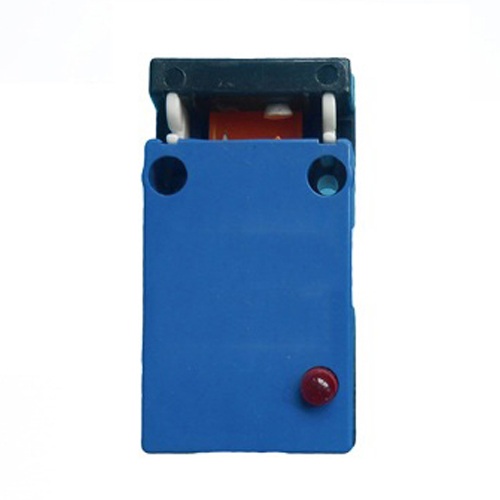
Furthermore, Q-W sensors are celebrated for their consistency and accuracy. They provide repeatable results, ensuring that a machine performs the same action at the exact same point every time. This precision is foundational for quality control in manufacturing. Modern versions also come with features like short-circuit protection, reverse polarity protection, and LED status indicators, making them easier to install, troubleshoot, and integrate into complex control systems.
When selecting a Q-W Proximity Sensor for a specific task, several factors must be considered. The sensing range is paramount—it must be appropriate for the application without being overly sensitive to unintended objects. The housing material, typically nickel-plated brass or stainless steel, should be chosen based on the environment (e.g., washdown areas in food plants require high-grade stainless steel). The output type, whether it's a simple two-wire AC/DC, three-wire NPN (sinking), or PNP (sourcing) transistor output, must be compatible with the existing programmable logic controller (PLC) or control circuitry.
Installation is straightforward but requires attention to detail. Sensors should be mounted securely to avoid vibration-induced errors. It's also critical to ensure that the sensing face has a clear, unobstructed field of view and that multiple sensors are spaced adequately apart to prevent mutual interference, a phenomenon known as "crosstalk." For inductive sensors, one must remember that different metals have different "correction factors"; for instance, steel is detected at the nominal range, while aluminum or copper may reduce the effective sensing distance.
From automotive assembly lines and robotic pick-and-place units to pharmaceutical packaging and elevator door safety systems, the applications for Q-W Proximity Sensors are virtually limitless. They are the silent, unseen guardians that ensure processes run smoothly, safely, and efficiently. As Industry 4.0 and the Internet of Things (IoT) continue to evolve, the role of smart sensors like the Q-W series will only grow, providing critical data for predictive maintenance and system optimization.
In conclusion, the Q-W Proximity Sensor is more than just a switch; it is a sophisticated enabling technology that bridges the physical and digital worlds. Its ability to provide reliable, non-contact detection forms the backbone of automated systems, driving productivity and innovation across countless sectors. For engineers and system integrators, understanding and leveraging the capabilities of this sensor is key to building smarter, more responsive, and more efficient operations for the future.