check

check

check

check

check

check
In the world of industrial automation and machinery control, a small yet critical component often determines the success of an operation: the limit switch. These electromechanical devices are fundamental to ensuring safety, precision, and reliability in countless applications. A limit switch is an actuator-operated switch that detects the presence or absence of an object, or monitors the movement and position of a machine part. When an object, known as the actuator or target, makes physical contact with the switch's operating head, it triggers a change in the electrical contacts within the switch body. This simple action sends a signal to a control system to start, stop, or alter a sequence of operations.
The core principle behind a limit switch is straightforward. It consists of a robust housing containing a set of electrical contacts (normally open or normally closed) connected to an external lever, roller, plunger, or other type of actuator. When the actuator is displaced by the target object, it mechanically moves the contacts, opening or closing the circuit. This provides a definitive, physical "hard" signal, which is a key advantage over non-contact sensors in environments where absolute certainty is required. Their design prioritizes durability to withstand harsh industrial environments, including exposure to dust, moisture, vibration, and extreme temperatures.
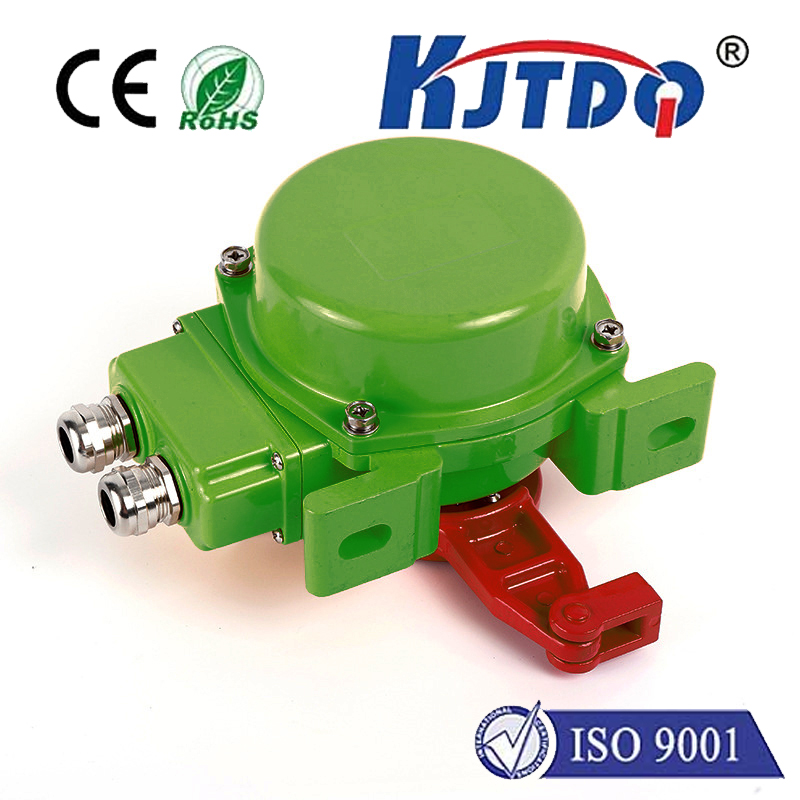
There are several primary types of limit switches, each suited for specific tasks. The most common is the lever-arm switch, featuring a rotating arm that activates the switch. Variations include roller lever switches for smoother engagement and wobble stick or whisker switches for detecting objects from any direction. Plunger-type switches are activated by direct linear force, ideal for precise end-position detection. Rotary cam limit switches are used to control the sequence of operations in machines by being actuated by a rotating cam. For safety-critical applications, safety-rated limit switches with positive-opening contacts are mandatory, designed to fail in a safe state.
The applications of limit switches are vast and integral to modern industry. They are ubiquitous in manufacturing assembly lines, where they control the travel of robotic arms, signal the end of a conveyor belt stroke, or confirm the placement of a component. In material handling, such as cranes and elevators, they act as over-travel safety stops to prevent collisions. Packaging machinery relies on them for precise product counting and positioning. In the automotive sector, they ensure robotic welders and painters operate within their programmed paths. Even in everyday appliances like garage doors, washing machines, and microwave ovens, micro limit switches control door positions and cycle sequences.
Selecting the right limit switch for an application requires careful consideration of several factors. The operating environment is paramount; switches are rated with IP (Ingress Protection) codes for dust and water resistance, and NEMA ratings for broader environmental protection. The electrical specifications—including voltage, current (both AC and DC), and contact configuration (SPDT, DPDT)—must match the control circuit's requirements. The mechanical specifications involve the actuator type, operating force, repeat accuracy, and expected lifespan in terms of mechanical and electrical cycles. The physical size and mounting style must also fit the spatial constraints of the machinery. For high-speed or delicate applications, the pre-travel and differential travel (the distance between activation and reset) are critical parameters.
Proper installation and maintenance are crucial for longevity and reliability. Limit switches should be mounted securely to avoid misalignment from vibration. The actuator must be positioned so that the target engages it correctly, without excessive force that could cause premature wear. Regular inspection for physical damage, loose connections, and contamination is necessary. Testing the switch's operation periodically ensures it continues to send the correct signal. While non-contact sensors like proximity or photoelectric switches offer advantages in wear-free operation, the limit switch remains irreplaceable where physical confirmation, high current switching capability, and environmental ruggedness are needed.
In conclusion, the humble limit switch is a cornerstone of automated control systems. Its simple, robust, and reliable nature makes it a trusted solution for position detection and safety interlocking across every industrial sector. From massive steel mills to delicate medical devices, these components provide the essential feedback that allows machines to operate intelligently and safely. Understanding their types, functions, and selection criteria is key for engineers and technicians to design and maintain efficient, fail-safe automated processes.