check

check

check

check
check
check
check
check

check
check
Imagine a high-speed production line bottling your favorite drink. Suddenly, a robotic arm misfires, crashing into equipment because it thought a bottle was present when it wasn’t. The culprit? Unreliable object detection. In the intricate dance of industrial automation, precision sensing is paramount, and where safety, reliability, and fail-safe operation are non-negotiable, NPN NC proximity sensors emerge as critical components. Understanding their unique detection characteristics is key to building robust, dependable systems that minimize costly downtime and maximize operational safety.
Decoding the Acronym: What is an NPN NC Proximity Sensor?
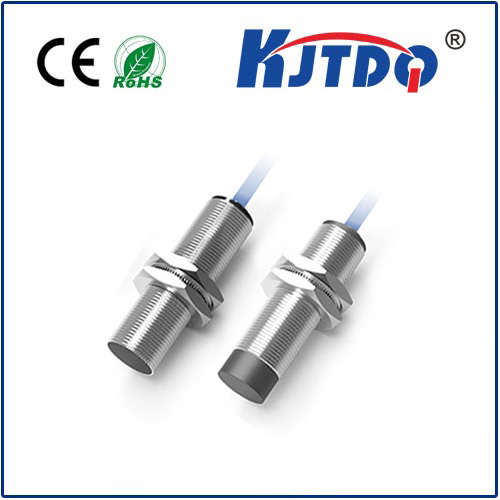
A proximity sensor detects the presence or absence of a target object without physical contact, using electromagnetic fields (inductive), light (photoelectric), sound (ultrasonic), or capacitance. The “NPN” and “NC” specifications define its electrical output configuration:
Therefore, an NPN NC proximity sensor provides an output signal path to ground (the NPN part) that is “closed” (current can flow) when no target is detected, and “open” (no current flows) when a target is detected.
Why Choose NPN NC? The Power of Normally Closed Logic
The choice between Normally Closed (NC) and Normally Open (NO) configurations hinges on the desired failure mode safety and application logic:

Key Applications Leveraging NPN NC Detection
The unique characteristics of NPN NC proximity sensors make them indispensable in numerous scenarios demanding high reliability and safety-focused detection:
Integrating NPN NC Sensors: Wiring Considerations
Integrating an NPN NC proximity sensor requires understanding its sinking output:
NPN NC vs. PNP NO: Choosing the Right Tool
The choice between NPN and PNP, and NC and NO, depends entirely on the control system’s input requirements and the desired safety logic:
PNP (Sourcing): Provides a positive voltage output when active. Load connects between output and ground.
NPN (Sinking): Provides a ground path when active. Load connects between +V and output.
NO (Normally Open): Output circuit is open at rest, closes when target detected. Ideal for presence detection where an active signal confirms an object is there.
NC (Normally Closed): Output circuit is closed at rest, opens when target detected. Ideal for absence detection and fail-safe operation, where loss of signal indicates an event/failure.
Mixing Types: Critical! Never mix NPN and PNP sensors on the same PLC input type without understanding the sink/source requirements. Connecting an NPN sensor to a sourcing PLC input (or vice-versa) will likely damage the sensor or PLC. Understanding the PLC input card’s design (sinking vs. sourcing) is essential for compatibility. NC vs NO configuration is a separate logical choice dictated by the application need.
Optimizing NPN NC Sensor Performance for Reliable Detection
To maximize the detection reliability of your NPN NC proximity sensors: