laser scanner sensor
- time:2025-03-06 02:19:07
- Click:0
Laser Scanner Sensors: The Eyes of Modern Automation and Precision
In a world where accuracy and efficiency define progress, laser scanner sensors have emerged as silent revolutionaries. From guiding autonomous vehicles through chaotic city streets to ensuring flawless quality control in manufacturing, these devices are redefining how machines “see” and interact with their environments. Imagine a technology that captures millions of data points per second with sub-millimeter precision—that’s the power of laser scanning.
What Are Laser Scanner Sensors?
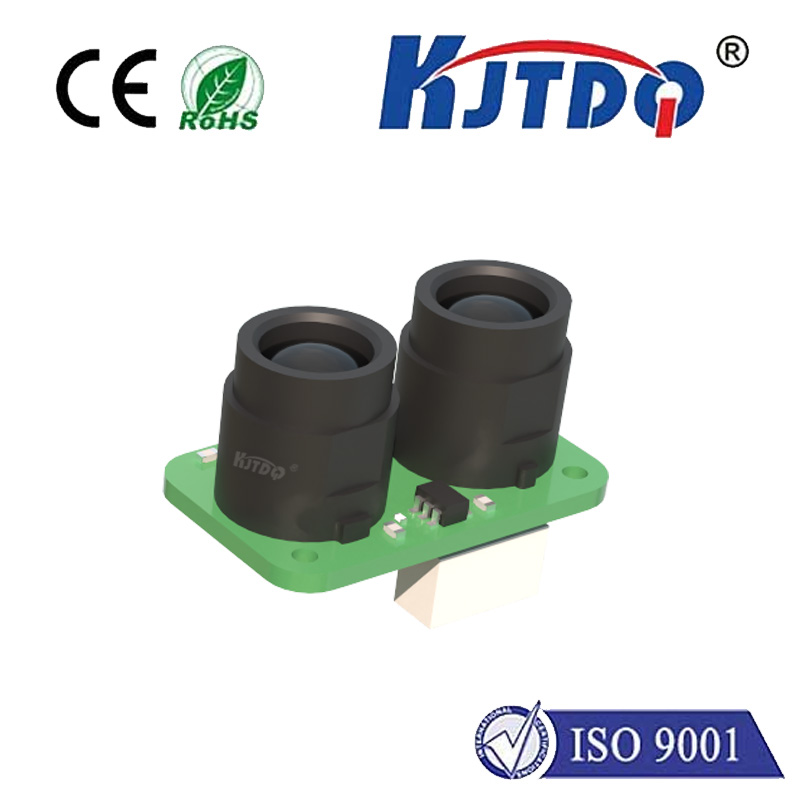
A laser scanner sensor is a non-contact measurement device that uses laser beams to detect, map, and analyze objects or environments. By emitting pulsed or continuous laser light and measuring the reflected signals, these sensors calculate distances, shapes, and surface characteristics with extraordinary accuracy. Unlike traditional optical sensors, laser scanners operate effectively in low-light conditions and can penetrate challenging environments like dust, fog, or rain.
The core technology behind these sensors often relies on Time-of-Flight (ToF) or phase-shift measurement. ToF calculates distance based on the time it takes for a laser pulse to bounce back, while phase-shift methods measure changes in the wavelength of reflected light. Both approaches enable real-time, high-resolution 3D mapping—a capability critical for applications ranging from robotics to archaeology.

Key Applications Driving Industry Transformation
- Autonomous Vehicles and Advanced Driver-Assistance Systems (ADAS)
Laser scanners, particularly LiDAR (Light Detection and Ranging), are the backbone of self-driving cars. By creating dynamic 3D maps of surroundings, they help vehicles detect pedestrians, obstacles, and lane markings. Companies like Waymo and Tesla leverage this technology to enhance safety and navigation, even at high speeds.
- Industrial Automation and Quality Control
In manufacturing, laser scanners ensure micron-level precision. For instance, automotive assembly lines use them to inspect weld seams or verify component dimensions. A single deviation of 0.1mm can trigger instant corrections, minimizing waste and downtime.
- Healthcare and Biomechanics
Surgeons now rely on laser-scanned 3D models for preoperative planning, while wearable sensors monitor patients’ gait analysis in rehabilitation. This fusion of precision and non-invasiveness is pushing medical diagnostics into a new era.
- Smart Infrastructure and Construction
From monitoring structural integrity of bridges to creating digital twins of buildings, laser scanners streamline construction workflows. They reduce manual surveying time by up to 70%, according to industry reports, while improving data accuracy.
Why Laser Scanners Outperform Traditional Sensors
The dominance of laser technology isn’t accidental. Here’s what sets these sensors apart:
- Speed and Resolution: Capable of capturing over 1 million points per second, laser scanners generate detailed models faster than photogrammetry or ultrasonic sensors.
- Adaptability: They perform consistently in extreme temperatures, vibrations, or uneven surfaces—conditions where cameras or contact sensors fail.
- Versatility: Whether measuring a nanoparticle or scanning a 10-kilometer pipeline, the scalability of laser systems is unmatched.
However, challenges remain. High-end LiDAR units can be costly, and performance may degrade in heavy rain or snow. Innovations like solid-state LiDAR and AI-driven noise filtration are addressing these limitations, making the technology more accessible.
The Future: Smaller, Smarter, and More Integrated
As industries embrace Industry 4.0, laser scanner sensors are evolving beyond standalone tools. Trends to watch include:
- Miniaturization: Chip-sized LiDAR sensors are entering consumer electronics, enabling smartphones to perform AR-enhanced measurements.
- AI Integration: Machine learning algorithms now interpret scan data in real time, identifying defects or anomalies without human intervention.
- Sustainability: Energy-efficient designs and recyclable materials are reducing the environmental footprint of these devices.
Market analysts predict the global laser scanner sensor market will grow at a CAGR of 8.2% through 2030, driven by demand in robotics, agriculture, and urban planning.
From enabling safer surgeries to powering the next generation of smart cities, laser scanner sensors are more than just tools—they’re catalysts for innovation. As technology advances, their role in bridging the gap between digital and physical worlds will only deepen, proving that sometimes, the smallest beam of light can illuminate the biggest possibilities.