

check

check

check

check

check
check
check
check
check

check
Industrial inductive proximity sensors detect metal objects without touching them, which makes them the standard way to confirm that a steel or aluminium part, bracket or machine element has arrived where it should be. A field at the sensing face reacts when metal enters it, and the sensor turns that reaction into a switching signal. KJT Sensors builds its inductive range for non-contact metal detection on automation lines, mainly to report the position, in-position status and motion status of metal objects.

It notices metal because metal disturbs the alternating electromagnetic field that an internal oscillator projects in front of the sensing face. When a conductive target moves into that zone, small eddy currents form in its surface. Those currents draw energy from the oscillator and change its amplitude, and the electronics inside the housing translate that change into a switching output or another output signal.
Two consequences follow from this principle. First, nothing has to touch anything: the target never presses a lever or plunger. Second, the sensor responds to metal and ignores plastic, wood, glass, cardboard and similar materials, because those do not carry eddy currents in a useful way.
They answer simple yes-or-no questions about metal parts, again and again, at machine speed. The core functions are non-contact metal detection, position determination and monitoring whether something is moving or has stopped. Commonly called proximity switches, these general-purpose devices cover:
presence and position checks for metal workpieces, carriers and fixtures;
counting metal parts as they pass a fixed point;
end-of-travel protection on slides, cylinders and carriages;
equipment-status monitoring, such as confirming that a rotating shaft or a gate is moving.
Because the target is never touched, an inductive switch avoids the contact movement that a mechanical switch depends on. That makes it a good fit for frequent switching, continuous production and long service periods, where a lever or roller would gradually wear.
The family shares one sensing principle, but the housing and geometry change with the job. The table below summarises the variants most often asked about.
| Variant | What it is built for |
|---|---|
| Miniature | Space-constrained mechanisms, fixtures and small automated assemblies |
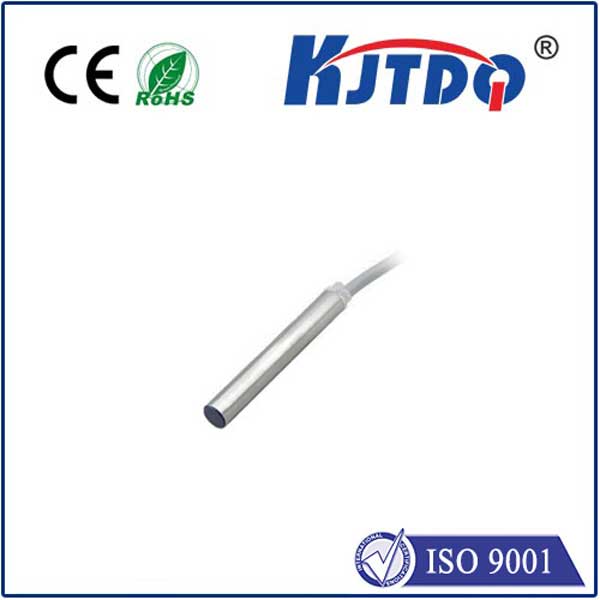
| All-metal | A stainless steel sensing face and housing that withstand impact and abrasive contact |
| Ring | Small metal objects passing through a central opening, such as screws, pins, rivets and stamped parts |
| Long sensing distance | Metal targets at a larger separation, which reduces the risk of a mechanical collision with the sensor |
A machining centre gives a practical example. On a fast CNC gantry tool changer, swarf and coolant collect around every sensor near the spindle. An all-metal version with a stainless face copes better with flying chips and wiping than a sensor with a plastic cap, while still reporting tool and carriage positions without contact.
Choose capacitive when the target is not metal. Inductive sensors detect only metal targets, whereas capacitive sensors also respond to non-metallic materials, which lets them check plastic parts, transparent containers, powder in a silo or liquid in a tank. If the object to be detected is a steel bracket, a gear tooth or an aluminium carrier, inductive is the natural choice and is less likely to be influenced by surrounding non-metallic material. If it is granulate, a bottle or a paper stack, an inductive sensor will simply not see it.
Start with the target: its metal type, its size and how close it passes to the face. Then describe the surroundings, including coolant, chips, heat, vibration and any cleaning routine, because these decide between a standard, all-metal or other housing. Next, note how much space the mechanism leaves, which may point towards a miniature or ring format. Finally, state what the control system expects from the output. Sensing range, output type and environmental ratings vary from model to model, so a short application review with the datasheet of the intended model in hand is the sensible last step.
Will an inductive sensor detect a plastic part sitting on a metal pallet?
It will detect the metal pallet, not the plastic part. To confirm the plastic part itself, a capacitive or photoelectric sensor is the better tool.
Why is an inductive switch preferred over a roller limit switch on fast axes?
It does not rely on a physical push from the target, so there is no actuator to wear with each cycle. This suits machines that switch many times a minute over long production runs.
Can one inductive sensor count small screws dropping down a tube?
A ring inductive sensor is designed for that task. The parts fall through its central opening, and each metal item is registered as it passes.
Do all inductive sensors use the same housing?
No. The principle is shared, but miniature, all-metal, ring and long-range versions use different bodies so that the sensor suits the space, the wear conditions and the distance involved.