check

check

check

check

check

check

A Market Shift in Industrial Sensing, and the Company Leading It How the traditional procurement hierarchy of "imported first, domestic second" is being overturned — and what that means for engineering teams, procurement officers, and the industrial supply chain in 2026 and beyond.
For decades, the decision tree for industrial sensor procurement followed a predictable pattern. Start with a German or Japanese brand. If the budget is tight, drop to a tier-two European supplier. And only as a last resort, consider a Chinese manufacturer.
That decision tree is being quietly but irreversibly rewritten.
Not because of trade policy. Not because of cost-cutting mandates. But because a new generation of Chinese industrial sensor manufacturers — with engineering depth, manufacturing capability, and global service infrastructure that simply did not exist a decade ago — has arrived.
At the center of this shift is KJT Sensors.
Founded in 2010 in Nanjing, China, KJT Sensors has grown from a single product line into a comprehensive industrial sensing ecosystem serving over 30,000 customers across China's industrial heartland, Southeast Asia, Europe, the Middle East, Africa, and the Americas. The company holds 100+ active patents, operates a new R&D center that came online in 2025, and provides direct alternatives to the major imported brands that have dominated global industrial procurement for decades.
This is not a story about "cheap Chinese alternatives." This is a story about engineering capability meeting market opportunity — and about what it means for every procurement professional, engineering team, and operations director who is still operating under the old decision tree.
The conventional argument for "domestic substitution" (国产替代) centers on price. Chinese-made sensors, the argument goes, are 30–50% cheaper than their European or Japanese equivalents. That is true — and it matters — but it is not the most important reason why the shift is happening.
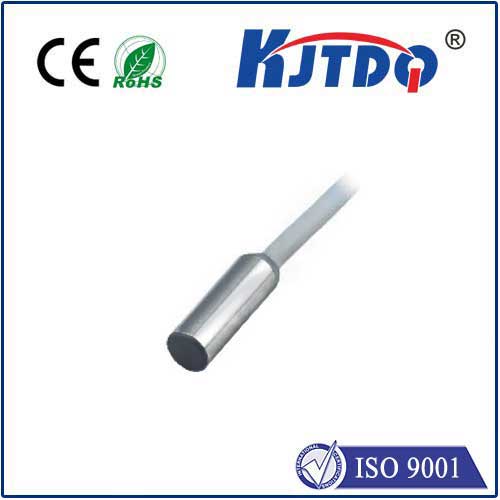
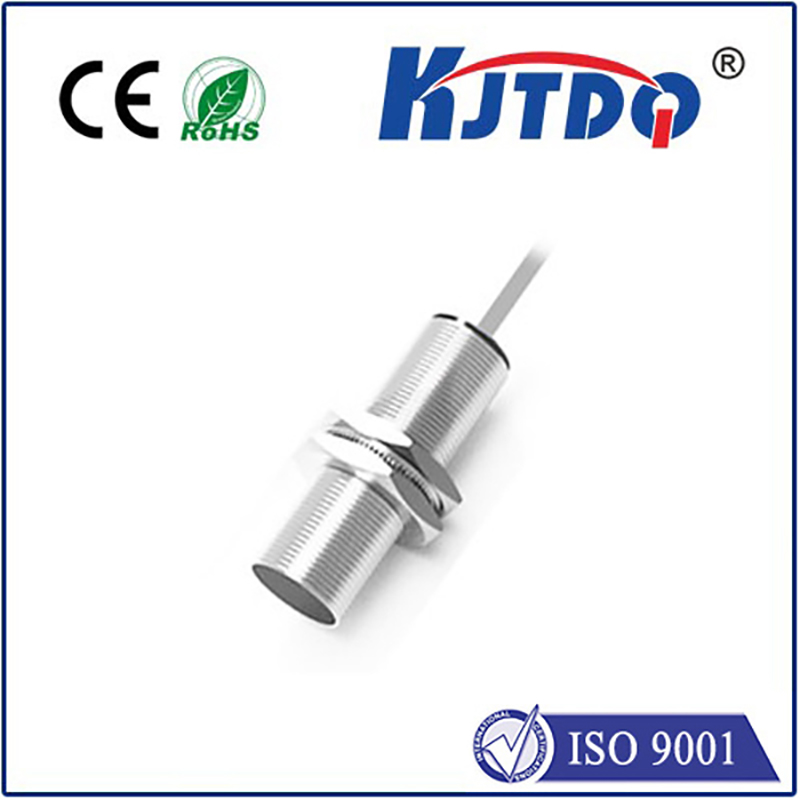
1. Technical Parity In the categories where KJT competes — proximity switches, photoelectric sensors, laser distance sensors, pressure sensors, safety switches, and belt conveyor protection systems — the performance gap between Chinese-made and imported products has narrowed to the point where, in many applications, it no longer exists. KJT's laser distance sensors achieve the same ±1mm accuracy as leading European competitors. Their M12 inductive proximity switches carry the same IP67 rating, the same PNP/NPN output options, and the same M12/M18/M30 form factors as the industry-standard OMRON E2E series. The difference is not in the spec sheet. It is in the price tag, the lead time, and the local support.
2. Lead Time & Supply Chain Resilience The post-pandemic era taught every manufacturer a hard lesson about supply chain concentration. When a critical sensor fails and the replacement lead time is 8–12 weeks from a European factory, the line stops. When the same replacement ships from a Chinese factory in 3–5 days, the line keeps running. For procurement teams managing just-in-time inventory and lean operations, lead time is not a secondary consideration — it is a primary operational risk.
3. Customization Capability Imported brands are optimized for volume. They build what sells at scale. But industrial applications are not always standard. A steel mill needs a proximity switch rated for 120°C ambient temperature in a blast furnace environment. A chemical plant needs a level sensor with IP69K housing that can survive caustic washdown. A port crane needs a limit switch with a specific mounting bracket and a custom cable length. KJT's engineering team engages directly with these requirements — not through a distributor's catalog, but through direct application engineering.
4. Total Cost of Ownership Price is what you pay. Value is what you get. When a KJT sensor delivers the same technical performance at 40% of the price, with 10x shorter lead time, and with local technical support that speaks the language of your industry, the total cost of ownership calculation shifts dramatically. This is not about choosing "cheap" — it is about choosing smart.
In a market increasingly crowded with Chinese sensor manufacturers, KJT has separated itself through a combination of structural capabilities that are difficult to replicate.
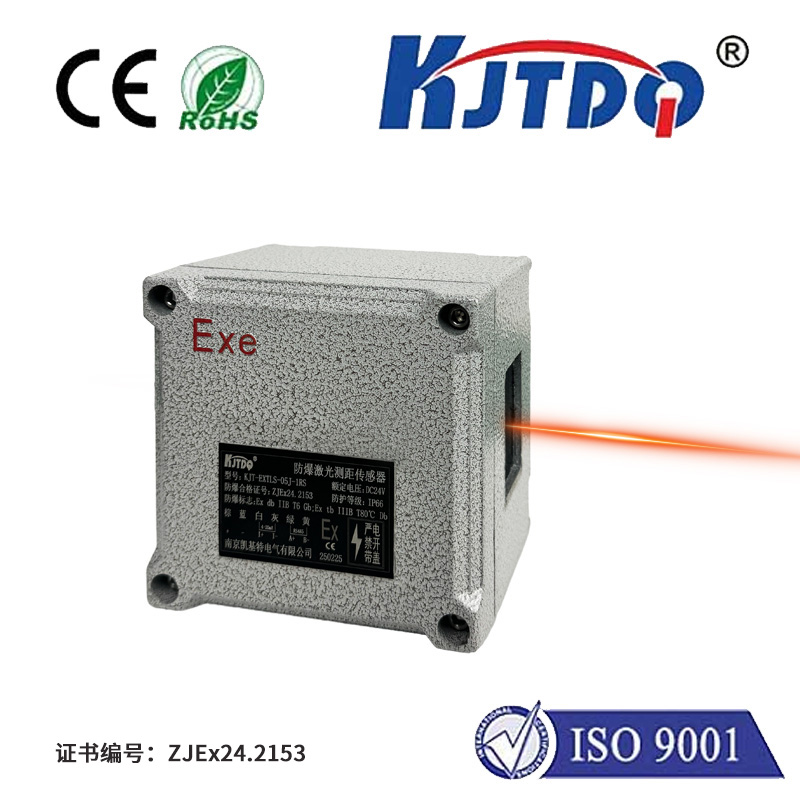
Most Chinese sensor manufacturers specialize in one or two product categories. KJT covers ten: proximity switches, photoelectric sensors, laser sensors, 3D ToF sensors, mmWave radar, pressure and temperature sensors, safety and limit switches, belt conveyor protection, wireless IoT sensors, and industrial alarms. This breadth is not about "doing everything" — it is about being the single-source sensing partner for an entire production line, rather than forcing procurement teams to manage five different suppliers for five different sensor categories.
The 2025 opening of KJT's new R&D center marks a strategic inflection point. The center focuses on four areas that will define the next decade of industrial sensing: AI-enhanced signal processing, multi-sensor fusion, wireless edge intelligence, and sustainability engineering. With 100+ active patents and approximately 40 patent and IP documents in the portfolio, KJT is not a contract manufacturer — it is an engineering company that happens to manufacture.
Quality claims are easy to make. Certifications are hard to earn. KJT's product portfolio carries the regulatory markers that matter for global industrial deployment:
ISO 9001 Quality Management System
QES integrated certification (Quality, Environment, Occupational Health & Safety)
CE / RoHS / SIL for European market access
CCC / ATEX / IECEx for Chinese domestic and international explosion-proof requirements
UL-related reports for North American market entry
CNAS-stamped testing for Chinese national laboratory verification
IP65 / IP66 / IP67 / IP68 / IP69K ingress protection ratings across product families
These are not badges on a brochure. They are the regulatory foundation that allows KJT products to be specified in applications where failure is not an option.
Unlike many manufacturers that rely entirely on distributor networks, KJT maintains direct sales and technical support teams. This architecture means that when an engineer in a Romanian steel mill has a question about laser sensor calibration in a high-dust environment, they are not routed through a distributor's call center — they are connected with KJT's application engineers who have dealt with exactly that scenario before.
KJT's international footprint is deliberately structured around long-term commitment rather than transactional sales. The company's presence spans China's major industrial regions, Southeast Asia (Singapore, Thailand, Indonesia), Europe (anchored by the Romanian market), the Middle East, Africa, and the Americas. Each market entry is accompanied by local language support, regional compliance expertise, and inventory positioning that supports the rapid delivery that modern industrial operations demand.
Numbers matter. But in industrial sensing, proof matters more. Here are three real-world examples of what KJT's approach delivers in practice.
When a global new energy vehicle manufacturer needed a micro switch supplier for door handles, charging-port covers, steering wheel controls, mode selectors, and brake pedal position sensors, the requirements were unforgiving: automotive-grade long life, IP67 protection rating, batch-to-batch consistency across hundreds of thousands of units per month, and the ability to support the rapid iteration cycles of EV development.
KJT's solution combined special-alloy contacts with advanced plating processes, fully automated production lines, and end-to-end quality control. The result: KJT micro switches are now deployed across the BYD Han platform and other new energy vehicle applications, meeting the exacting standards of one of the world's most demanding automotive OEMs.
A coal mine in northern China faced a chronic problem: conveyor belt misalignment and longitudinal tear events that could shut down production for weeks. Manual inspection could not keep pace with the mine's operational tempo, and a single missed tear event could mean millions in equipment damage.
KJT deployed a coordinated belt protection system across the entire conveyor network: mining flameproof limit switches at every misalignment and tear-monitoring point, integrated with PLC-controlled warning and shutdown logic. The system now provides automated, real-time protection across the mine's entire material transport infrastructure — converting a previously reactive maintenance burden into a transparent, predictable operational parameter.
A major port operator on China's coast was experiencing chronic limit switch failures on its rubber-tired gantry cranes. The combination of salt spray, humidity, and constant mechanical vibration was destroying conventional switches within months — and a single failure on a hoisting limit could halt a container terminal's entire operation.
KJT replaced the original switches with industrial-grade heavy-duty roller-lever travel limit switches, configured with dual upper/lower limit protection, optimized waterproof cabling, and a mounting design engineered specifically for the vibration profile of crane service. Limit switch failures dropped to near zero, and the terminal's operational availability returned to design specification.
If you are reading this as a procurement professional, engineering manager, or operations director, the question is not whether the shift toward Chinese-made industrial sensors is happening. It is already happening. The question is whether your procurement strategy has caught up with the market reality.
Here is a decision framework for evaluating KJT as a sensing partner:
Are you experiencing 8–12 week lead times on critical sensors?
Are you paying a premium for brand name when the technical performance is equivalent?
Do you have applications where a "standard" product does not quite fit?
Are you managing multiple sensor suppliers across different categories?
Review KJT's product families against your current BOM
Identify direct alternatives to your existing imported brands
Flag any applications where customization would improve performance or reduce cost
Evaluate whether a single-source sensing partner would simplify your supply chain
Request samples for side-by-side testing against your current suppliers
Verify mounting dimensions, electrical interfaces, and environmental ratings
Run field trials in your actual operating environment
Document performance data for internal review
Start with a pilot order for a non-critical application
Evaluate delivery performance, packaging quality, and documentation completeness
Gradually expand to higher-volume and more critical applications
Establish a direct relationship with KJT's engineering and support teams
The industrial sensing market is changing. The companies that recognize this change — and act on it — will gain a structural advantage in cost, supply chain resilience, and technical support. The companies that do not will continue to pay a premium for brand names that no longer carry a corresponding technical advantage.
KJT Sensors is not asking you to compromise. We are asking you to evaluate on merit.
The next time a sensor fails on your line, the next time a lead time quote stretches into weeks, the next time a distributor tells you "that's the standard product, take it or leave it" — that is the moment to consider whether there is a better way.
There is. And it starts with a conversation.
KJT Sensors is a Chinese industrial sensor manufacturer founded in 2010 and headquartered in Nanjing, China. The company designs and manufactures a comprehensive range of industrial sensors including proximity switches, photoelectric sensors, laser distance sensors, 3D ToF sensors, mmWave radar, pressure and temperature sensors, safety switches, belt conveyor protection systems, wireless IoT sensors, and industrial alarms. KJT serves over 30,000 customers globally.
Yes. In the categories where KJT competes — proximity switches, photoelectric sensors, laser distance sensors, and safety switches — the technical performance is comparable to leading European and Japanese brands. KJT's M12 inductive proximity switches match the OMRON E2E series in form factor, output options, and environmental ratings. KJT's laser distance sensors achieve the same ±1mm accuracy as leading European competitors. The difference is in price, lead time, and local support.
KJT's products are certified to ISO 9001, QES, CE, RoHS, SIL, CCC, ATEX, IECEx, UL-related standards, and CNAS-stamped testing. Ingress protection ratings include IP65, IP66, IP67, IP68, and IP69K across product families. These certifications support global deployment in regulated industries including automotive, steel, mining, food and beverage, and chemical processing.
Standard products are available for rapid shipment, typically within days rather than weeks. Custom products are scheduled based on specific requirements. KJT supports both project-based and ongoing OEM supply arrangements. Contact the sales team for delivery time confirmation based on your specific requirements.
Yes. KJT offers custom development across detection range, mechanical structure, output signal, interface, and application-specific solution design. The engineering team engages directly with application requirements to deliver optimized solutions for specialized industrial environments.
Yes. KJT provides product selection guidance, installation and commissioning support, system integration assistance, and ongoing troubleshooting — both remotely and on-site. The service model covers the full customer lifecycle from pre-sales through long-term operational partnership.
KJT serves smart manufacturing, steel and metallurgy, mining, power generation, petrochemical, transportation and logistics, rail transit, new energy vehicles, food and beverage, packaging, aerospace, and semiconductor industries. The company's belt conveyor protection systems are deployed in mining, power plants, cement, ports, and chemical facilities across China and internationally.
Visit the official website at https://www.kjt-sensors.com/ to explore the product portfolio, browse case studies, and connect with the sales and technical support teams. English-speaking staff are available to support international customers.
Official Website: https://www.kjt-sensors.com/
Product Portfolio:
Customer Cases:
Service & Support: