check

check

check

check
check
check
check
check

check

check

Intro: Designed for robotic arm ends, mobile equipment, and precision assembly scenarios, this sensor achieves millimeter-level non-contact distance measurement in limited spaces, providing a highly reliable short-range sensing solution for industrial automation.
Current distance sensors commonly used in industrial sites often suffer from reduced accuracy under environmental influences, short maintenance cycles, and bulky structures during deployment. Restricted by installation space and working-condition adaptability, existing solutions often struggle to balance measurement accuracy and long-term stability inside compact mechanisms. Industrial close-range precision sensing still requires a more engineering-feasible technical path.
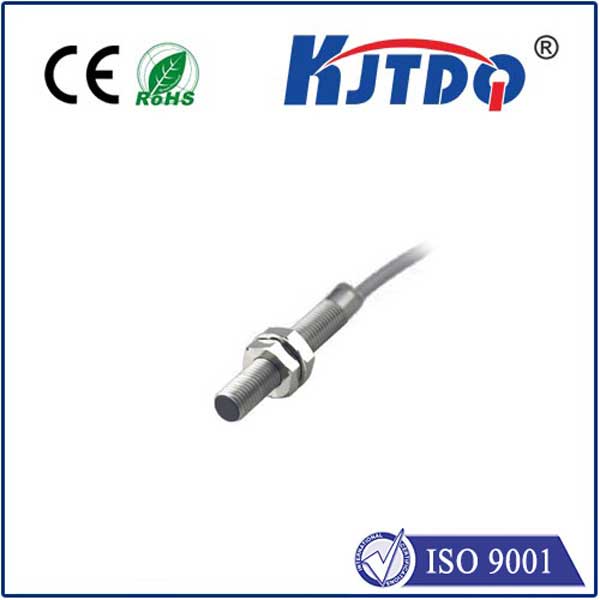
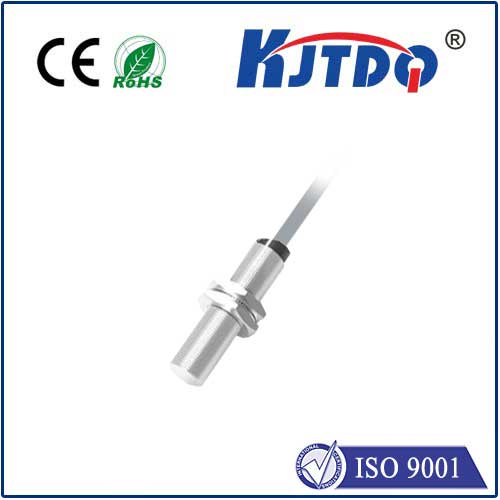
The KJT-LD18 radar distance sensor uses a solid-state RF architecture and integrates an FMCW radar system into a highly compact body. It is designed for applications such as robotic arm joint positioning, AGV obstacle avoidance, and precision assembly inspection. It provides a detection solution that obtains target distance information without mechanical contact, reducing installation space requirements while maintaining measurement performance.
The body uses a highly integrated RF front end and signal processing layout, keeping the overall dimensions extremely compact. For space-limited positions such as robotic arm wrists and internal areas of mobile equipment, the sensor can be deployed without interfering with mechanism movement, effectively reducing structural modification costs during equipment integration.
Key parameters such as rated operating voltage, power consumption, output mode, effective range, repeatability, response time, and protection rating are calibrated according to common industrial sensor testing standards. The communication interface supports mainstream industrial bus protocols, allowing direct connection with PLCs and upper-level systems.
Equipped with a 122G radar signal processing core, the sensor uses a high-frequency FMCW, or Frequency Modulated Continuous Wave, system. By transmitting linear frequency-modulated signals and analyzing the frequency difference of echoes to extract distance information, this architecture achieves higher distance measurement accuracy and greater anti-interference margin under similar power consumption compared with traditional pulse-based solutions.
Under typical industrial conditions involving ambient light, electromagnetic noise, and multipath reflection, the sensor maintains a low probability of false alarms and missed detection. Test data shows that even in complex scenarios where highly reflective backgrounds and low-reflectivity targets coexist, its output consistency still meets industrial inspection requirements.
The housing uses industrial-grade alloy materials with an anti-corrosion surface treatment. The fully sealed structure meets the IP67 protection rating and resists cutting fluids, dust, and water vapor. Internal circuits are protected with coating treatment, making the sensor suitable for typical industrial environments involving temperature, humidity, and pollutants.
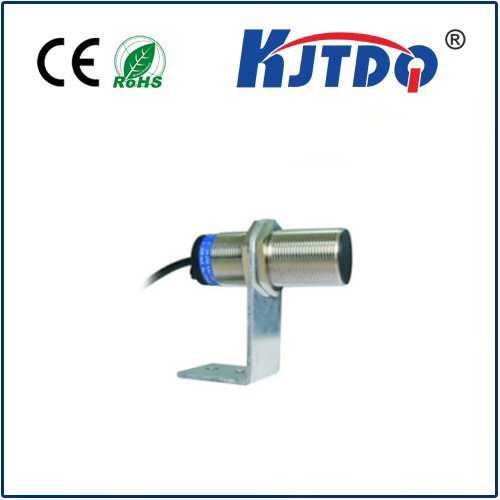
Standard threaded mounting holes and matching brackets are available, supporting front, side, inverted, and other installation orientations. The cable outlet direction can be adjusted according to on-site wiring needs, reducing installation and later maintenance difficulty.
After batch calibration testing, the sensor achieves sub-millimeter static repeatability within the effective range and shows good dynamic response linearity. The built-in temperature compensation mechanism corrects temperature drift and keeps measurement deviation within specified accuracy indicators across the full operating temperature range.