check

check

check

check
check
check
check
check

check
check
In the complex and demanding world of industrial automation, reliable data acquisition is the cornerstone of efficiency and control. Sensors act as the eyes and ears of a system, but their value is only realized when their signals can be accurately and consistently communicated to controllers like PLCs or SCADA systems. This is where the combination of RS485 communication and the Modbus protocol, embodied in devices like the RS485 Modbus proximity sensor, becomes a transformative solution. Moving beyond simple on/off signals, this integration offers a robust, scalable, and intelligent approach to sensing.
The core strength of an RS485 Modbus proximity sensor lies in its digital communication backbone. RS485 is a standard defining the electrical characteristics of a balanced voltage digital interface. It is renowned for its exceptional noise immunity, allowing signals to travel over long distances—up to 1200 meters—without significant degradation, even in electrically noisy industrial environments full of motors and drives. This makes it vastly superior to traditional analog voltage or current loops for long-range applications. Paired with this robust physical layer is the Modbus protocol. Modbus is a quintessential, open, and vendor-neutral communication language. It operates on a simple master-slave architecture, where a central master device (e.g., a PLC) can query multiple sensor "slaves" on the same network. Each sensor is assigned a unique address, enabling precise, collision-free data exchange.
So, what specific advantages does an RS485 Modbus inductive or capacitive proximity sensor offer over conventional models? First is the richness of data. Beyond just detecting the presence or absence of an object, these smart sensors can transmit a wealth of information digitally. This includes not only the switch status but also diagnostic data like internal temperature, operating voltage, output current, and even calibration parameters or device health flags. This predictive maintenance capability allows operators to address potential issues before they cause downtime. Second is simplified wiring and cost reduction. Instead of running individual wires for power and signal from each sensor back to the controller, a single twisted-pair cable (often with a shield) forms a daisy-chained network connecting all sensors. This drastically reduces wiring complexity, material costs, and installation time. Third is unparalleled flexibility and scalability. Adding a new sensor to an existing network is straightforward—simply connect it to the bus and assign a unique address. The system can easily scale to monitor dozens or even hundreds of sensing points from a single communication port on the controller.
Typical applications for these sensors are found anywhere robust, networked sensing is required. In automated material handling, they monitor package positions on conveyors, pallet presence, and robotic arm end-effector status. In assembly lines, they verify component placement and tool positioning. Within large machinery, they provide critical feedback on door positions, safety guard closures, and actuator end-stops. The ability to daisy-chain sensors along a production line with one cable run is a significant logistical and financial benefit.
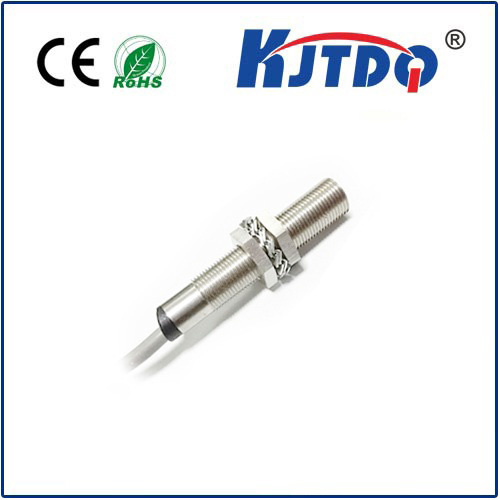
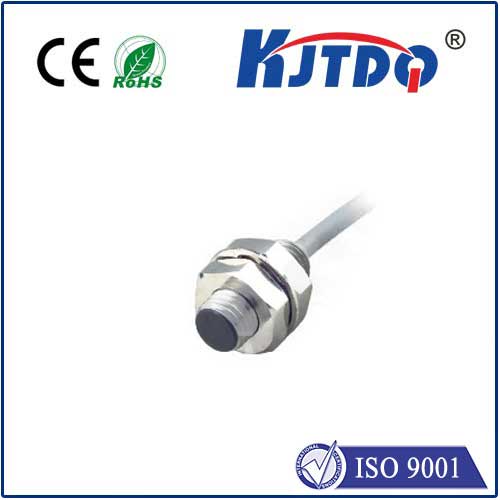
When selecting an RS485 Modbus proximity sensor, several key specifications demand attention. The sensing range and type (inductive for metals, capacitive for non-metals) must match the target material. The housing material, typically nickel-plated brass or stainless steel, should suit the environmental conditions (e.g., washdown, chemicals). The IP rating (Ingress Protection) indicates resilience against dust and water; a rating of IP67 is common for harsh industrial floors. Crucially, verify the supported Modbus variant (usually RTU over RS485) and the available register map to ensure the required data points (status, diagnostics, etc.) are accessible. Finally, ensure compatibility with the existing master device's software and communication settings.
Implementing these sensors involves a few critical steps. Proper network termination with resistors at both ends of the bus is essential to prevent signal reflections. Correct addressing of each sensor, following the device manual, is mandatory to avoid communication conflicts. Using shielded, twisted-pair cable and grounding the shield at one point helps maintain signal integrity. Most manufacturers provide configuration software or simple command sets to adjust parameters like response time or hysteresis.
In conclusion, the RS485 Modbus proximity sensor represents a significant evolution in industrial sensing technology. It transcends the limitations of basic discrete sensors by offering a networked, data-rich, and highly reliable solution. By leveraging the proven durability of RS485 and the universal compatibility of Modbus, it simplifies system architecture, reduces lifecycle costs, and unlocks valuable diagnostic insights. For engineers designing new systems or upgrading existing ones for greater intelligence and connectivity, specifying RS485 Modbus-enabled proximity sensors is a strategic decision that enhances operational visibility, reliability, and future-proofing in an increasingly data-driven industrial landscape.