check

check

check

check
check
check
check
check

check

check
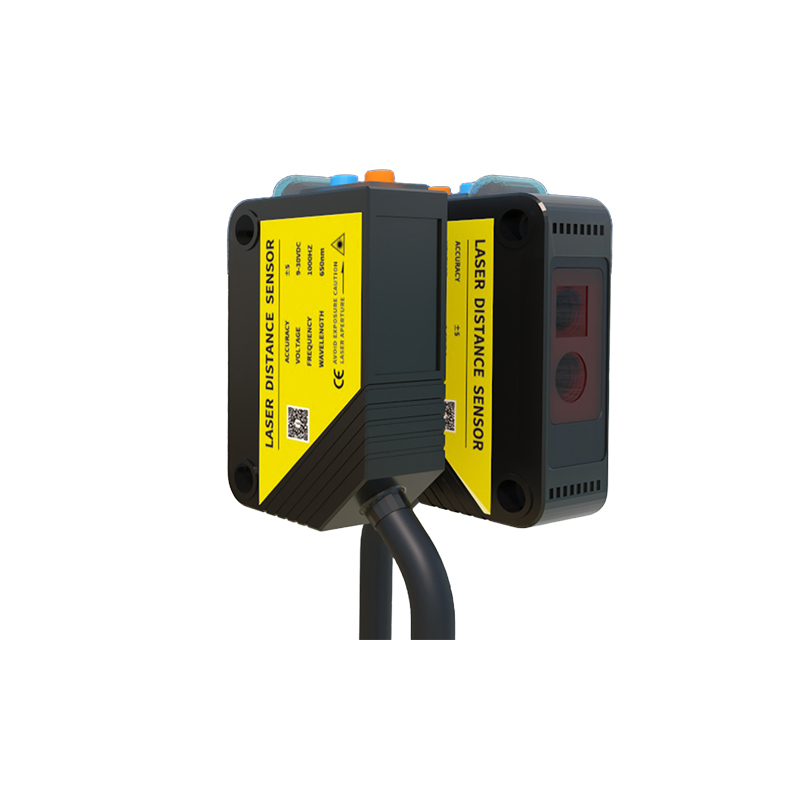
In the rapidly evolving landscape of sensing technology, the single-point Time-of-Flight (TOF) rangefinder sensor stands out as a pivotal component for applications demanding accurate, non-contact distance measurement. Unlike complex array-based systems, this sensor focuses its capability on a single point, delivering exceptional performance through a straightforward yet powerful principle. By emitting a modulated light signal, typically from an infrared laser or LED, and precisely measuring the time it takes for the reflection to return, the sensor calculates distance with remarkable speed and accuracy. This fundamental operation makes it an indispensable tool across diverse industries.
The advantages of integrating a single-point TOF sensor are multifaceted. Primarily, it offers high precision and reliability in distance readings, often achieving sub-millimeter accuracy depending on the model and environmental conditions. Its fast response time, often in the microsecond range, enables real-time measurement critical for dynamic systems. Furthermore, its performance is largely immune to the target object's surface color or texture, a significant edge over traditional triangulation-based sensors. The compact form factor and relatively low power consumption of modern single-point TOF modules facilitate their integration into space-constrained and battery-operated devices, from consumer electronics to industrial machinery.
Practical applications of the single-point TOF rangefinder sensor are vast and growing. In the realm of consumer electronics, it is the technology behind the autofocus assist in smartphones and cameras, ensuring sharp images by quickly gauging the distance to the subject. Within industrial automation, these sensors are deployed for precise object positioning, level monitoring in tanks or silos, and as safety presence detectors on machinery. Robotics utilizes them for obstacle avoidance and navigation, allowing autonomous vehicles and drones to perceive their immediate surroundings. Even in the building sector, they find use in people counting systems, gesture recognition interfaces, and smart lighting controls that adjust based on occupancy and distance.
Selecting the right single-point TOF sensor requires careful consideration of several key parameters. The required measuring range is paramount; sensors are available for short-range (a few centimeters), medium-range (up to several meters), and long-range applications. Accuracy and resolution specifications must align with the project's tolerance needs. The update rate, or how frequently the sensor can take a new measurement, is crucial for high-speed processes. Environmental factors such as ambient light immunity, operational temperature range, and resistance to dust or moisture should also be evaluated to ensure stable performance in the intended setting. Interface options, like I2C, UART, or analog output, determine how easily the sensor communicates with the host microcontroller or processor.
Looking ahead, the trajectory for single-point TOF rangefinder sensors points toward even greater miniaturization, enhanced accuracy over longer distances, and reduced power consumption. Integration with smarter onboard processing capabilities will allow for more sophisticated data filtering and direct output of processed information. As the Internet of Things (IoT) and Industry 4.0 continue to expand, the demand for robust, accurate, and cost-effective distance sensing solutions will only intensify. The single-point TOF sensor, with its blend of simplicity, performance, and versatility, is strategically positioned to meet this demand, acting as a fundamental building block for the next generation of intelligent systems. Its role in enabling precise spatial awareness will continue to be a critical factor in innovation across automated manufacturing, smart infrastructure, and personal technology.