check

check

check

check
check
check
check
check

check

check
In today's fast-paced technological landscape, the demand for accurate, reliable, and rapid distance measurement is paramount across numerous industries. From autonomous vehicles navigating complex environments to construction professionals ensuring structural integrity, the need for precision is non-negotiable. At the heart of many advanced systems lies a critical component: the high-performance laser rangefinder sensor. This sophisticated device has evolved far beyond simple distance measurement, becoming a cornerstone of modern automation, safety, and efficiency.
The fundamental principle behind a laser rangefinder sensor is LiDAR (Light Detection and Ranging). It emits a focused pulse of laser light towards a target and precisely measures the time it takes for the reflection to return. By calculating this time-of-flight, the sensor determines the distance with exceptional accuracy. However, not all sensors are created equal. A high-performance variant distinguishes itself through a combination of advanced features designed to operate in challenging real-world conditions.
Key attributes define a top-tier laser rangefinder sensor. First is unparalleled measurement accuracy and resolution, often down to the millimeter level, even over long ranges. This is crucial for applications like aerial surveying or industrial robotics where minor errors can have significant consequences. Second is a high measurement speed or update rate, enabling real-time data capture for dynamic systems such as drone obstacle avoidance or high-speed manufacturing lines. Third is exceptional range capability, allowing measurement over distances from a few centimeters to several kilometers, depending on the model and target reflectivity.
Robustness is another critical factor. High-performance sensors are engineered to withstand environmental stressors like dust, moisture, vibration, and extreme temperatures. This durability ensures consistent operation on a construction site, within an agricultural vehicle, or integrated into outdoor security systems. Furthermore, advanced models incorporate intelligent signal processing to filter out noise, distinguish between multiple targets, and maintain accuracy in varying light conditions, from bright sunlight to complete darkness.
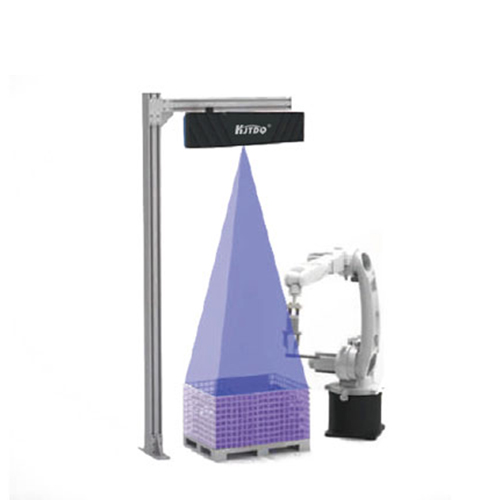
The applications for this technology are vast and growing. In industrial automation, these sensors guide robotic arms, control material handling, and perform precise quality inspections. The automotive sector relies on them for adaptive cruise control, collision avoidance, and the development of self-driving car perception systems. In forestry and agriculture, they map terrain, measure tree volume, and enable precision planting. Surveyors and architects use them for rapid, contactless measurements of buildings and land plots, significantly improving project workflows.
Choosing the right high-performance laser rangefinder sensor requires careful consideration of the specific application's needs. Factors such as the required measurement range, desired accuracy, necessary sampling speed, environmental conditions, and interface compatibility (e.g., USB, Ethernet, CAN bus) all play a decisive role. Integration support, including software development kits (SDKs) and technical documentation, is also vital for seamless implementation into larger systems.
Looking ahead, the trajectory for laser rangefinder sensor technology points toward even greater miniaturization, reduced power consumption, and enhanced data fusion capabilities. The integration of artificial intelligence for real-time object classification and scenario analysis based on distance data is already on the horizon. These advancements will unlock new possibilities in smart city infrastructure, advanced human-machine interfaces, and next-generation logistics.
Ultimately, the value of a high-performance laser rangefinder sensor is measured by its ability to deliver trustworthy data consistently. It transforms abstract distances into actionable digital information, driving efficiency, enhancing safety, and enabling innovations that were once considered futuristic. As industries continue to push the boundaries of what's possible, the role of this precise and robust sensing technology will only become more central, acting as the reliable eyes for machines and systems that shape our world.