check

check

check

check
check
check
check
check

check

check
In the rapidly evolving landscape of distance measurement and 3D sensing, Time-of-Flight (TOF) laser rangefinder sensors have emerged as a cornerstone technology. Unlike traditional methods, these sensors offer unparalleled precision, speed, and reliability for a vast array of applications. This guide delves into the core principles of TOF technology and explores its transformative impact across various industries.
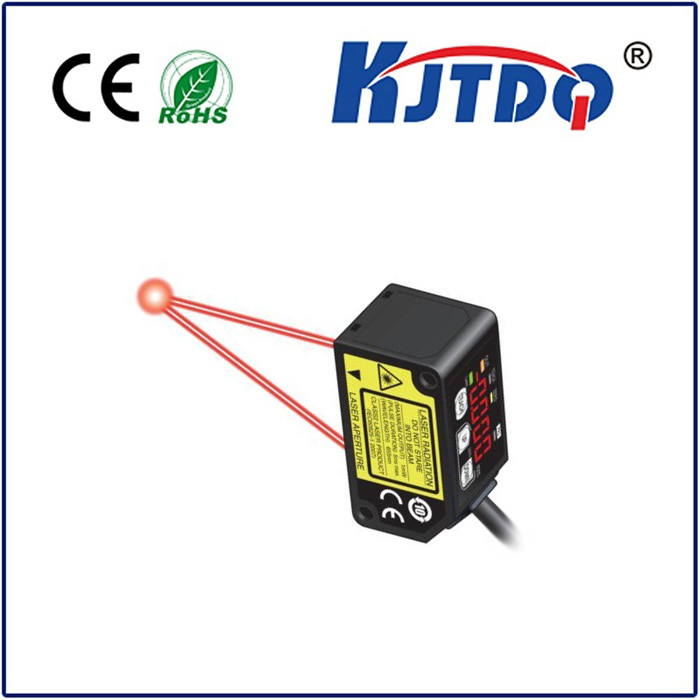
At its heart, a TOF laser rangefinder sensor operates on a simple yet powerful principle: it measures the time it takes for a pulse of laser light to travel to a target and reflect back to the sensor. By knowing the speed of light (a constant), the sensor's internal processor can calculate the distance to the object with extreme accuracy. Modern TOF sensors emit modulated, eye-safe infrared laser beams and use sophisticated CMOS sensors to detect the returning signal's phase shift, enabling sub-millimeter precision even over several meters.
The advantages of this technology are manifold. Firstly, it provides direct, absolute distance measurement without the need for physical contact, making it ideal for delicate or hazardous environments. Secondly, its measurement speed is exceptionally high, allowing for real-time data acquisition critical for dynamic systems. Furthermore, TOF sensors are largely immune to ambient light interference and target surface characteristics, ensuring consistent performance whether measuring a dark, matte surface or a bright, reflective one.
The practical applications of TOF laser rangefinder sensors are vast and growing. In industrial automation, they are indispensable for robotics, enabling precise bin-picking, obstacle avoidance, and assembly line monitoring. They ensure robotic arms move with exact spatial awareness. In the realm of autonomous vehicles and Advanced Driver-Assistance Systems (ADAS), these sensors contribute to object detection, pedestrian safety, and low-speed navigation by creating detailed depth maps of the vehicle's surroundings.
Beyond mobility, TOF technology is revolutionizing consumer electronics. It is the key component behind the facial recognition systems in modern smartphones, providing secure and fast authentication. In augmented and virtual reality (AR/VR), TOF sensors map physical environments to seamlessly blend digital content with the real world, enhancing user immersion. Additionally, they are found in smart home devices for gesture control, occupancy sensing, and even in vacuum robots for efficient room mapping and navigation.
The logistics and surveying sectors also benefit tremendously. TOF sensors enable rapid volume measurement in warehouses, automate forklift guidance, and are integrated into handheld devices for construction site measurements and forestry management, replacing cumbersome tape measures and traditional theodolites with instant, digital accuracy.
When selecting a TOF laser rangefinder sensor for a project, several key specifications must be considered. The measurement range defines its operational distance, while accuracy and resolution determine the fineness of the data. The update rate, or measurement frequency, is crucial for tracking moving objects. Environmental ratings for dust and water resistance (like IP ratings) are vital for harsh conditions, and the physical form factor must align with the design constraints of the final product.
Looking ahead, the future of TOF sensors points toward higher integration, reduced power consumption, and lower costs. We can expect sensors with even longer ranges, better performance in direct sunlight, and the fusion of TOF data with other sensing modalities like RGB cameras and inertial measurement units (IMUs) to create richer environmental models. As the Internet of Things (IoT) and Industry 4.0 expand, the demand for robust, intelligent distance sensing will only solidify the position of TOF laser rangefinder sensors as a fundamental enabling technology.