check

check

check

check
check
check
check
check

check

check
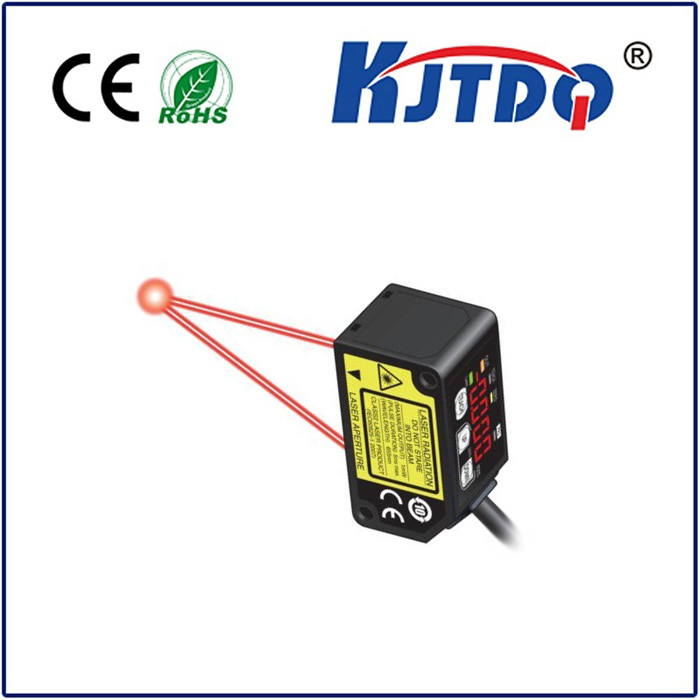
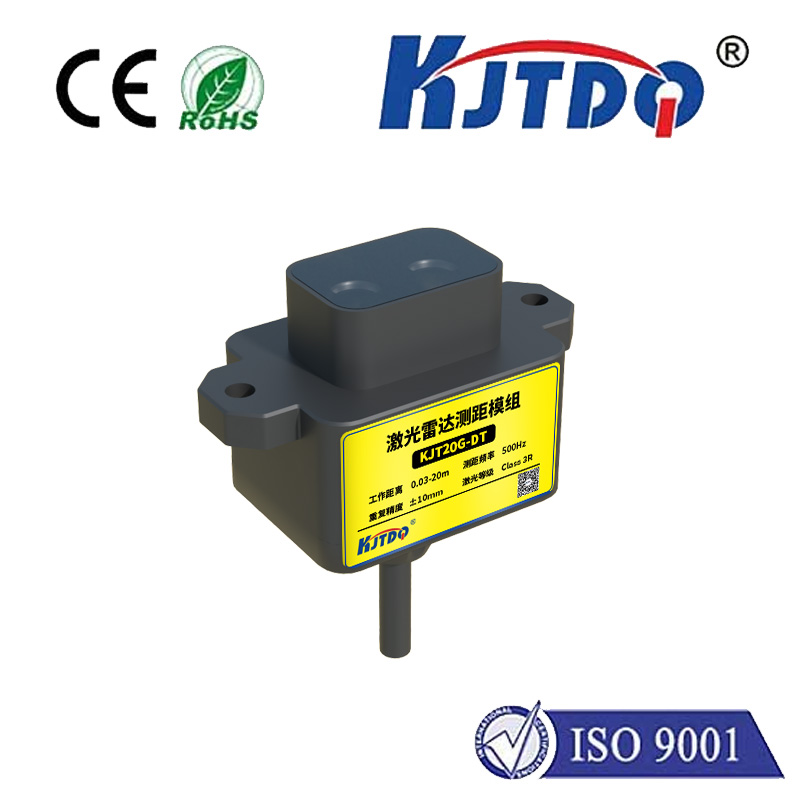
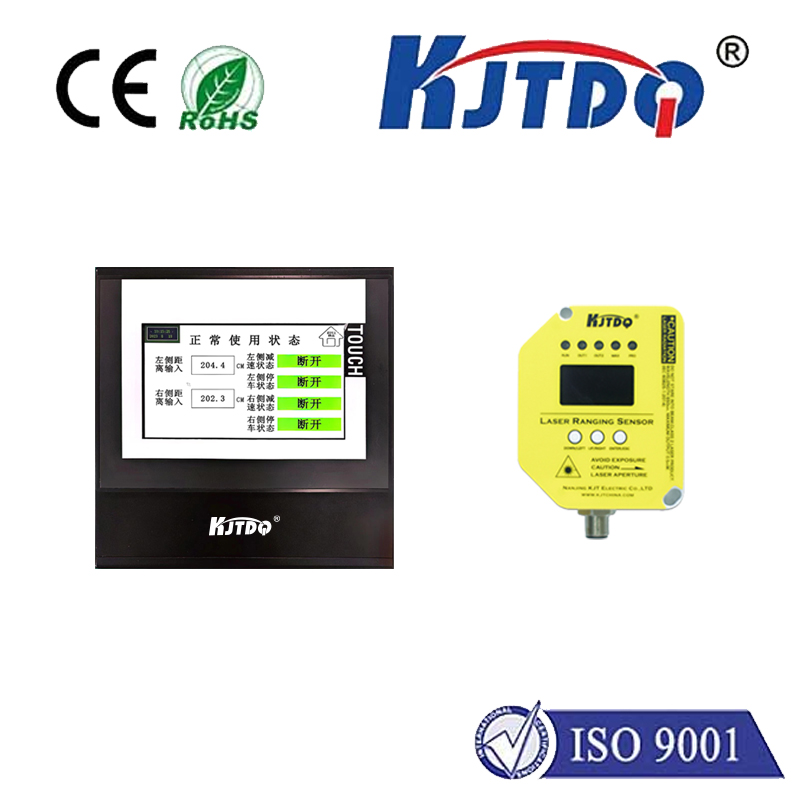
In the rapidly evolving landscape of industrial automation and quality control, precision is not just a goal; it's a fundamental requirement. At the heart of this demand for accuracy lies a critical component: the Domestic Laser Displacement Sensor. This technology, now matured and refined through significant domestic innovation, is revolutionizing how industries measure, inspect, and ensure quality with unparalleled reliability and cost-effectiveness.
Unlike traditional contact measurement tools that can wear down or distort delicate surfaces, laser displacement sensors operate on a non-contact principle. They project a focused laser beam onto a target object. The sensor then precisely calculates the distance to the object by analyzing the position of the reflected light spot on its internal high-speed CMOS or PSD detector. This method allows for instantaneous, micron-level measurements without ever touching the product, making it ideal for applications involving soft, hot, moving, or easily deformable materials.
The advent of high-performance Domestic Laser Displacement Sensors marks a significant shift. Early adoption often relied on imported units, which came with higher costs, longer lead times for procurement and servicing, and sometimes less tailored support. Today's domestic manufacturers have closed the technological gap, offering sensors that rival international brands in key performance metrics such as measurement resolution, linearity, sampling speed, and long-term stability. This domestic progress empowers a wider range of enterprises, from burgeoning startups to established manufacturing giants, to integrate advanced metrology into their processes without straining budgets.
The applications for these precise tools are vast and varied. In the automotive sector, they are indispensable for measuring panel gaps, inspecting weld seams, and verifying the dimensions of critical engine components with speed and repeatability that human inspectors cannot match. Within the electronics industry, these sensors ensure the precise coplanarity of chip pins, measure the thickness of circuit boards, and verify the placement of miniature surface-mount devices. Furthermore, in fields like robotics, they provide essential feedback for precise positioning and guidance, enabling robots to perform complex assembly tasks. Even in renewable energy, they are used to inspect solar panels and wind turbine blades.
Choosing a Domestic Laser Displacement Sensor offers distinct advantages beyond competitive pricing. It ensures easier access to technical support, faster delivery of replacement parts, and firmware or software updates that are often more attuned to local market needs and standards. The reduced logistical chain also contributes to shorter downtime in case of maintenance, a critical factor for continuous production lines. Manufacturers are increasingly offering robust sensors with IP67 ratings for harsh environments, resistant to dust, oil, and water spray, ensuring durability on the factory floor.
Implementing this technology effectively requires consideration of several factors. The measurement range, resolution, and spot size must be matched to the specific task. The sensor's response speed must be capable of keeping up with high-speed production lines. Environmental conditions like ambient light, the color and reflectivity of the target material (often compensated by advanced models with automatic teaching functions), and vibrations must all be accounted for during installation and calibration.
As Industry 4.0 and smart manufacturing initiatives gain momentum, the role of the Domestic Laser Displacement Sensor becomes even more central. These sensors are no longer isolated measurement devices; they are integral data-generating nodes. They feed real-time dimensional data directly into networked systems and Manufacturing Execution Systems (MES), enabling predictive analytics, real-time process adjustment, and comprehensive digital traceability for every produced part. This seamless integration is key to building the agile, data-driven factories of the future.
In conclusion, the modern Domestic Laser Displacement Sensor stands as a testament to significant engineering achievement. It provides a powerful, accessible, and reliable solution for non-contact precision measurement. By delivering exceptional accuracy, robustness, and seamless integration capabilities, it is not merely a tool but a strategic asset. It empowers industries to enhance product quality, optimize production efficiency, reduce waste, and ultimately strengthen their competitive edge in the global market. For any operation where precision matters, investing in this advanced domestic technology is a step toward a more controlled, efficient, and intelligent manufacturing paradigm.