check

check

check

check

check

check
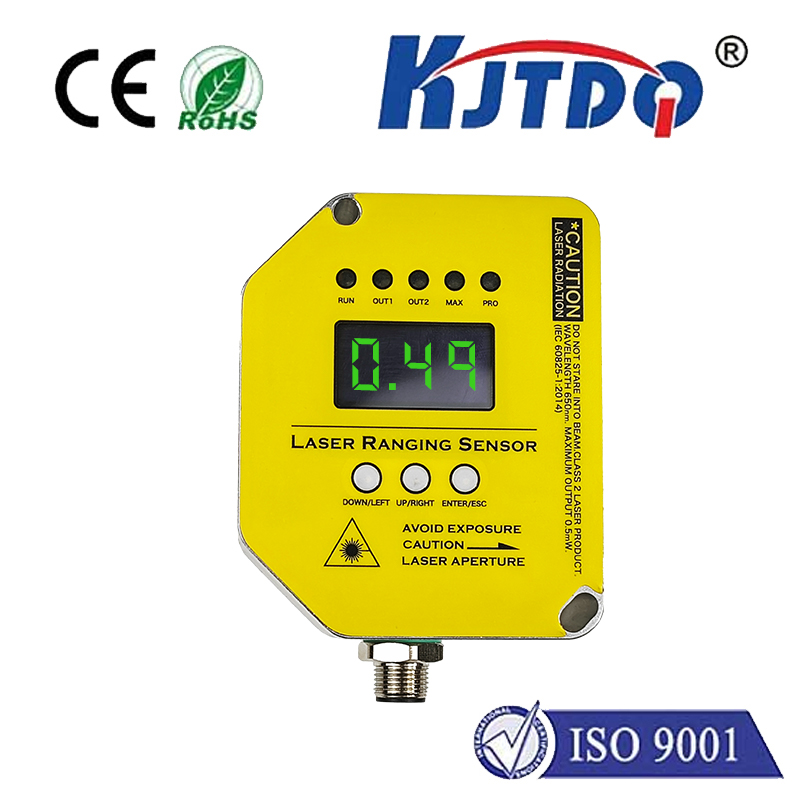
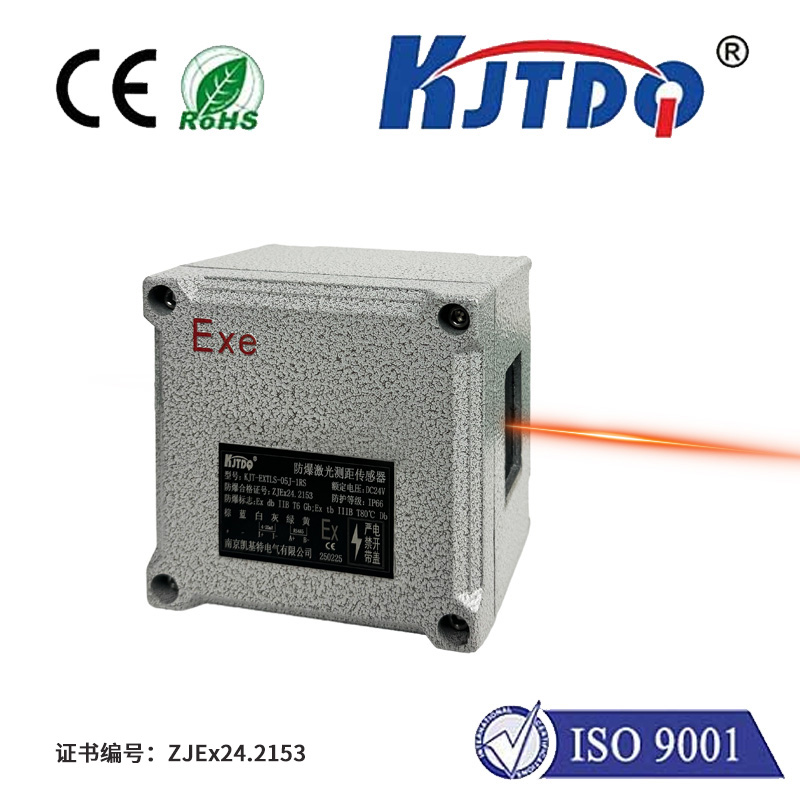
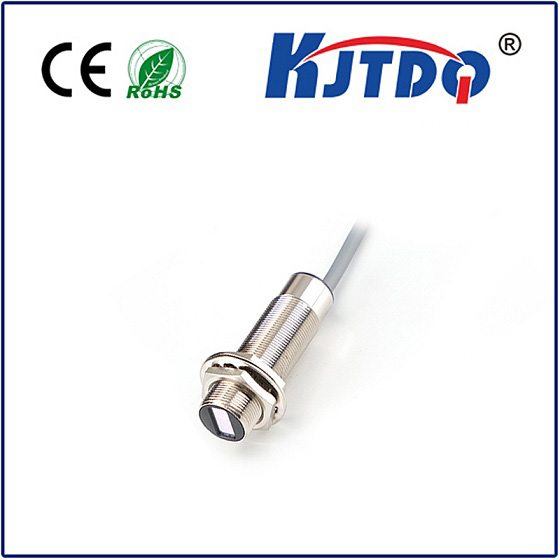
In the realm of precision measurement and spatial awareness, the evolution of sensor technology has been nothing short of revolutionary. Among the frontrunners in this technological race is the Laser Rangefinder Sensor, particularly those utilizing Time-of-Flight (TOF) principles. This sophisticated technology is rapidly becoming the cornerstone for applications demanding high accuracy, speed, and reliability, from industrial automation to consumer electronics and beyond.
At its core, a Laser Rangefinder Sensor based on TOF technology operates on a deceptively simple principle: it measures the time it takes for a laser pulse to travel from the sensor to a target object and back. By knowing the constant speed of light, the sensor can calculate the distance to the object with remarkable precision. This method stands in contrast to other techniques like triangulation or phase-shift measurement, offering distinct advantages in terms of range, accuracy over longer distances, and immunity to ambient light interference in many implementations.
The integration of TOF technology into laser rangefinder sensors has unlocked new levels of performance. Modern TOF sensors can achieve millimeter-level accuracy over distances ranging from a few centimeters to several hundred meters, depending on their design and laser class. They accomplish this through advanced components, including high-speed pulsed laser diodes, sensitive single-photon avalanche diode (SPAD) receivers, and sophisticated timing circuitry capable of resolving picosecond differences. This allows for not just single-point distance measurement but also the creation of detailed 3D point clouds when deployed in array configurations, enabling depth mapping and object recognition.
The practical applications of Laser Rangefinder TOF Sensors are vast and growing. In industrial settings, they are indispensable for robotics, providing precise guidance for automated guided vehicles (AGVs) and robotic arms in assembly and logistics. They enable non-contact measurement in quality control, monitoring dimensions and positions on fast-moving production lines. In the construction and surveying sectors, these sensors facilitate accurate land measurement, building information modeling (BIM), and volume calculations. The automotive industry leverages them as a key component in Advanced Driver-Assistance Systems (ADAS) and the development of autonomous vehicles, where they help detect obstacles, pedestrians, and other vehicles.
Beyond heavy industry, TOF laser sensors are permeating consumer markets. They are the enabling technology behind the facial recognition systems in modern smartphones, providing secure and fast authentication by mapping the contours of a user's face. In smart home devices, they enhance user experiences; for instance, robot vacuums use them to navigate and map rooms efficiently, while smart TVs might employ them for gesture control. Furthermore, they are finding roles in healthcare for patient monitoring and in agriculture for crop monitoring and yield estimation.
The advantages of using a TOF-based Laser Rangefinder Sensor are compelling. They offer high measurement speed, often capable of thousands of measurements per second, which is crucial for dynamic applications. Their accuracy remains consistent over a wide range of distances and under various surface conditions, though highly reflective or absorbent materials can pose challenges. Modern designs also focus on miniaturization and power efficiency, making them suitable for portable and battery-operated devices. Additionally, as a direct time-measurement system, the data processing can be less computationally intensive compared to some other 3D sensing methods.
However, selecting and implementing the right TOF laser sensor requires careful consideration. Factors such as the required measurement range, accuracy, field of view, data output rate, and environmental conditions (like outdoor use with sunlight) must be evaluated. The choice between a single-point sensor and a multi-pixel TOF camera depends on whether simple distance data or full 3D perception is needed. System integrators must also consider aspects like eye safety (laser class), power consumption, and interface compatibility.
Looking ahead, the future of Laser Rangefinder TOF Sensors is bright, driven by ongoing advancements in semiconductor laser technology, detector sensitivity, and signal processing algorithms. Trends point towards even smaller form factors, lower costs, higher resolution, and improved performance in challenging environments. This will undoubtedly open doors to novel applications in augmented reality (AR), virtual reality (VR), advanced human-machine interfaces, and the ever-expanding Internet of Things (IoT).
In conclusion, the Laser Rangefinder Sensor utilizing Time-of-Flight technology represents a significant leap forward in precision sensing. Its ability to deliver fast, accurate, and reliable distance data in a compact and increasingly affordable package is transforming how machines perceive and interact with the physical world. As development continues, these sensors will become even more pervasive, acting as the fundamental eyes for a smarter, more automated future across virtually every sector of technology and industry.