check

check

check

check

check

check
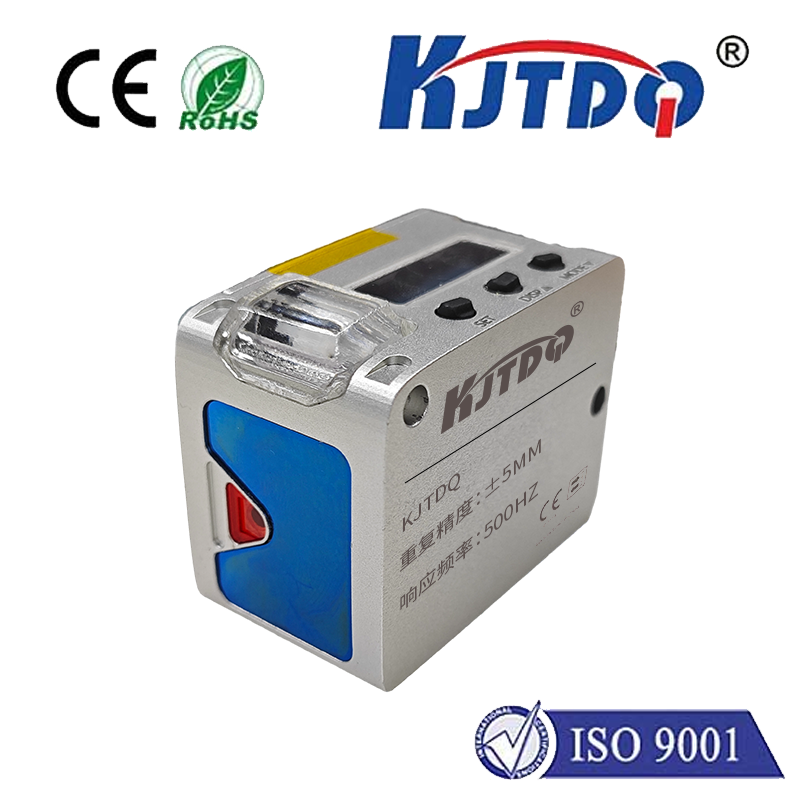
In the rapidly evolving landscape of industrial automation, consumer electronics, and medical devices, the demand for components that offer high performance without compromising on size has never been greater. Enter the ultra-small laser sensor, a technological marvel that is quietly powering a new wave of innovation. These miniature sensors, often no larger than a fingernail, are redefining the boundaries of precision measurement, enabling capabilities once thought impossible in such compact form factors.
The core principle behind an ultra-small laser sensor involves emitting a focused beam of light to detect the presence, distance, displacement, or profile of an object. Unlike traditional optical sensors, their miniaturized design leverages advanced micro-optics and semiconductor laser diodes. This allows for incredibly precise measurements—often down to the micron level—while being integrated into spaces where conventional sensors simply cannot fit. The result is a device that delivers exceptional accuracy, high-speed response, and remarkable reliability, all within an exceptionally small package.
The applications for these sensors are vast and transformative. In the manufacturing sector, they are integral to robotic arms and automated assembly lines, performing critical tasks like part alignment, thickness inspection, and defect detection with unparalleled speed and precision. Their small size allows them to be mounted directly on robotic end-effectors or within tight machinery housings, optimizing production efficiency and minimizing downtime.
Consumer electronics is another domain experiencing a significant impact. The latest smartphones and tablets utilize ultra-small laser sensors for autofocus systems in cameras, enabling faster and sharper image capture. They also play a crucial role in emerging technologies like facial recognition for device security and in gesture-sensing interfaces, creating more intuitive user experiences. Wearable devices, such as smartwatches and fitness trackers, employ these sensors for health monitoring features like heart rate tracking and blood oxygen level estimation, all thanks to their non-invasive, compact design.
The medical field benefits profoundly from this miniaturization. Ultra-small laser sensors are at the heart of many minimally invasive surgical tools and diagnostic equipment. They can guide catheters with extreme precision, measure biological tissues in real-time during procedures, and enhance the imaging capabilities of endoscopes. This leads to safer, less invasive surgeries and more accurate diagnoses, ultimately improving patient outcomes.
Furthermore, the automotive industry is adopting these sensors for advanced driver-assistance systems (ADAS). They contribute to functions like parking assistance, blind-spot detection, and collision avoidance by providing precise distance measurements to nearby objects. Their robustness and small size make them ideal for the harsh environments and space-constrained areas within modern vehicles.
The development of the ultra-small laser sensor is not without its challenges. Engineers must continuously balance performance parameters such as measurement range, accuracy, power consumption, and thermal management within a shrinking physical space. However, ongoing advancements in materials science, photonics integration, and signal processing algorithms are steadily overcoming these hurdles, pushing the limits of what these tiny powerhouses can achieve.
Looking ahead, the integration of ultra-small laser sensors with the Internet of Things (IoT) and artificial intelligence (AI) promises even smarter systems. Networks of these sensors can provide rich, real-time spatial data, enabling predictive maintenance in factories, creating detailed 3D maps for autonomous robots, and powering next-generation augmented reality applications. Their role as a fundamental enabler of precision in the digital and physical worlds is set to expand exponentially.
In conclusion, the ultra-small laser sensor is far more than just a miniaturized component; it is a critical catalyst for innovation across diverse sectors. By delivering high-precision sensing in an incredibly small footprint, it unlocks new design possibilities, enhances product functionality, and drives efficiency. As technology continues to trend towards greater integration and intelligence, the importance of these versatile and powerful sensors will only continue to grow, solidifying their position as a cornerstone of modern technological advancement.