check

check

check

check

check

check
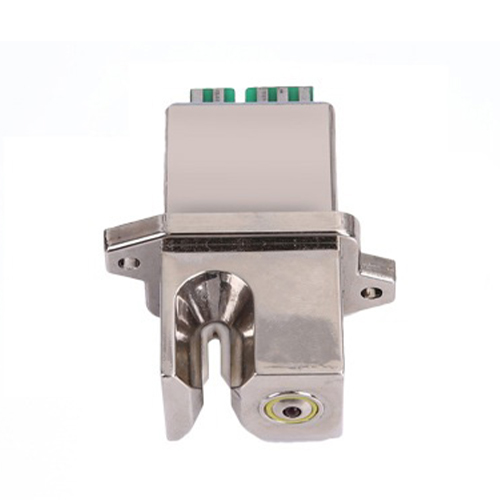
In the world of modern measurement and surveying, accuracy is not just a preference; it's a necessity. Whether you're a professional surveyor mapping a construction site, a forestry expert assessing timber, a hunter calculating a precise shot, or an outdoor enthusiast navigating challenging terrain, the ability to determine exact distances quickly and reliably is paramount. This is where the outdoor laser rangefinder sensor, often abbreviated as KJTDQ in technical specifications, becomes an indispensable tool. Unlike its indoor counterparts, this specialized device is engineered to conquer the variables of the great outdoors, delivering consistent performance where it matters most.
The core technology behind an outdoor laser rangefinder sensor is elegantly straightforward yet incredibly sophisticated. It operates on the principle of Time-of-Flight (ToF). The sensor emits a focused, invisible laser pulse towards a target. This pulse travels at the constant speed of light, reflects off the object, and returns to the sensor's receiver. A high-speed processor then calculates the distance by precisely measuring the time elapsed between the emission and the reception of the pulse. The formula is simple: Distance = (Speed of Light × Time) / 2. The "outdoor" designation signifies critical enhancements that allow this process to function flawlessly in real-world conditions.
What truly sets a premium outdoor laser rangefinder sensor apart are the features designed to combat environmental interference. Sunlight, rain, fog, and dust can scatter or absorb laser pulses, leading to inaccurate readings or complete failure. Advanced models incorporate several key technologies. First, high-powered laser diodes ensure a strong, coherent beam that can penetrate moderate atmospheric obstructions. Second, multi-echo technology is a game-changer. Instead of relying on the first return signal, which might be from a branch in front of your target, the sensor intelligently analyzes multiple return pulses. It can distinguish between the branch, the foliage behind it, and the solid tree trunk in the distance, automatically selecting and displaying the correct measurement.
Durability is non-negotiable. A quality outdoor sensor is housed in a rugged, often waterproof and dustproof casing rated to IP54 or higher. It can withstand accidental drops, extreme temperatures, and prolonged exposure to moisture. Ergonomics are also crucial; a compact, lightweight design with an intuitive button layout allows for single-handed operation, even while wearing gloves. For integration into other systems, many sensors offer versatile output options like RS232, RS485, or CAN bus, making them perfect for drones (UAVs), robotic platforms, and automated surveying equipment.
The applications are vast and growing. In construction and civil engineering, these sensors enable rapid site surveys, volume calculations for earthworks, and monitoring structural deformations. Forestry professionals use them for tree height measurement, stand density analysis, and harvest planning. In the realm of sports and recreation, golfers rely on them for precise yardages, while hunters benefit from angle-compensated ballistic calculations that account for incline. They are also vital in security and perimeter monitoring systems, providing exact intrusion detection ranges.
When selecting an outdoor laser rangefinder sensor, key specifications to evaluate include maximum range (often stated for targets with different reflectivity), accuracy (typically within ±1 meter or much better for high-end models), measurement speed, beam divergence (a narrower beam offers better target specificity), and the class of laser (Class 1 is eye-safe). The integration of Bluetooth or other wireless protocols for data logging and smartphone connectivity is becoming a standard expectation.
Ultimately, an outdoor laser rangefinder sensor is more than just a measuring device; it is a catalyst for efficiency, safety, and precision. By transforming complex distance estimation into a simple, button-press operation, it empowers professionals and hobbyists alike to make better-informed decisions. The KJTDQ series and similar advanced sensors represent the pinnacle of this technology, offering robust construction, intelligent filtering algorithms, and reliable performance that users can trust when they are miles away from the comfort of a controlled indoor environment. Investing in a capable sensor is investing in confidence for every outdoor challenge.