check

check

check
check
check
check
check
check

check

check
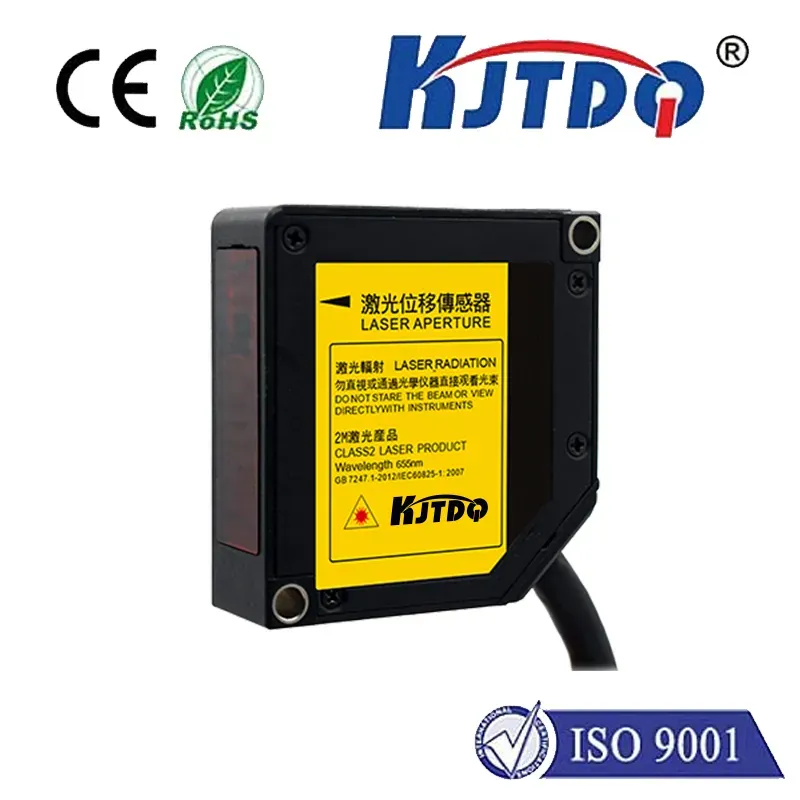
In today's fast-paced technological landscape, the demand for accurate, reliable, and non-contact distance measurement is higher than ever. Laser rangefinder sensor modules have emerged as a cornerstone technology, enabling precision across a diverse array of industries. These compact, sophisticated devices utilize laser pulses to calculate distances with remarkable accuracy, transforming how machines perceive and interact with their environment.
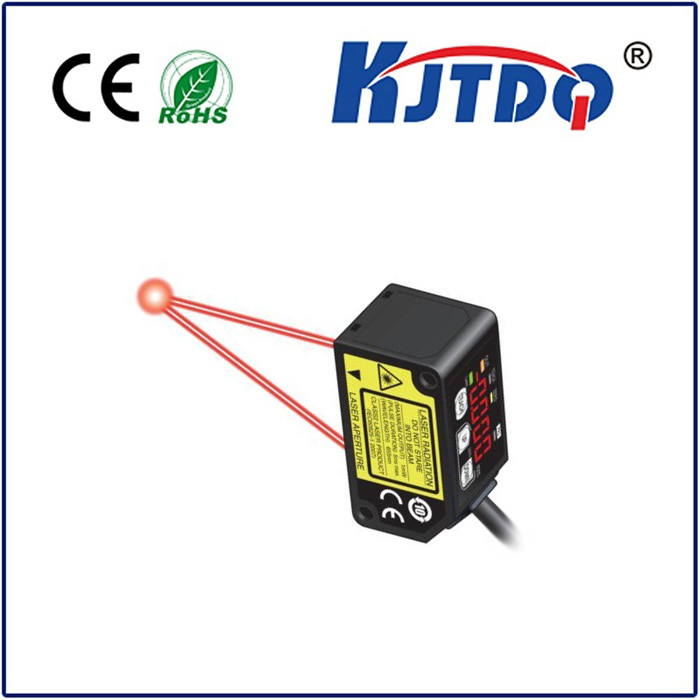
At the heart of a laser rangefinder sensor module lies the principle of time-of-flight (ToF) or phase-shift measurement. The module emits a focused laser beam towards a target. The beam reflects off the surface and returns to a receiver within the module. By precisely calculating the time delay between emission and reception, or by analyzing the phase shift of the modulated laser wave, the sensor's internal processor computes the exact distance. This process occurs in milliseconds, providing real-time data critical for dynamic applications.
The applications for these modules are vast and continually expanding. In robotics and automation, they are indispensable for navigation, obstacle avoidance, and precise positioning of robotic arms. Autonomous vehicles and drones rely on them for creating detailed 3D maps of their surroundings, ensuring safe operation. In the construction and surveying sectors, professionals use tools integrated with these modules for land measurement, volume calculations, and alignment tasks, drastically improving efficiency and reducing human error. Industrial automation leverages them for inventory management, conveyor belt monitoring, and quality control inspections where consistent, non-contact measurement is paramount.
Furthermore, the consumer electronics market has seen significant integration. From smartphone cameras that use laser autofocus for instant, sharp images to smart home devices that map room layouts, the technology is becoming ubiquitous. Even in sports and recreation, laser rangefinders provide golfers and hunters with precise distance readings to their targets.
Modern laser rangefinder sensor modules offer a compelling set of features. Key specifications include measurement range, which can vary from a few centimeters to several kilometers depending on the model and laser class. Accuracy is typically within millimeters or even sub-millimeter levels for high-end modules. Measurement speed, or the rate at which distance points can be captured, is crucial for scanning moving objects. Other important factors are the beam divergence, which affects spot size at a distance, and environmental robustness—resistance to ambient light, dust, and varying temperatures.
When selecting a laser rangefinder sensor module for a project, several considerations come into play. Clearly define the required operating range and accuracy. Consider the physical size and power consumption, especially for portable or battery-operated devices. The interface for data output, such as UART, I2C, or analog voltage, must be compatible with the host system. Finally, the operating environment dictates the need for specific ingress protection (IP) ratings or specialized filters to handle challenging conditions like bright sunlight or fog.
The evolution of these modules points toward even smaller form factors, lower power consumption, and enhanced intelligence. Future iterations may incorporate advanced signal processing directly on-chip, better multi-target discrimination, and seamless integration with other sensor types like inertial measurement units (IMUs) or cameras for sensor fusion. This will unlock new possibilities in augmented reality, advanced driver-assistance systems (ADAS), and sophisticated industrial IoT solutions.
In conclusion, laser rangefinder sensor modules are far more than simple distance-measuring tools. They are enabling technologies that drive innovation, enhance safety, and improve precision across countless fields. By providing a reliable "eye" for machines, they form a critical link in the chain of automation and intelligent system design, proving that sometimes, the most impactful components are those that help everything else see clearly.