check

check

check

check

check

check
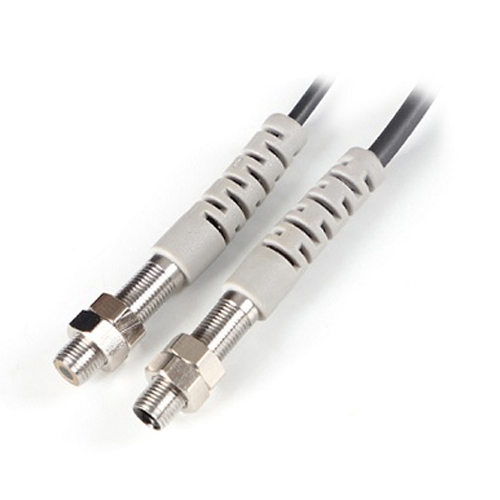
In the intricate world of industrial automation, where precision and reliability are non-negotiable, the short-range photoelectric switch stands as a silent yet indispensable sentinel. This compact device, often overlooked, plays a critical role in ensuring seamless operations, from assembly lines to packaging machinery. Unlike its long-range counterparts designed for vast distances, the short-range photoelectric switch excels in close-quarters detection, offering unparalleled accuracy for applications where minute details matter.
The core principle of a short-range photoelectric switch is elegantly simple: it emits a beam of light—typically infrared, red, or laser—and detects changes in the received light signal. When an object interrupts or reflects this beam within its specified sensing range, usually from a few millimeters up to a few hundred millimeters, the switch triggers an electrical signal. This immediate response is the heartbeat of countless automated processes. Its primary advantage lies in its ability to detect tiny, transparent, or reflective objects that might elude other sensor types, such as inductive or capacitive proximity sensors. Whether it's verifying the presence of a miniature electronic component on a circuit board, counting small pharmaceutical vials, or ensuring a label is correctly positioned on a product, the short-range photoelectric switch performs with consistent fidelity.
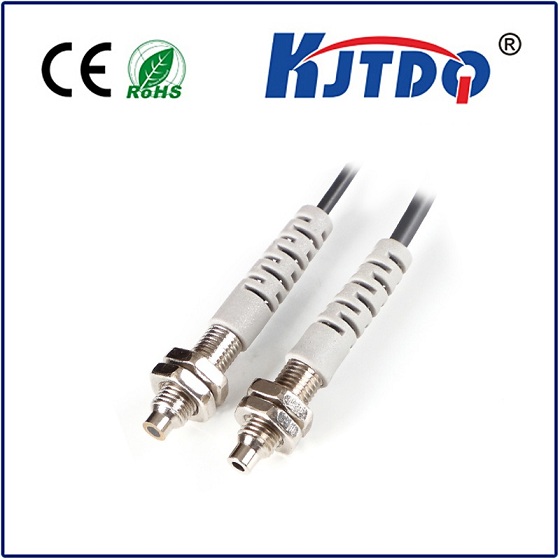
Several key technologies define modern short-range photoelectric switches. The diffuse reflective type is among the most common for short-range duties. It houses both the emitter and receiver in a single unit. The switch detects an object by measuring the light reflected directly from the target's surface. This design simplifies installation as it only requires access from one side. For even more precise short-range detection, often down to sub-millimeter levels, the through-beam model is employed. Here, the emitter and receiver are separate units facing each other. An object is detected when it breaks the light beam traveling between them. This method offers the highest reliability and is immune to the color or surface finish of the object. Lastly, the retro-reflective switch uses a specialized reflector to bounce the beam back to the receiver, providing a longer range within the short-to-medium category but with a single-sided installation benefit.
The integration of advanced features has propelled these switches to new heights of performance. Background suppression technology, for instance, allows the sensor to ignore objects beyond a set distance, focusing solely on the target in the foreground—a vital function in cluttered environments. Many models now incorporate adjustable sensing ranges via potentiometers or teach-in functions, offering remarkable flexibility. Furthermore, the development of miniaturized housings, some as small as a few cubic centimeters, allows them to be installed in extremely tight spaces without compromising on sensing power. Robust construction with high Ingress Protection (IP) ratings ensures they withstand harsh conditions involving dust, moisture, and mechanical vibration, which are commonplace in industrial settings.
The applications for short-range photoelectric sensors are vast and varied. In electronics manufacturing, they are pivotal for PCB population verification, ensuring each chip and resistor is present before soldering. In the pharmaceutical and food & beverage industries, they perform critical tasks like bottle cap alignment detection, fill-level monitoring in small containers, and precise packet counting on high-speed conveyors. Automated packaging machinery relies on them to confirm the presence of a product before sealing or to control the precise cut of wrapping film. Even in modern robotics, these switches provide essential feedback for gripper positioning and part presence confirmation during delicate pick-and-place operations.
Selecting the right short-range photoelectric switch requires careful consideration of several factors. The nature of the target object—its size, material, color, and surface texture—is paramount. The required sensing distance and the available space for installation dictate the housing size and sensing mode. Environmental conditions such as ambient light, temperature extremes, and potential contaminants must be matched with the switch's specifications. Finally, the electrical output type (e.g., NPN, PNP, analog) must be compatible with the existing control system, such as a PLC.
As Industry 4.0 continues to evolve, the humble short-range photoelectric switch is becoming smarter. Integration with IO-Link communication protocol is a growing trend, transforming these simple sensors into intelligent data points. They can now transmit not just a simple on/off signal but also diagnostic data like operating temperature, lens contamination warnings, and signal strength, enabling predictive maintenance and reducing unplanned downtime. This connectivity aligns perfectly with the demand for smarter, more responsive, and data-driven manufacturing ecosystems.
In conclusion, the short-range photoelectric switch is far more than a basic component; it is a precision tool fundamental to the accuracy, efficiency, and safety of automated systems. Its ability to deliver reliable detection in confined spaces and challenging conditions makes it an irreplaceable asset. For engineers and system integrators aiming to optimize their machinery's performance, understanding and leveraging the capabilities of these sophisticated sensors is a crucial step toward achieving flawless automation.