check

check

check

check

check

check
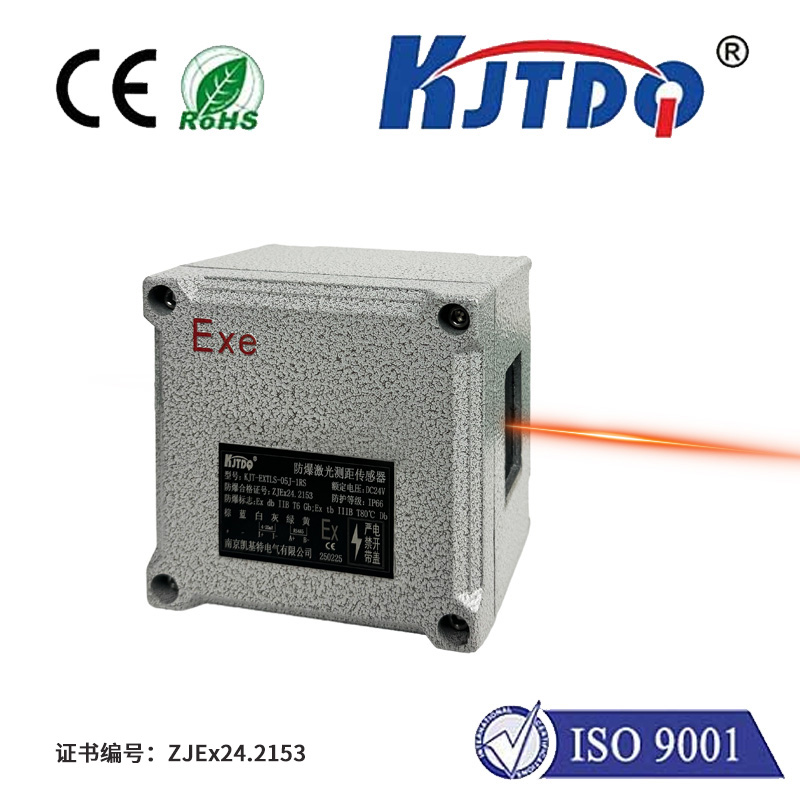
In industrial settings where flammable gases, vapors, or combustible dusts are present, safety is not just a priority—it's an absolute necessity. Traditional sensors often fall short in such hazardous conditions, risking catastrophic failures. Enter the explosion-proof laser sensor, a technological marvel designed to operate reliably where others cannot. These sensors utilize laser-based measurement principles to detect objects, distances, or levels without physical contact, eliminating sparks that could ignite volatile atmospheres.
The core of an explosion-proof laser sensor lies in its robust housing, typically constructed from materials like stainless steel or aluminum alloys that can contain any internal explosion. This enclosure prevents flames or hot gases from escaping into the surrounding environment, adhering to stringent international standards such as ATEX, IECEx, or UL. Inside, advanced laser diodes emit focused light beams, which reflect off targets and return to a receiver. By calculating the time-of-flight or phase shift, the sensor accurately determines position or presence, even in dusty or foggy conditions where visibility is poor.
Why choose a laser sensor over other types? Precision is a key advantage. Laser sensors offer high resolution and repeatability, making them ideal for applications like tank level monitoring in chemical plants or alignment tasks in mining operations. They are immune to electromagnetic interference, a common issue in industrial zones crowded with machinery. Moreover, their non-contact nature reduces wear and tear, ensuring longevity with minimal maintenance. For instance, in oil refineries, these sensors monitor pipeline integrity without direct exposure to corrosive substances, enhancing both safety and operational efficiency.
Installation and integration are straightforward. Modern explosion-proof laser sensors come with versatile mounting options and communication protocols like 4-20 mA analog outputs, IO-Link, or Ethernet/IP. This compatibility allows seamless connection to control systems, enabling real-time data logging and automated responses. In a pharmaceutical facility handling explosive solvents, sensors can trigger alarms or shut down processes if levels exceed safe thresholds, preventing potential disasters.
Despite their robustness, users must follow guidelines for optimal performance. Regular calibration checks are recommended to maintain accuracy, especially in environments with temperature fluctuations. It's also crucial to select sensors with appropriate protection ratings (e.g., IP67 for dust and water resistance) and ensure proper certification for the specific hazardous zone classification. Training personnel on safe handling and troubleshooting can further mitigate risks.
In conclusion, explosion-proof laser sensors represent a critical innovation for industries operating under perilous conditions. By combining laser precision with explosion-proof durability, they not only safeguard assets and personnel but also boost productivity through reliable, continuous monitoring. As technology evolves, we can expect even smarter sensors with enhanced connectivity and AI-driven analytics, paving the way for safer, more efficient industrial landscapes. Investing in these devices is not merely a compliance measure—it's a commitment to a secure and sustainable future.