check

check

check

check
check
check
check
check

check
check
In the intricate world of automation and robotics, where digital signals and complex algorithms often steal the spotlight, there exists a fundamental, reliable workhorse: the analog ranging sensor. This technology, often overshadowed by its digital counterparts, remains a cornerstone for applications demanding continuous, real-time distance feedback with inherent simplicity and speed. Unlike sensors that output discrete digital values, an analog ranging sensor provides a continuous voltage or current signal that is directly proportional to the distance to a target object. This direct proportionality is its defining characteristic and the source of its enduring value in numerous industrial and commercial settings.
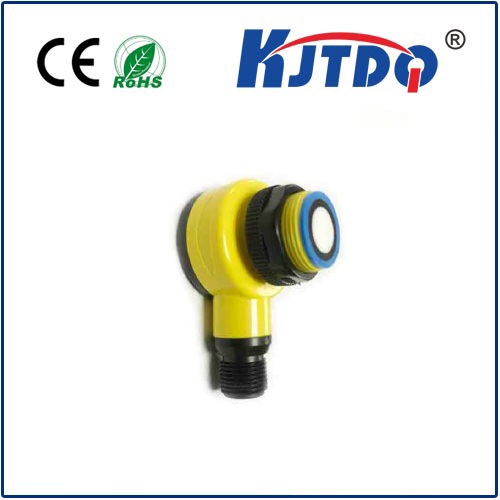
The operational principle of most analog ranging sensors is elegantly straightforward, often based on ultrasonic or infrared technologies. For instance, an ultrasonic sensor emits a high-frequency sound pulse and measures the time it takes for the echo to return. This time-of-flight data is then converted internally into a smooth, continuous analog output signal, typically ranging from 0-10V or 4-20mA. Similarly, infrared sensors may use the intensity of reflected light to gauge distance, outputting a corresponding analog value. This continuous output stream allows monitoring systems to perceive not just the presence or absence of an object, but its exact position and subtle movements within the sensor's range. There is no waiting for data packet conversion or protocol handshakes; the information is immediate and fluid.
This inherent immediacy and simplicity translate into significant practical advantages. System integration becomes remarkably straightforward. The analog signal can be directly fed into a vast array of standard industrial equipment—programmable logic controllers (PLCs), analog input modules, chart recorders, or simple meter displays—without the need for additional complex communication interfaces or specialized drivers. This reduces system cost, complexity, and potential points of failure. For tasks like controlling the precise fill level in a liquid tank, maintaining a constant gap in a rolling mill, or ensuring a robotic arm follows a contoured surface, the continuous feedback from an analog sensor allows for smooth, proportional control responses. The system can react to minute changes in distance with proportional adjustments, leading to finer control and higher quality outcomes.
Furthermore, analog ranging sensors are renowned for their robustness in electrically noisy environments. While digital signals can be susceptible to electromagnetic interference (EMI), which can corrupt data packets, a well-shielded analog signal is often more resistant to such noise. A minor interference might cause a temporary flicker in the reading rather than a complete communication breakdown or erroneous digital command. This reliability is paramount in harsh industrial settings near heavy machinery, motors, and welding equipment.
However, it is crucial to acknowledge the considerations when deploying analog technology. The signal is susceptible to degradation over long cable runs, and its accuracy can be influenced by factors like temperature fluctuations or voltage supply variations, necessitating proper calibration. The output represents a relative distance value that must be interpreted by the receiving device based on a known scale. For applications requiring absolute precision or integration into complex networked systems with numerous data points, digital sensors with built-in processing and direct communication buses (like IO-Link, CAN bus, or Ethernet) might offer advantages in diagnostics, configuration ease, and noise immunity.
Yet, the analog ranging sensor holds its ground firmly in a vast array of critical applications. It is the silent guardian ensuring consistent loop tension in textile and wire production. It provides the essential feedback for automated guided vehicles (AGVs) to maintain safe distances from obstacles. In packaging machinery, it ensures products are correctly positioned for sealing or labeling. From simple object detection on conveyor belts to sophisticated thickness measurement in manufacturing, the analog output provides a reliable, cost-effective, and fast solution.
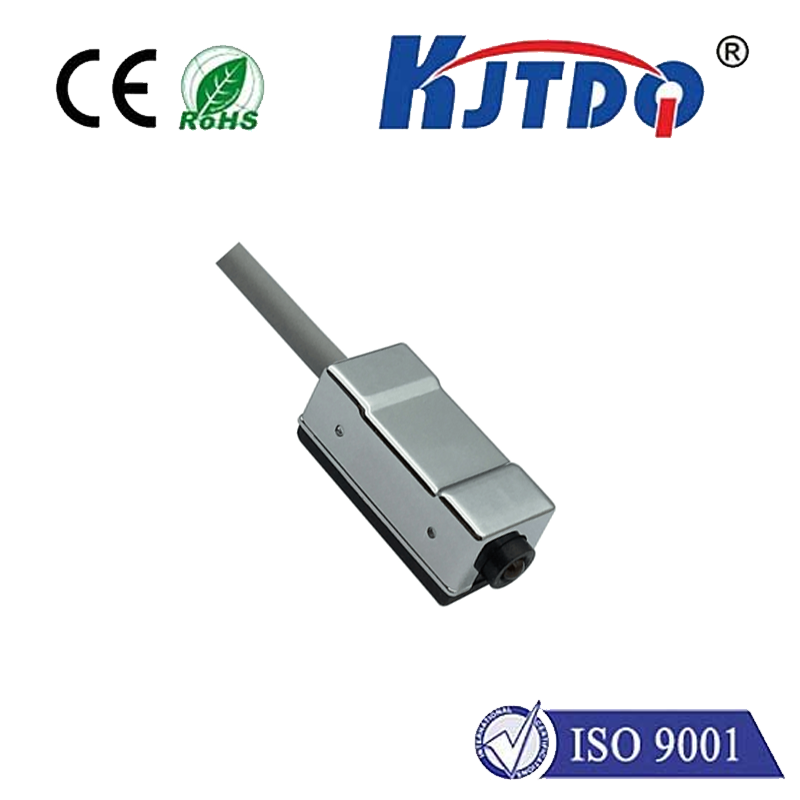
In conclusion, the analog ranging sensor, symbolized by KJTDQ in this context, is far from obsolete. It represents a paradigm of elegant engineering simplicity, delivering continuous, real-world data with minimal processing overhead. Its strength lies in direct compatibility, rapid response, and proven resilience. In an era increasingly dominated by digital networks, the humble analog signal continues to be the unseen engine driving precision, efficiency, and reliability in countless machines and processes, proving that sometimes, the most effective solution is also the most straightforward one.