check

check

check

check
check
check
check
check

check

check
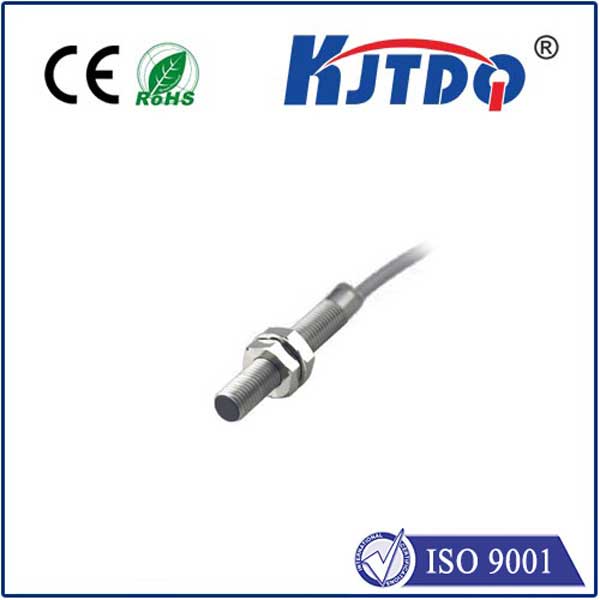
In the complex and often unforgiving world of industrial automation, the ability to reliably detect objects or monitor positions under extreme conditions is not just a convenience—it's a critical component of operational safety, efficiency, and longevity. This is where specialized components like the KFG13L3KNC High Pressure Proximity Sensor come into play, engineered to deliver unwavering performance where standard sensors would falter.
The core challenge in many heavy-duty applications, such as hydraulic systems, die-casting machines, plastic injection molding, and high-pressure testing equipment, is the presence of immense ambient pressure. Conventional inductive or capacitive proximity sensors can suffer from housing deformation, seal failure, or signal drift when subjected to these forces, leading to inaccurate readings, false triggers, or complete failure. The KFG13L3KNC is specifically designed to counteract these issues. Its robust construction typically involves a stainless-steel housing rated for high pressure resistance, ensuring the internal electronics and sensing face remain completely isolated from the external environment. This hermetic sealing is paramount, preventing media ingress and maintaining sensor integrity even when submerged in hydraulic fluid or exposed to pressurized washdowns.
Beyond its formidable pressure rating, the KFG13L3KNC excels in its fundamental sensing capabilities. As an inductive proximity sensor, it generates an electromagnetic field from its active face. When a metallic target enters this field, it causes a change in oscillation, which the sensor detects. The "KFG13L3KNC" variant is often characterized by a precise sensing range, a fast response time, and excellent repeat accuracy. This means it can consistently detect the presence or absence of a metal component—like a piston rod in a cylinder, a valve position, or a tooling fixture—with millimeter precision, cycle after cycle. This reliability is the bedrock of automated process control, enabling precise sequencing, preventing machine collisions, and providing essential feedback for system monitoring.
A key advantage of this sensor category is its non-contact operation. Unlike mechanical limit switches, which require physical touch and are prone to wear, the KFG13L3KNC detects targets without making contact. This eliminates mechanical abrasion, dramatically extends the service life of both the sensor and the target, and allows for detection at high speeds. Furthermore, its solid-state design contributes to high switching frequencies and resistance to vibration, common in dynamic industrial settings.
Installation and integration are streamlined for engineer and technician convenience. The sensor often comes in a compact, cylindrical form factor (like an M12 or M18 threaded barrel), allowing for easy mounting in tight spaces. It is typically available in various output configurations (e.g., PNP/NPN, NO/NC) to seamlessly interface with Programmable Logic Controllers (PLCs) and other control systems. Many models also feature LED status indicators for quick visual confirmation of operation and power, simplifying diagnostics and maintenance.
The application scope for the KFG13L3KNC High Pressure Proximity Sensor is vast. In metalworking, it monitors tool positions in CNC machines under high coolant pressure. In the automotive industry, it ensures proper clamping force in high-pressure presses. Within offshore or maritime equipment, it provides reliable feedback where deep-water pressures are a factor. Essentially, any environment where high pressure coexists with the need for accurate, non-contact metallic object detection is a potential use case.
Selecting the right sensor for such a critical role requires careful consideration. Factors beyond just pressure rating include the specific sensing distance required, the target material and size, the required electrical output, the operating temperature range, and the necessary ingress protection (IP) rating for dust and water. The KFG13L3KNC is built to meet stringent specifications, offering a solution that prioritizes durability and precision.
Ultimately, implementing a component like the KFG13L3KNC is an investment in system resilience. It reduces unplanned downtime caused by sensor failure, minimizes maintenance costs associated with replacing worn mechanical switches, and enhances overall process reliability. In demanding industrial landscapes, where pressure is a constant factor, choosing a sensor engineered to withstand those demands is not merely a technical specification—it is a strategic decision for sustained productivity and operational excellence.