check

check

check

check

check

check
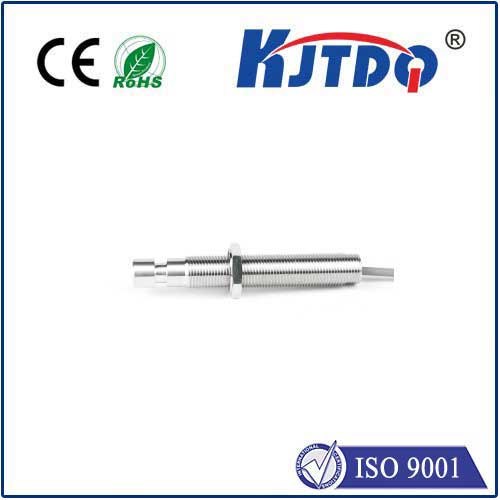
In the relentless world of industrial automation, where machinery operates under extreme pressures and within tight tolerances, the reliability of every component is non-negotiable. Sensor failure in a high-pressure zone isn't just an inconvenience; it can lead to catastrophic downtime, safety hazards, and significant financial loss. This is where specialized sensing technology steps in, designed not just to function, but to thrive under duress. The KNYT1.8-M12-PBH-93 High Pressure Proximity Sensor represents this pinnacle of engineered resilience, offering unparalleled performance where standard sensors falter.
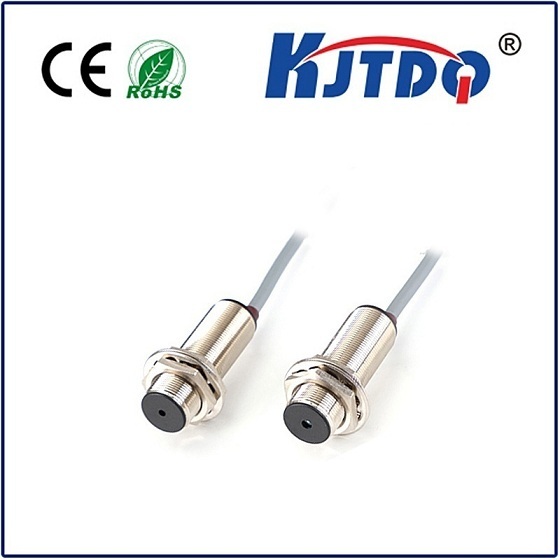
Traditional inductive proximity sensors face immense challenges in high-pressure applications, such as hydraulic systems, die-casting machines, plastic injection molding, and high-pressure pump monitoring. The constant force exerted by fluids or mechanical components can compromise sensor housing integrity, leading to ingress, signal drift, or complete failure. The internal electronics and sensing face of a standard sensor are simply not built to withstand sustained external pressure. The KNYT1.8-M12-PBH-93 is engineered from the ground up to counter these exact forces. Its robust stainless-steel housing is not merely for physical protection; it is specifically designed to resist deformation under extreme pressure, ensuring the critical gap between the sensing face and the target remains constant. This consistent performance is key to maintaining accurate and repeatable detection, cycle after cycle, in the most punishing conditions.
Beyond its hardened exterior, the sensor incorporates a pressure-compensated design. This advanced feature neutralizes the effects of external pressure on its internal sensing mechanism. While a conventional sensor might give a false signal or change its switching point as ambient pressure increases, the KNYT1.8-M12-PBH-93 maintains its calibrated 1.8mm sensing distance with steadfast accuracy. This immunity to pressure variation is crucial for processes where precision is paramount, ensuring that a valve position, piston location, or part presence is detected correctly regardless of the system's operational state. The M12 connector provides a quick, secure, and industry-standard connection, resistant to vibration, while the PBH designation often refers to its specific pin configuration and output type (typically PNP normally open), ensuring seamless integration into existing control cabinets.
The application spectrum for this high-pressure specialist is vast. In hydraulic press monitoring, it reliably detects cylinder end positions even when submerged in oil or subjected to the system's full operating pressure. Within plastic injection molding machines, it can be installed directly into the mold or barrel to monitor screw position, enduring the intense clamping forces and material pressure. For offshore equipment or deep-sea applications where ambient water pressure is a constant factor, its robust construction ensures reliable operation. Furthermore, in automated high-pressure cleaning systems or chemical processing plants, its resilience translates to longevity and reduced maintenance intervals, providing a significantly lower total cost of ownership despite a potentially higher initial investment compared to standard models.
Selecting the right sensor for high-pressure environments goes beyond just checking a pressure rating. It requires an understanding of the medium (oil, water, molten plastic), the type of pressure (static, dynamic, pulsating), temperature ranges, and required certifications. The KNYT1.8-M12-PBH-93 is typically built to meet stringent international protection standards like IP67, IP68, or IP69K, guarding against both high-pressure jets and temporary immersion. Its design prioritizes not just survival but signal stability, a factor often overlooked until it causes production line errors. When operational continuity, safety, and precision are critical, compromising on sensor capability is a risk no operation can afford. Implementing a purpose-built sensor like this one is a strategic decision that fortifies the entire automation system against one of the harshest environmental challenges.