check

check

check

check

check

check
In the world of industrial automation and process control, the ability to detect objects or monitor positions reliably under extreme conditions is not just a convenience—it's a critical necessity for safety, efficiency, and productivity. This is where high-pressure proximity sensors come into play, and among the leading solutions in this specialized field is the BHS0028 High Pressure Proximity Sensor. Designed to perform flawlessly where standard sensors would fail, this device represents a significant advancement in sensing technology.
The BHS0028 is engineered specifically for environments where pressure is a constant and formidable factor. Think of hydraulic systems, heavy-duty presses, deep-sea equipment, or high-pressure washdown areas in food and beverage processing. In these applications, standard inductive or capacitive sensors can suffer from housing deformation, seal failure, or signal interference, leading to inaccurate readings or complete breakdowns. The BHS0028 overcomes these challenges through a robust construction that typically includes a stainless steel housing rated for high-pressure endurance, often exceeding several hundred bar. This rugged design ensures the internal electronics and sensing element are completely isolated from the external pressure, guaranteeing consistent performance and a long operational lifespan.
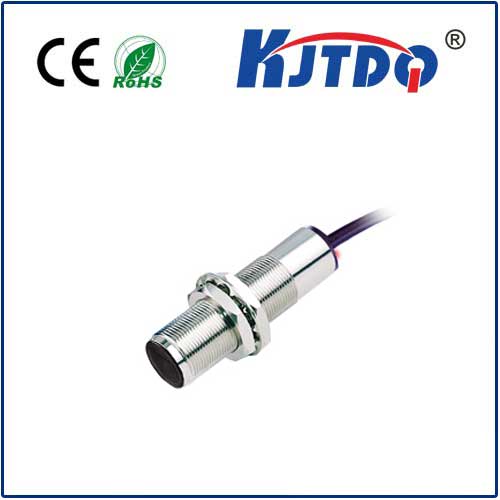
At its core, the BHS0028 utilizes a proven sensing principle, such as inductive or magnetostrictive technology, optimized for high-pressure resilience. It detects the presence of a metal target without any physical contact. The key differentiator is how its components are fortified. The sensing face is often a thick, reinforced material that can withstand direct exposure to intense forces. The electrical connections are hermetically sealed using advanced techniques to prevent any ingress of media, even under fluctuating pressure cycles. This attention to detail in sealing and material science is what sets it apart, making it immune to the failures that plague conventional sensors in similar settings.
The benefits of integrating the BHS0028 into a system are substantial. First and foremost is reliability. Equipment downtime in high-pressure industries is extraordinarily costly. The sensor's failure-resistant design minimizes unplanned stops, ensuring continuous operation. Secondly, it enhances safety. Accurate detection of piston position in a hydraulic cylinder or confirmation of a clamp's status in a press is vital to preventing accidents. The BHS0028 provides that certainty. Furthermore, its high repeat accuracy ensures process consistency, which is crucial for maintaining product quality in manufacturing. Despite its ruggedness, these sensors are designed for easy installation and integration with existing PLCs and control systems, often featuring standard output signals like PNP/NPN or analog 4-20mA.
When selecting a high-pressure proximity sensor like the BHS0028, several technical specifications demand close attention. The pressure rating is paramount—ensure it exceeds the maximum operating pressure of your system with a safety margin. The sensing distance, while possibly slightly less than a standard sensor due to the thicker housing, must be suitable for the application. Environmental factors like temperature range, resistance to specific chemicals or oils, and required ingress protection (IP) rating (e.g., IP67, IP69K) are also critical. The BHS0028 series typically offers variants to meet these diverse needs.
Real-world applications are where the BHS0028 truly proves its value. In offshore oil and gas platforms, it monitors valve positions on Christmas trees operating under immense seabed pressure. In metal forming and stamping presses, it provides precise end-position detection for rams, ensuring each stroke is complete and safe. Within the realm of industrial hydraulics, it is indispensable for feedback in cylinders powering heavy machinery. Even in high-pressure cleaning systems for the pharmaceutical industry, it can be used for component presence verification, surviving the harsh, sanitizing environment.
Maintenance for such a robust sensor is remarkably straightforward. Its primary requirement is periodic visual inspection of the housing and seals for integrity. Because it is a non-contact device, there are no moving parts to wear out from the sensing action itself. The durability built into the BHS0028 means it often outlasts the machinery it is installed on, providing a excellent return on investment through reduced replacement costs and maintenance labor.
In conclusion, the BHS0028 High Pressure Proximity Sensor is not merely a component; it is a strategic asset for any operation facing the dual challenges of needing precise non-contact detection and surviving intense pressure. It embodies a solution where resilience meets precision. For engineers and system designers, choosing the BHS0028 translates to selecting unwavering reliability, enhanced safety protocols, and ultimately, protecting both capital equipment and bottom-line profitability from the risks inherent in high-pressure environments. It stands as a testament to how targeted engineering can solve some of industry's most demanding sensing puzzles.