check

check

check

check

check

check
In the world of industrial automation and process control, the ability to detect objects or monitor positions reliably under extreme conditions is not just a convenience—it's a critical necessity for safety, efficiency, and productivity. This is where high-pressure proximity sensors come into play, and among the leading solutions in this specialized field is the BHS001 High Pressure Proximity Sensor. Engineered to perform flawlessly where standard sensors would fail, the BHS001 represents a pinnacle of durability and precision.
The core challenge in high-pressure environments, such as those found in hydraulic systems, die-casting machines, injection molding, offshore equipment, and heavy-duty press lines, is the immense physical stress exerted on components. Ordinary sensors can suffer from seal failure, housing deformation, or signal drift when subjected to pressures that can reach several hundred bar. The BHS001 is specifically designed to overcome these hurdles. Its robust construction typically involves a stainless steel housing, often rated to IP67, IP68, or IP69K standards, ensuring not only resistance to high pressure but also complete immunity to water, oil, dust, and chemical splashes. This ruggedness guarantees long-term operational stability and significantly reduces downtime and maintenance costs.
At the heart of the BHS001's performance is its advanced sensing technology. While specific models may vary, high-pressure proximity sensors often utilize inductive or capacitive principles. Inductive models are ideal for detecting metallic targets, even through non-metallic tank walls or pipes, without physical contact. The BHS001 is engineered to maintain a consistent sensing distance—its nominal range—regardless of fluctuating ambient pressures. This is achieved through sophisticated internal compensation mechanisms that isolate the sensing element from the mechanical stresses of the pressure medium. The result is highly repeatable and accurate detection, with no false triggers, which is essential for precise cycle control and safety interlocks.
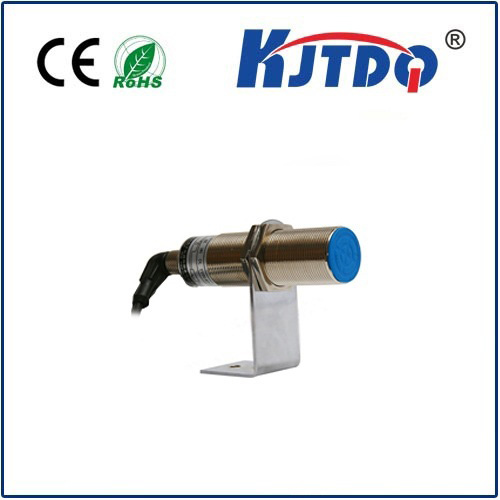
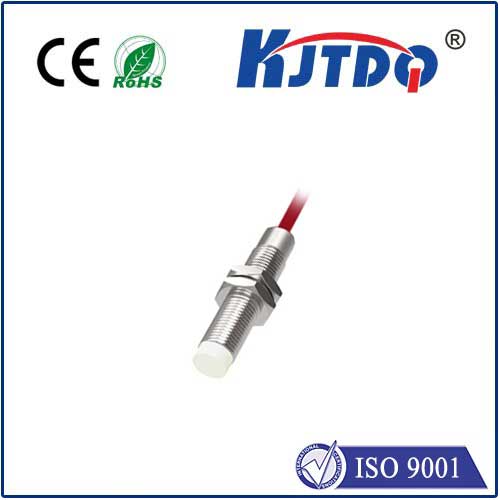
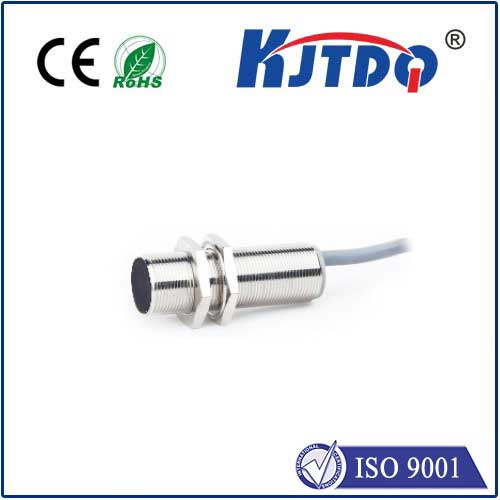
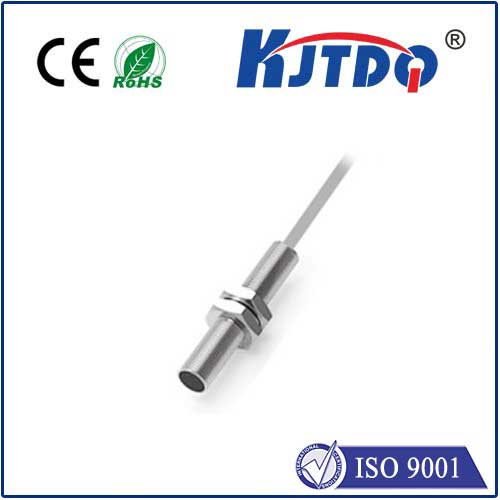
Installation and integration of the BHS001 are streamlined for industrial applications. It commonly features standard M12, M18, or M30 threaded barrels, allowing for direct mounting into pressurized ports or manifolds. The electrical connection is equally user-friendly, with options for quick-disconnect cables or fixed cable outlets, and output signals compatible with standard PLC (Programmable Logic Controller) inputs (e.g., PNP/NPN). This plug-and-play compatibility minimizes engineering time and simplifies retrofitting into existing systems.
The applications for the BHS001 are vast and critical. In hydraulic power units, it monitors piston position or confirms the status of valves. Within plastic injection molding machines, it ensures molds are correctly closed under tremendous clamping force before the injection cycle begins. In the oil and gas industry, it provides vital position feedback on subsea valves and actuators. Furthermore, in automated high-pressure cleaning systems or food and beverage processing where high-pressure CIP (Clean-in-Place) systems are used, the sensor reliably confirms the presence of components without succumbing to the harsh, high-pressure washdown environment.
Choosing the BHS001 is an investment in system resilience. Its key benefits translate directly to the bottom line: enhanced machine safety by preventing operation in unsafe states, improved product quality through consistent process control, and increased overall equipment effectiveness (OEE) by eliminating failures caused by sensor inadequacy. When selecting a sensor for a high-pressure application, specifications such as the maximum pressure rating, pressure medium compatibility, sensing range, temperature range, and output type must be carefully matched to the operating conditions. The BHS001 series typically offers a range of models to meet these diverse requirements.
In conclusion, the BHS001 High Pressure Proximity Sensor stands as a testament to targeted engineering solving a specific industrial challenge. It goes beyond basic detection to become a cornerstone of reliability in the most demanding applications. For engineers and system integrators tasked with designing or maintaining equipment that operates under high pressure, specifying a sensor like the BHS001 is a decisive step toward achieving unwavering operational continuity, safeguarding valuable assets, and ensuring a safe working environment. It is not merely a component but a critical guardian of process integrity.