check

check

check
check
check
check
check
check

check

check
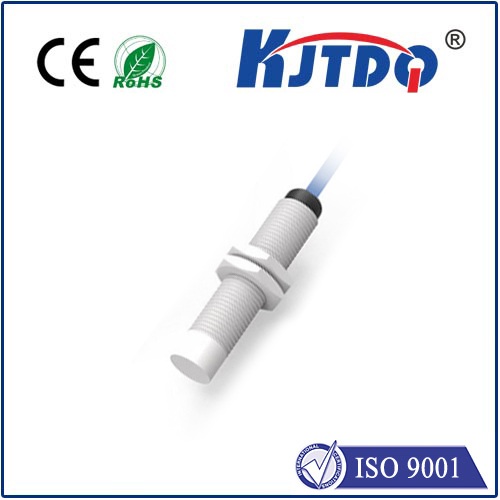
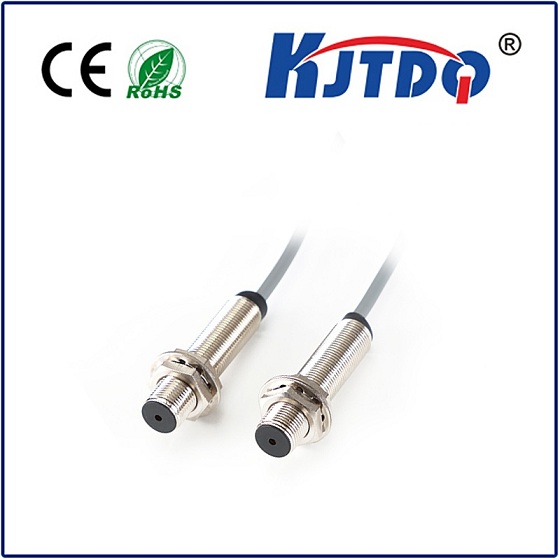
In the high-stakes world of industrial automation and process control, equipment reliability is non-negotiable. Downtime caused by sensor failure in harsh environments translates directly to lost revenue and compromised safety. This is where the HR12-10-931.5E2 High Pressure Proximity Sensor steps in, engineered to deliver unwavering performance where standard sensors falter. This robust device represents a significant leap in sensing technology, specifically designed to operate with precision under extreme pressure conditions.
The core challenge in many heavy industries—such as hydraulic systems, die-casting machinery, plastic injection molding, and high-pressure testing rigs—is the hostile environment. Fluctuating extreme pressures, temperature variations, and potential exposure to contaminants can quickly degrade or disable conventional inductive proximity sensors. The HR12-10-931.5E2 is built from the ground up to conquer these challenges. Its defining feature is its exceptional pressure rating, allowing it to function accurately and reliably when directly exposed to high-pressure media or installed within pressurized chambers. The housing is constructed from high-grade, corrosion-resistant stainless steel, providing an IP67 or higher ingress protection rating. This ensures a tight seal against oils, coolants, and particulate matter, making it impervious to the dirty, wet conditions typical of factory floors.
Beyond its rugged exterior lies sophisticated sensing intelligence. Utilizing a high-frequency oscillation principle, the HR12-10-931.5E2 detects the presence of metallic targets with remarkable consistency. Its 931.5E2 designation often refers to specific electrical characteristics, typically a 3-wire DC configuration with complementary Normally Open (NO) and Normally Closed (NC) outputs (e.g., PNP or NPN). This dual-output flexibility simplifies integration into diverse control systems, whether for triggering an action when a target is present or signaling when one is absent. The sensing distance is precisely calibrated, and its repeatability remains stable even under mechanical stress or vibrational forces, a critical factor for maintaining cycle accuracy in automated machinery.
Installation and maintenance are streamlined for efficiency. The sensor's compact, cylindrical HR12-10 form factor allows for easy mounting in space-constrained locations. Engineers appreciate the clear LED status indicator, which provides instant visual confirmation of power and operational state, aiding in rapid troubleshooting. Its design minimizes the risk of false triggers from background electromagnetic interference, a common pitfall in electrically noisy industrial settings. By providing a stable, high-integrity signal to the Programmable Logic Controller (PLC), it forms a dependable link in the control chain.
The operational benefits are substantial. By implementing the HR12-10-931.5E2, facilities achieve a higher level of process reliability. It enables precise monitoring of piston position in hydraulic cylinders, ensures proper mold clamping in injection machines, and verifies component placement in automated assembly lines—all under high-pressure conditions. This reliability directly reduces unplanned maintenance stops, extends mean time between failures (MTBF), and protects valuable downstream equipment from malfunction. The sensor's durability translates into a lower total cost of ownership, despite a potentially higher initial investment compared to standard models.
In conclusion, the HR12-10-931.5E2 High Pressure Proximity Sensor is not merely a component; it is a strategic asset for any operation facing demanding physical environments. It embodies a fusion of ruggedness, precision, and intelligent design. For system integrators, maintenance engineers, and plant managers seeking to eliminate a key point of failure, this sensor offers a proven solution. It ensures that critical processes continue to run smoothly, safeguarding both productivity and safety in the most challenging industrial applications. Choosing a sensor like the HR12-10-931.5E2 is an investment in operational continuity and long-term equipment resilience.