check

check

check

check

check

check
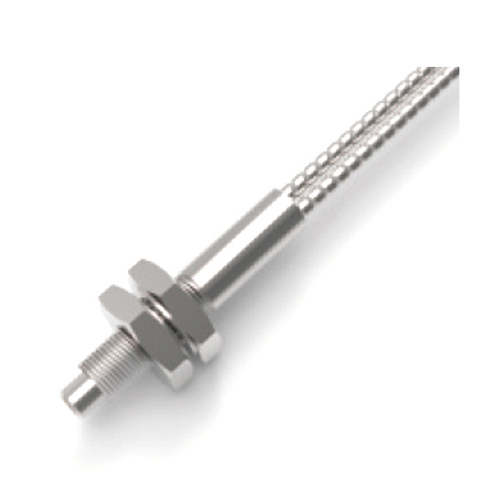
In the complex and often unforgiving world of industrial automation, the reliability of every component is paramount. When it comes to monitoring and control in high-pressure environments, standard sensors often fall short, leading to costly downtime and safety risks. This is where the BHS001L BES 516-300-S135-S4-D High Pressure Proximity Sensor steps in, engineered specifically to deliver unwavering performance under extreme conditions. This sensor represents a significant leap in sensing technology, designed for applications where pressure, contamination, and mechanical stress are constant challenges.
The core strength of the BHS001L model lies in its robust construction. The designation "BES 516-300-S135-S4-D" is not just a part number; it's a detailed specification sheet. It indicates a sensor built to withstand exceptionally high pressures, often encountered in hydraulic systems, heavy-duty presses, injection molding machines, and offshore equipment. The housing is typically crafted from high-grade stainless steel, providing exceptional resistance to corrosion, physical impact, and the ingress of fluids or particulates. This durability ensures a long operational life even in the most abrasive and wet environments, reducing the total cost of ownership through fewer replacements and maintenance intervals.
Functionally, this inductive proximity sensor operates on a non-contact principle. It detects the presence of metallic target objects without any physical touch, eliminating wear and tear on the sensor itself. The "S135" likely refers to a specific sensing distance or a variant optimized for certain metallic types, offering precise and repeatable detection. This accuracy is critical for processes like position verification of pistons in hydraulic cylinders, end-of-travel detection in high-force actuators, or monitoring valve positions. The "S4" connection type suggests a standardized, secure electrical connection, often a M12 connector, ensuring quick installation and reliable signal transmission even in environments with significant vibration.
What truly sets the BHS001L apart is its ability to maintain signal integrity under high pressure. Internal components are specially encapsulated or designed to prevent failure caused by pressure transients or static high-pressure conditions that would compromise a standard sensor. This makes it an indispensable component in industries such as oil and gas, where equipment integrity is non-negotiable, or in automotive manufacturing for high-pressure die-casting applications. Its performance ensures that control systems receive accurate data, enabling precise automation and preventing machine damage or production of faulty parts.
Integration into existing systems is straightforward. The sensor outputs a clear digital signal (often PNP or NPN) that is compatible with standard Programmable Logic Controllers (PLCs) and industrial networks. This plug-and-play capability, combined with its ruggedness, minimizes installation time and complexity. Engineers and maintenance teams value this sensor for its set-and-forget reliability, allowing them to focus on broader system optimization rather than constant sensor troubleshooting.
In conclusion, the BHS001L BES 516-300-S135-S4-D is more than just a sensor; it is a critical reliability component for modern industry. It addresses the specific pain points of high-pressure applications by combining robust mechanical design, precise non-contact sensing, and unwavering electronic stability. For system designers and plant managers seeking to enhance uptime, safety, and process precision in challenging environments, specifying this high-pressure proximity sensor is a strategic decision that pays dividends in operational efficiency and long-term equipment health. It stands as a testament to how targeted engineering can solve some of the most persistent challenges in industrial automation.