check

check

check

check

check

check
In the complex and often unforgiving world of industrial automation, the reliability of individual components dictates the efficiency and safety of the entire system. Among these critical components, proximity sensors play a pivotal role in non-contact detection, ensuring seamless operations. When the application involves high-pressure environments—such as hydraulic systems, heavy-duty presses, or offshore equipment—the standard sensor simply won't suffice. This is where specialized solutions like the UB1815AE65P2 (PNP.NC) High Pressure Proximity Sensor come into play, engineered to deliver unwavering performance under extreme conditions.
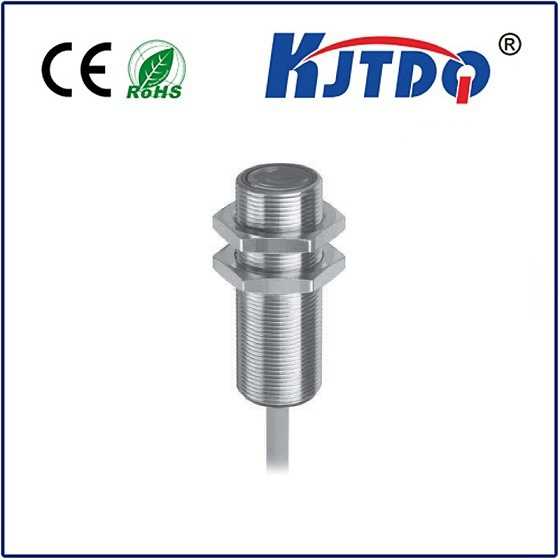
The UB1815AE65P2 is not just another sensor; it is a precision instrument designed for resilience. The designation "PNP.NC" indicates its specific output configuration: PNP (sourcing) and Normally Closed (NC) switching logic. This configuration is often preferred in control systems for its compatibility and safety features, particularly in scenarios where an open-circuit failure should trigger a machine stop. The core challenge in high-pressure zones is the immense force exerted on equipment housings. Standard sensor enclosures can deform or allow minute ingress under sustained high pressure, leading to premature failure. The UB1815AE65P2 addresses this with a robust, hermetically sealed housing constructed from high-grade stainless steel. This design effectively shields the sensitive internal electronics from pressure fluctuations, mechanical stress, and corrosive elements commonly found in industrial settings like machining coolants or outdoor weather.
Performance under pressure is quantified by key specifications. This sensor is built to withstand immersion and operation in environments with pressures significantly higher than atmospheric pressure, a specification that must be carefully matched to the application's peak operating conditions. Its sensing range, while tailored for precise detection, is optimized for stability, ensuring that the switching point does not drift even when external pressure changes. The use of a PNP output provides a positive signal when a target is detected, which integrates smoothly with programmable logic controllers (PLCs) prevalent in modern factories. The Normally Closed function adds a layer of operational safety; the circuit is complete in its resting state, and it opens upon sensing a target. This means that a wire break or power loss to the sensor will typically be interpreted as a "target detected" signal, which can be programmed to initiate a safe shutdown procedure—a crucial fail-safe in high-pressure systems.
The practical applications for the UB1815AE65P2 are vast and critical. In hydraulic press monitoring, it can reliably detect the position of a piston or ram within a high-pressure cylinder, ensuring precise control over force and stroke. Within valve actuation systems on pipelines or processing plants, it confirms the open or closed status of valves controlling high-pressure fluids. In the automotive industry, similar sensors monitor components in high-pressure die-casting machines. In each case, the sensor's immunity to pressure transients and its physical durability prevent false triggers and costly downtime. Installation and maintenance are streamlined by its standard M12 or M18 threaded barrel design, allowing for easy integration into existing mounting setups. Technicians appreciate the consistent performance, which reduces the frequency of calibration checks and replacements.
Selecting the right high-pressure proximity sensor requires a detailed analysis of the operating environment. Key factors include the maximum pressure rating, the required sensing distance, the material of the target, ambient temperature extremes, and the necessary electrical interface. The UB1815AE65P2, with its clearly defined PNP.NC characteristics and rugged build, presents a compelling option for engineers seeking a dependable solution. It eliminates the guesswork and risk associated with using under-specified components. By ensuring accurate detection in the heart of high-pressure processes, this sensor contributes directly to enhanced operational safety, reduced maintenance costs, and improved overall equipment effectiveness (OEE).
For system integrators and plant managers, investing in purpose-built components like this sensor translates into long-term reliability. It represents a proactive approach to maintenance, moving away from reactive breakdown fixes. The robustness of the UB1815AE65P2 means it can endure the daily rigors of production, from vibration and shock to exposure to harsh media, all while maintaining a stable electrical output. This reliability is the foundation for building more resilient and automated industrial systems, where every sensor's signal is a trusted piece of data driving decision-making and control. In essence, it is more than a component; it is a commitment to continuous and safe production, making it an indispensable tool in the advanced industrial landscape.