check

check

check

check

check

check
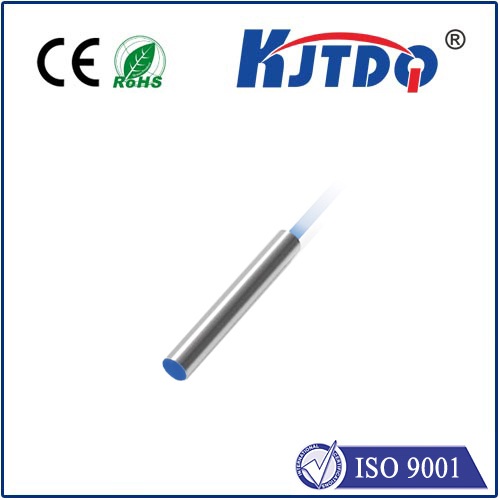
In industrial automation and process control, the ability to reliably detect objects or monitor positions under extreme pressure conditions is not just an advantage—it's a necessity for safety, efficiency, and system integrity. This is where specialized components like the MFH201 High Pressure Proximity Sensor step into the spotlight. Designed to perform where standard sensors falter, this sensor represents a critical solution for applications involving hydraulic systems, high-pressure die-casting, injection molding, and oil & gas equipment.
The core challenge in high-pressure environments is the immense stress exerted on equipment. Standard inductive or capacitive proximity sensors may have their electronics compromised or their housings deformed by constant exposure to pressures that can reach several hundred bar. The MFH201 is engineered from the ground up to withstand these forces. Its defining characteristic is a robust, often stainless steel, housing that is hermetically sealed. This construction prevents media ingress and maintains sensor functionality by protecting the internal oscillator, evaluation circuit, and output switching element from mechanical stress and potential corrosion caused by pressurized fluids or gases.
Unlike many sensors that measure pressure directly, the MFH201 utilizes electromagnetic fields to detect the presence of metallic targets. This non-contact principle remains its primary function. However, its true value lies in its ability to perform this detection task while the sensor body is submerged in or exposed to high-pressure fluid lines or chambers. For instance, it can be threaded directly into a hydraulic cylinder to provide precise end-position detection of a piston, ensuring cycle control and preventing cylinder damage. The sensor's design ensures that the sensing face remains uncompromised, offering a consistent switching point even as the ambient pressure around its body fluctuates dramatically.
Key technical features typically associated with sensors like the MFH201 include high pressure ratings, often certified up to 500 Bar or more, ensuring suitability for the most demanding tasks. They offer various output types, such as PNP or NPN transistor outputs, and sometimes analog options, providing compatibility with different PLC (Programmable Logic Controller) systems. The sensing range, while relatively short due to the dense housing material, is highly precise and repeatable. Furthermore, these sensors are built to resist temperature variations, vibration, and electrical noise common in industrial settings, guaranteeing a long service life and reduced maintenance downtime.
The application spectrum is vast. In plastic injection molding machines, an MFH201 sensor can reliably monitor nozzle position or screw recovery under intense injection pressure. Within hydraulic power units, it ensures accurate valve spool positioning. In the energy sector, it contributes to safety systems in wellhead equipment. Its reliability translates directly into reduced machine downtime, prevention of costly process errors, and enhanced operational safety by providing fail-safe position feedback.
Selecting the right high-pressure proximity sensor requires careful consideration. Engineers must match the sensor's pressure rating to the maximum system pressure, including potential pressure spikes. The chemical compatibility of the housing material with the process media is crucial to avoid corrosion. Electrical requirements, including operating voltage, output type, and connection method (pre-wired cable or connector), must align with the control cabinet specifications. Finally, the physical size and thread type (e.g., M12, M18, G1/4) must fit the installation port.
Installation is a critical phase. It must follow manufacturer guidelines precisely, ensuring proper torque is applied during threading to achieve a seal without damaging the sensor. The sensing face must have a clear, unobstructed path to the target object. Proper electrical wiring, with attention to shielding in electrically noisy environments, is essential for stable signal transmission.
In conclusion, the MFH201 High Pressure Proximity Sensor is far more than just a switch. It is a robust interface between the physical force of pressurized systems and the digital control world. By delivering unwavering reliability in conditions that would disable ordinary sensors, it forms the backbone of precise control and safety in heavy industry. For system designers and maintenance engineers facing the challenges of high-pressure environments, specifying a purpose-built sensor like the MFH201 is a decisive step toward achieving peak operational performance and long-term equipment health.