check

check

check

check

check

check
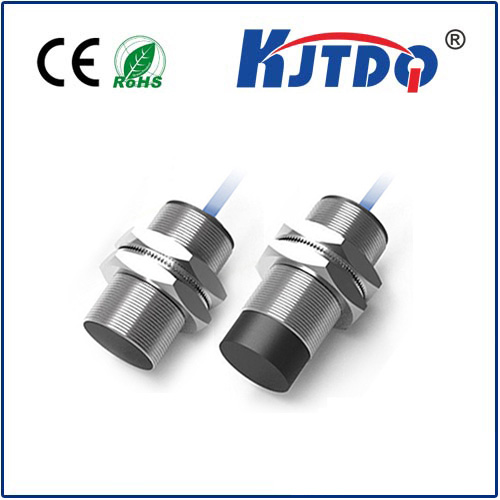
In the complex and often unforgiving world of industrial automation, the reliability of every component is paramount. Among these critical components, proximity sensors play a vital role in detecting the presence or absence of objects without physical contact. When operating environments involve extreme pressures, standard sensors fall short, leading to potential system failures, safety hazards, and costly downtime. This is where the CSIM18-1.5 High Pressure Proximity Sensor steps in, engineered specifically to deliver unwavering performance under the most strenuous conditions.
The CSIM18-1.5 is not merely an incremental improvement but a purpose-built device designed for high-pressure applications. Its robust housing, typically constructed from high-grade stainless steel, provides exceptional resistance to mechanical stress and corrosion. The core of its capability lies in its ability to maintain precise detection accuracy even when subjected to pressures up to 500 Bar or higher, depending on the specific model configuration. This makes it an indispensable tool in industries such as hydraulic systems, heavy machinery, offshore oil and gas platforms, and high-pressure testing facilities. Unlike conventional inductive or capacitive sensors that may malfunction or suffer from signal drift under compression, the CSIM18-1.5 utilizes a specialized sensing mechanism and sealing technology that ensures consistent operation.
One of the standout features of this sensor is its remarkable immunity to environmental interference. High-pressure zones are often accompanied by temperature fluctuations, vibration, and the presence of conductive or non-conductive media like hydraulic oil, water, or coolants. The CSIM18-1.5 is built to withstand these challenges. Its advanced electronics are shielded against electromagnetic interference (EMI), and its temperature compensation circuitry guarantees stable switching points across a wide operational range. This translates to fewer false triggers, reduced maintenance intervals, and a significantly longer service life compared to standard M18 sensors.
Installation and integration are streamlined for efficiency. The sensor conforms to the common M18 threaded housing standard, allowing for easy retrofitting into existing system layouts without requiring extensive modifications. It offers various output options, including PNP, NPN, and analog outputs, providing compatibility with a broad spectrum of PLCs (Programmable Logic Controllers) and control systems. The LED status indicator offers clear visual confirmation of operation and switching state, aiding in quick diagnostics and troubleshooting on the shop floor.
The economic argument for deploying the CSIM18-1.5 High Pressure Proximity Sensor is compelling. While the initial investment may be higher than a standard sensor, the total cost of ownership is drastically lower. By preventing unplanned stoppages, minimizing replacement parts, and avoiding the catastrophic costs associated with pressure-related system failures, this sensor protects both productivity and profit margins. It contributes directly to enhanced operational safety by providing reliable data for machine control, ensuring that processes halt or proceed only when conditions are correctly met.
From monitoring piston position in hydraulic cylinders to ensuring proper clamping force in molding presses, the applications are diverse and critical. In subsea equipment or deep-well drilling apparatus, where pressures are immense and maintenance access is nearly impossible, the durability of the CSIM18-1.5 becomes not just a feature but a necessity. It represents a fusion of precision engineering and practical design, delivering the robustness required for today's advanced industrial landscapes.
Selecting the right sensor for high-pressure duties is a decision that impacts overall system integrity. The CSIM18-1.5 High Pressure Proximity Sensor stands as a proven, reliable choice, engineered to perform where others cannot. It ensures that detection—a fundamental automation task—remains a source of confidence rather than concern, even under extreme pressure.