check

check

check

check

check

check
In the relentless world of industrial automation, where machinery operates under extreme pressures and within tight tolerances, the reliability of every component is non-negotiable. Sensor failure in a high-pressure environment isn't just an inconvenience; it can lead to catastrophic downtime, safety hazards, and significant financial loss. This is where precision engineering meets rugged durability, embodied in solutions like the KFG13L3BNC High Pressure Proximity Sensor. Designed to perform flawlessly where others falter, this sensor represents a critical advancement for engineers and plant managers seeking uncompromising performance.
The core challenge in high-pressure applications—common in hydraulic systems, die-casting machines, plastic injection molding, and heavy-duty press lines—is the constant assault of intense physical forces. Standard inductive proximity sensors can suffer from housing deformation, diaphragm failure, or signal drift when subjected to pressures exceeding 100 bar. The KFG13L3BNC is engineered from the ground up to withstand these conditions. Its defining feature is a specially reinforced stainless-steel housing and sensing face, capable of withstanding continuous pressure loads that would compromise conventional models. This robust construction ensures that the sensor maintains its precise switching characteristics and mechanical integrity, cycle after cycle, in the most punishing environments.
Beyond mere durability, the KFG13L3BNC excels in detection accuracy and stability. Utilizing a high-performance inductive sensing principle, it provides non-contact detection of metallic targets with exceptional repeatability. This is crucial for applications like monitoring piston position in hydraulic cylinders or confirming mold closure in injection machines, where a deviation of even a fraction of a millimeter can affect product quality or process safety. The sensor's stable output signal remains unaffected by pressure fluctuations, oil contamination, or temperature variations typically found in industrial settings, guaranteeing consistent and reliable feedback to the control system.
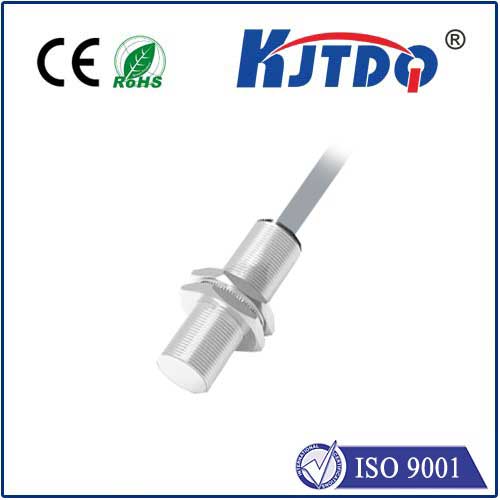
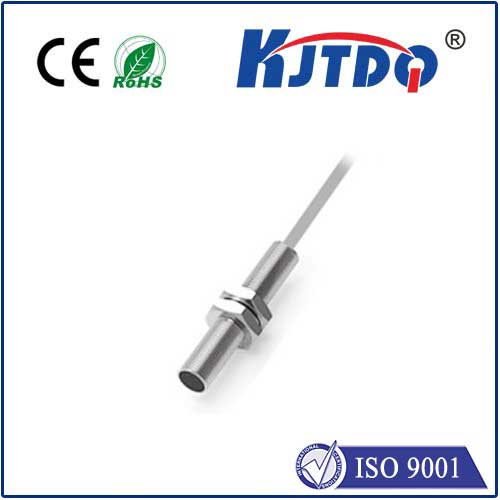
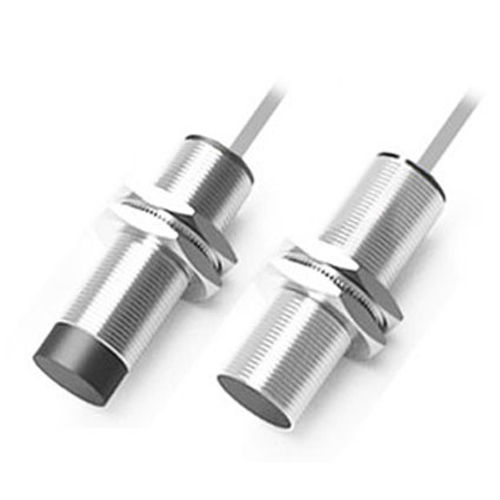
Installation and integration are streamlined for efficiency. The KFG13L3BNC features a compact, cylindrical design with standard mounting dimensions, allowing for easy retrofitting into existing machinery or incorporation into new designs. Its 3-wire DC configuration with PNP or NPN output options (as denoted by the model suffix) offers compatibility with a vast array of PLCs and control units. The integrated LED status indicator provides immediate visual confirmation of operation and switching state, simplifying setup, troubleshooting, and maintenance procedures. This user-centric design minimizes installation time and reduces the potential for errors.
The operational benefits translate directly into tangible bottom-line results for facility operators. The primary advantage is dramatically reduced unplanned downtime. The sensor's extreme resilience means fewer failures, eliminating the frequent replacements associated with lesser components. This leads to higher overall equipment effectiveness (OEE) and greater production throughput. Furthermore, its reliability enhances process safety by ensuring critical position feedback is always accurate, helping to prevent machine damage and protect personnel. The long service life and reduced maintenance needs also contribute to a lower total cost of ownership, making it a strategically sound investment.
Selecting the right sensor for a high-pressure application requires careful consideration. The KFG13L3BNC is specifically suited for scenarios involving direct exposure to hydraulic oil, coolants, or other pressurized media where the sensing face is in direct contact with the high-pressure zone. It is ideal for detecting the position of pistons, valves, and tools within pressurized chambers. When specifying, key parameters to verify include the required sensing distance, the specific pressure rating needed for the application, the thread size (commonly M12 or M18), and the required electrical output type to match the control system.
In conclusion, navigating the demands of modern industrial automation necessitates components that are not just adequate but exceptional. The KFG13L3BNC High Pressure Proximity Sensor stands as a testament to targeted engineering, offering a robust, accurate, and reliable solution for the most challenging high-pressure detection tasks. It moves beyond being a simple component to become a foundational element for enhancing machine reliability, ensuring process safety, and optimizing production efficiency. For engineers committed to building resilient and high-performing systems, specifying a sensor of this caliber is a decisive step toward achieving operational excellence and maintaining a competitive edge in a demanding industrial landscape.