check

check

check

check

check

check
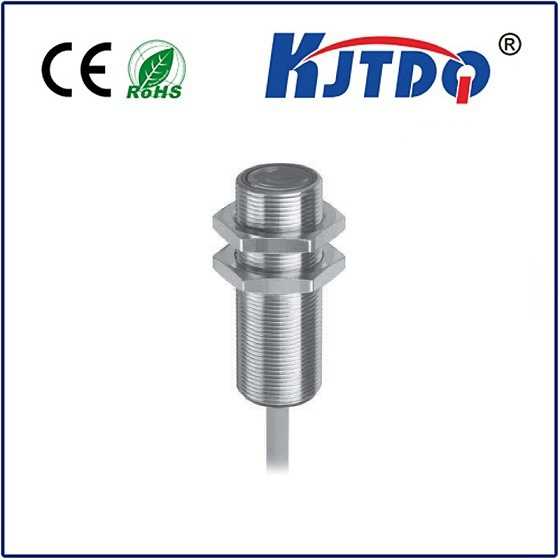
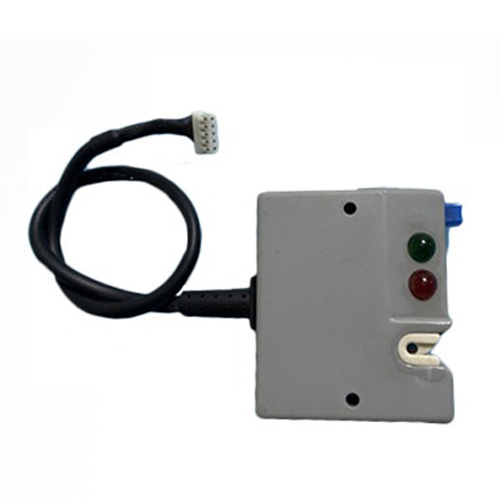
In the demanding world of industrial automation and process control, the reliability of every component is paramount. Equipment failure in high-pressure, high-temperature, or corrosive environments can lead to catastrophic downtime, safety hazards, and significant financial loss. This is where precision sensing technology becomes the unsung hero, silently ensuring operational continuity and safety. Among the critical components in this domain, proximity sensors designed for extreme conditions stand out. The KGG20H2KUC High Pressure Proximity Sensor emerges as a premier example of engineering tailored to withstand the most punishing applications.
The core challenge in high-pressure environments is not just detection but survival. Standard inductive or capacitive sensors often falter when exposed to sustained high pressure, rapid pressure cycles, or media that can infiltrate and damage sensitive electronics. The KGG20H2KUC is specifically constructed to address these exact pain points. Its defining feature is a robust, hermetically sealed housing engineered to resist ingress from liquids, oils, and corrosive agents, even under significant external pressure. This sealing is not merely a coating but an integral part of the design, ensuring the internal coil, oscillator, and evaluation circuitry remain completely isolated from the hostile external environment. This translates directly to unparalleled longevity and stable signal output, eliminating false triggers and measurement drift that plague lesser sensors.
Beyond its formidable pressure resistance, the KGG20H2KUC excels in its core function: non-contact detection. Utilizing a high-frequency oscillating field, it can reliably detect the presence or absence of metallic targets—typically made of steel, aluminum, or brass—without any physical contact. This non-contact operation is crucial in high-pressure systems where mechanical wear from repeated physical strikes would lead to rapid sensor degradation. The "H2" in its designation often correlates with a specific sensing distance and flush-mounting capability, allowing it to be installed flush with a metal surface without loss of function, thereby protecting it from mechanical damage. The "KUC" suffix typically indicates specific electrical connections, output configurations (like PNP or NPN), and voltage ratings, making it adaptable to a wide range of control systems, from standard PLCs to sophisticated distributed control systems.
The practical applications for a sensor of this caliber are vast and critical. In hydraulic and pneumatic systems, it is indispensable for monitoring piston position in high-pressure cylinders, ensuring cycles complete correctly and preventing over-travel that could damage machinery. Within the oil and gas industry, it performs vital tasks on drilling rigs and pipeline systems, detecting valve positions or component presence in areas where pressure can surge unexpectedly. Manufacturing presses, die-casting machines, and plastic injection molding equipment all rely on such durable sensors for mold protection and cycle verification, where temperatures and clamping pressures are extreme. Furthermore, in chemical processing and marine applications, its resistance to corrosion makes it a reliable choice for monitoring pumps, agitators, and other moving parts exposed to aggressive media.
Selecting the right sensor for a high-pressure application involves several key considerations beyond just the pressure rating. Engineers must evaluate the specific media the sensor will face, the temperature range of the operating environment, the required sensing distance, the target material, and the necessary electrical output. The KGG20H2KUC is typically part of a broader family of sensors, offering variants to meet these nuanced requirements. Installation is also critical; proper mounting, using the correct seals and torque specifications, is essential to maintain its IP (Ingress Protection) and pressure ratings. Regular verification of its output signal as part of a preventive maintenance schedule can help predict system health and avoid unplanned stoppages.
Ultimately, the value proposition of the KGG20H2KUC High Pressure Proximity Sensor lies in its contribution to total cost of ownership. While its initial investment may be higher than a standard sensor, its durability and reliability prevent far more costly episodes of production halts, emergency repairs, and component replacement. It provides plant managers and automation engineers with peace of mind, knowing that a critical link in their control chain is built for endurance. In an era where efficiency and uptime are directly tied to profitability, deploying robust, application-specific components like the KGG20H2KUC is not just a technical choice—it's a strategic business decision. It represents a commitment to operational excellence and safety, proving that the most reliable technology is often the one you never have to think about because it simply works, day after day, under pressure.