check

check

check

check

check

check
In the world of industrial automation, precision and reliability are non-negotiable. The KJTDQ PR18-B0DPO photoelectric switch stands as a testament to this principle, offering a robust sensing solution designed for demanding environments. This comprehensive guide delves into the features, applications, and technical advantages of this versatile sensor, providing essential insights for engineers, system integrators, and procurement specialists.
At its core, the PR18-B0DPO is a diffuse reflective photoelectric sensor. This means it detects objects by emitting a beam of light and measuring the amount reflected back. The "B0D" in its model number typically indicates a specific sensing distance and output configuration, often featuring a 0-30cm sensing range and a PNP (sourcing) output. The compact PR18 cylindrical housing, commonly 18mm in diameter, makes it suitable for installations where space is at a premium. Its construction is engineered for durability, featuring a housing resistant to common industrial contaminants like dust and oil splash, ensuring stable operation in challenging conditions such as packaging lines, material handling systems, and assembly stations.
One of the key strengths of the KJTDQ PR18-B0DPO lies in its operational simplicity and effectiveness. It requires no separate reflector, as it uses the target object itself to reflect the light beam. This simplifies installation and reduces component count. The sensor is equipped with a visible red LED light beam, which aids immensely in alignment and troubleshooting during setup. Users can quickly and accurately position the sensor for optimal detection. The output, typically a solid-state transistor switch (PNP), provides a fast and reliable signal to programmable logic controllers (PLCs) or other control systems, enabling precise counting, positioning, or presence verification tasks.
The applications for this photoelectric switch are vast and varied. In conveyor belt systems, it is indispensable for detecting the presence or absence of products, triggering sorting mechanisms, or ensuring proper spacing. Within automated machinery, it can act as a safety interlock, confirming that a part is in the correct position before a process cycle begins. It is equally effective in packaging machinery for detecting labels, monitoring fill levels, or confirming case sealing. The device's reliable performance is not significantly affected by the color or surface texture of most objects, although highly reflective or absorbent materials may require fine-tuning of the sensing distance.
Technical specifications are crucial for integration. The PR18-B0DPO typically operates on a wide-range DC supply voltage, such as 10-30V DC, offering flexibility in various electrical panels. Its output current rating is sufficient to drive relays, indicator lamps, or PLC input modules directly. The switching frequency is high enough for fast-paced production lines. Furthermore, many models feature a potentiometer for sensitivity adjustment, allowing engineers to fine-tune the sensor to ignore background objects or detect specific materials reliably. This adjustability is a critical feature for overcoming application-specific challenges.
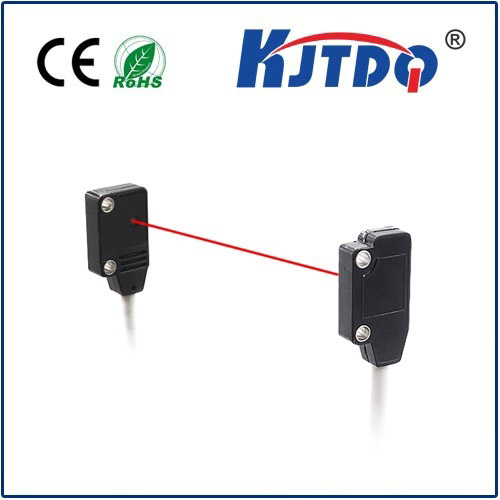
When selecting a photoelectric sensor, comparing alternatives is essential. Compared to through-beam sensors, the diffuse reflective type like the PR18-B0DPO offers easier installation with only one device to mount and wire, though with a generally shorter sensing range. Against inductive proximity sensors, it has the distinct advantage of detecting non-metallic objects, including plastic, wood, glass, and most liquids. For applications involving transparent objects, a polarized retro-reflective or through-beam model might be considered, but for the vast majority of solid object detection tasks, the diffuse reflective sensor provides an excellent balance of cost, performance, and reliability.
Installation and maintenance best practices ensure longevity. It is recommended to mount the sensor securely, avoiding excessive vibration. The sensing face should be kept clean from obstructions and buildup. While the device is built to withstand minor misalignment, periodic checks are advised in high-vibration environments. Understanding the load connected to the output is vital to prevent overcurrent situations. For long cable runs, using shielded cable can help mitigate electrical noise interference, guaranteeing signal integrity.
In conclusion, the KJTDQ PR18-B0DPO photoelectric switch represents a fundamental and highly reliable component in modern industrial sensing. Its diffuse reflective design, robust construction, and user-friendly features make it a go-to choice for countless automation tasks. By providing consistent, accurate object detection, it forms a critical link in the chain of automated processes, enhancing efficiency, safety, and overall system productivity. For professionals seeking a dependable, versatile, and cost-effective sensing solution, this model deserves serious consideration for integration into new projects or as a replacement for less reliable components.