check

check

check

check
check
check
check
check

check

check
In the world of industrial automation, precision and reliability are non-negotiable. The E3F-DS10Y1 photoelectric switch stands as a cornerstone component for countless sensing applications, from conveyor belt monitoring to object positioning and safety interlocking. This comprehensive guide delves into the core features, operational principles, and practical applications of this ubiquitous sensor, providing engineers and technicians with the knowledge to implement it effectively.
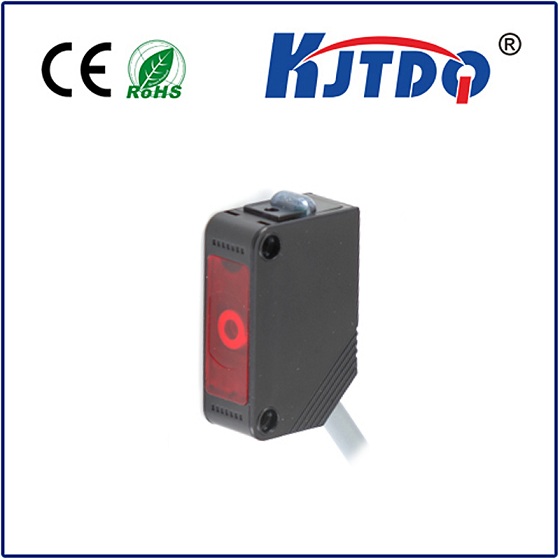
At its heart, the E3F-DS10Y1 is a diffuse reflective photoelectric sensor. It operates on a simple yet robust principle: an internal infrared LED emits a beam of light. When this beam strikes an object within its detection range, a portion of the light is reflected back to the sensor's receiver. The built-in circuitry then processes this signal to trigger an output. The "DS10Y1" model specifically denotes a sensing distance of 10 centimeters, an NPN output configuration (sinking output), and a 3-wire connection system. This NPN configuration is widely compatible with many programmable logic controllers (PLCs) and standard industrial control circuits.
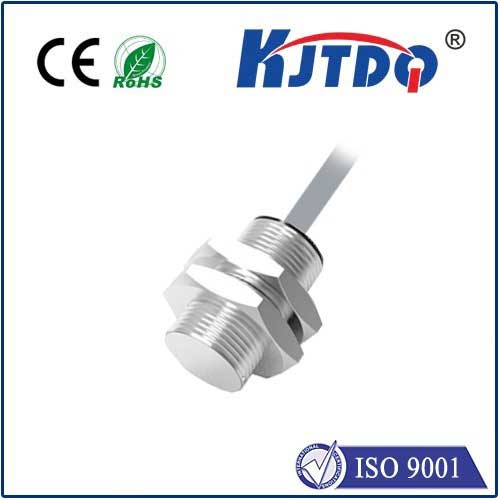
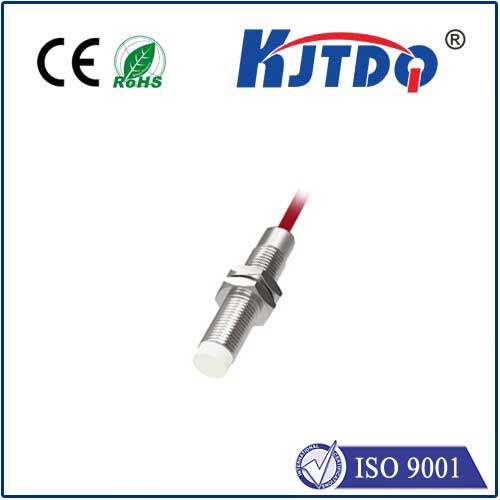
The durability of the E3F-DS10Y1 is a key factor in its industrial popularity. Housed in a compact, cylindrical metal or rugged plastic body, it is designed to withstand harsh environments. Many models feature environmental ratings such as IP67, making them resistant to dust ingress and capable of withstanding temporary immersion in water. This resilience ensures consistent performance in settings like packaging lines, material handling systems, and automotive assembly plants where moisture, oil mist, or particulate matter may be present.
Installation and alignment are straightforward. The sensor is typically mounted using a standard bracket, and its visible red sensing beam (in many versions) aids in precise positioning relative to the target object. Users must consider factors like the target object's color, material, and surface finish. Light-colored, matte surfaces provide optimal reflectivity, while dark, shiny, or transparent objects may require adjustments in mounting distance or the selection of a different sensor type, such as a through-beam model. The stable sensing point, with minimal hysteresis, ensures that the output state changes cleanly as an object enters or leaves the detection zone.
The electrical connection follows a simple three-wire scheme: brown wire for DC positive supply (typically 10-30V DC), blue wire for DC common (0V), and black wire as the switched NPN output. When the sensor detects an object, the black wire connects internally to the blue wire (common), completing the circuit to the load connected between the black wire and positive supply. A correct wiring setup is crucial to avoid damage to the sensor or the connected controller.
Practical applications are vast. Common uses include detecting the presence of boxes on a conveyor, counting products as they pass a point, confirming the open or closed position of a machine guard, or positioning robotic arms. Its reliability makes it suitable for critical tasks where a missed detection could lead to production downtime or compromised safety. For instance, in an automated bottling plant, an array of E3F-DS10Y1 sensors can verify that each bottle is correctly positioned for filling and capping.
When integrating the E3F-DS10Y1, best practices involve ensuring a stable power supply, avoiding electrical noise from high-power cables by separating wiring, and performing regular maintenance checks to keep the lens clean from obstructions like dust or grime. Understanding its limitations is also important; it is not intended for long-range detection or for distinguishing between very similar objects at the same distance.
In summary, the E3F-DS10Y1 photoelectric switch represents a perfect blend of simplicity, robustness, and functional reliability. Its standardized design and proven performance have made it a default choice for engineers seeking a cost-effective and dependable solution for proximity sensing. By mastering its specifications and application nuances, professionals can enhance system efficiency and minimize unplanned downtime, ensuring smooth and continuous automated operations.