check

check

check

check

check

check
In the intricate world of electronic components and industrial automation, the reliability of a single, small part can dictate the success of an entire system. Among these critical components, the micro switch stands out for its precision and durability. Specifically, the V 153 1C25 micro switch model has established itself as a cornerstone in applications demanding exacting performance and unwavering consistency. This article delves into the technical specifications, operational principles, and diverse applications of this pivotal component, highlighting why it remains a preferred choice for engineers and designers globally.
At its core, the V 153 1C25 is a snap-action switch. Its fundamental operation relies on a spring-loaded mechanism that ensures a rapid, crisp transition between its open and closed states. This "snap-action" is crucial, as it minimizes arcing at the contacts, thereby significantly extending the switch's operational lifespan. The "V 153" designation typically refers to a specific series or form factor, often characterized by a compact, rectangular body with a standard mounting footprint. The "1C25" likely denotes specific electrical ratings or contact configuration details, such as a single-pole, double-throw (SPDT) setup with a current rating suitable for control circuits. This configuration provides versatility, allowing it to control two separate circuits or provide a common changeover function.
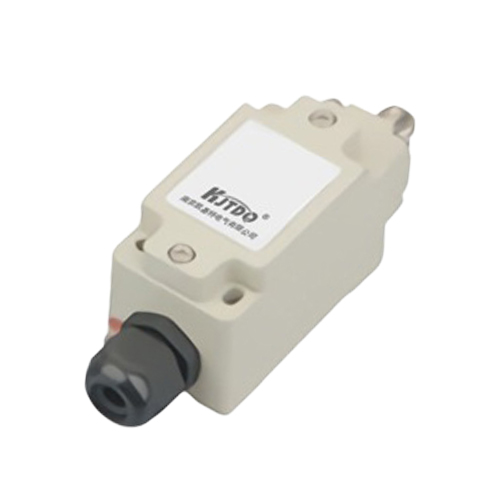
The construction of the V 153 1C25 micro switch is engineered for resilience. The housing is commonly made from high-grade thermoplastics or reinforced materials, offering excellent insulation and resistance to environmental factors like dust, moisture, and mild chemicals. Internally, the contacts are often silver-plated or made from other alloys that ensure low contact resistance and high conductivity, even after millions of actuation cycles. The actuator, the part physically pressed or triggered, can come in various forms—a standard lever, a roller lever, a simulated roller lever, or a straight pin plunger. This variety allows the V 153 1C25 to be adapted to countless mechanical interfaces, from being triggered by a door's movement to sensing the position of a machine part.
The applications for the V 153 1C25 micro switch are vast and span numerous industries. In the realm of home appliances, it is the unseen workhorse inside microwave ovens, ensuring the door is securely closed before operation begins. It is found in washing machines, detecting lid position for safety. Within the automotive sector, these switches are integral to brake light circuits, door ajar indicators, and gearbox position sensing. Industrial automation leverages them extensively in control panels, safety interlocks on machinery, and as limit switches to define the travel boundaries of robotic arms or conveyor systems. Its reliability in providing a definitive "on" or "off" signal makes it indispensable for safety-critical functions.
When selecting a micro switch like the V 153 1C25, several key parameters must be considered. The electrical rating, including voltage (AC/DC) and current capacity, must match the circuit requirements. Mechanical life, often rated in millions of cycles, indicates durability under pure mechanical operation, while electrical life may be lower due to contact wear from arcing. Operating force, the amount of pressure needed to actuate the switch, and pretravel/overtravel distances are critical for mechanical design integration. Environmental sealing, indicated by IP ratings, is vital for applications exposed to contaminants. The V 153 1C25 series typically offers a balanced profile across these parameters, making it a robust general-purpose solution.
Installation and maintenance, though straightforward, require attention to detail. Mounting must be secure to prevent misalignment, which can affect actuation accuracy and lifespan. The actuator should engage smoothly without binding or excessive side load. During wiring, ensuring clean, secure connections is paramount to prevent overheating. For long-term reliability, periodic inspection for physical wear on the actuator and checking for signs of contact degradation are recommended practices. Its design often facilitates easy replacement, minimizing downtime in industrial settings.
Comparing the V 153 1C25 to other switch technologies illuminates its strengths. Unlike basic tactile switches, it offers a definitive, audible snap and higher current ratings. Compared to proximity sensors, it provides a direct physical interface without the need for complex electronics in simple detection tasks, often at a lower cost and with greater resistance to electrical noise. Its primary advantage lies in its proven mechanical simplicity, which translates to high reliability and predictable failure modes.
In conclusion, the V 153 1C25 micro switch exemplifies how a meticulously designed electromechanical component can become a universal standard. Its blend of compact size, robust construction, precise snap-action mechanism, and adaptable design ensures it continues to be a fundamental building block in everything from consumer electronics to heavy industrial machinery. For system designers seeking a dependable, cost-effective solution for position detection, safety interlocking, or control initiation, this micro switch model represents a time-tested and reliable choice, quietly enabling the precise and safe operation of the modern technological world.