check

check

check

check

check

check
In the world of industrial automation and robotics, achieving flawless precision and reliable safety is not just a goal—it’s a fundamental requirement. At the heart of countless mechanical systems, from conveyor belts and assembly lines to robotic arms and access gates, lies a critical component often overlooked: the limit switch. When combined with the innovative and educational platform of VEX robotics, these devices transform from simple mechanical parts into powerful tools for teaching, prototyping, and implementing real-world control logic. This guide delves into the synergy between robust limit switches and the versatile VEX ecosystem, offering insights for engineers, educators, and hobbyists alike.
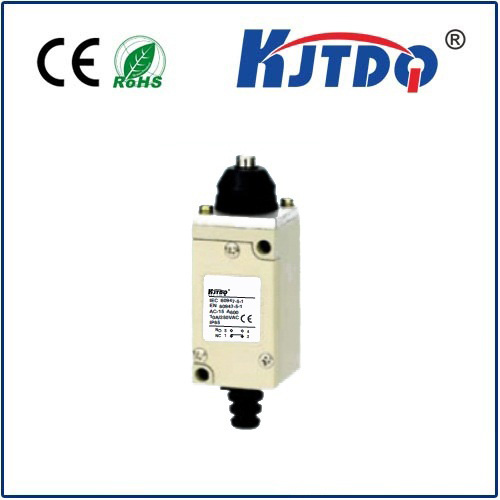
A limit switch is an electromechanical device designed to detect the presence or absence of an object, or to monitor the limits of movement. It operates on a straightforward principle: a physical actuator (like a lever, roller, or plunger) is triggered by an object's motion. This action opens or closes an electrical contact within the switch, sending a clear signal to a control system—such as a Programmable Logic Controller (PLC), microcontroller, or in our context, a VEX robotics brain. This signal acts as a digital "on/off" command, crucial for tasks like halting a motor at a specific point, reversing direction, initiating a new sequence, or ensuring safety by preventing over-travel.
Why is this so vital? Imagine a garage door. Without limit switches, it would either crash into the ground or strain against its top mechanism. The switches provide the "stop here" commands. In industrial settings, they ensure robotic welders operate within a safe envelope or that packaging machines index materials correctly. They are the unsung guardians of repetitive motion, preventing damage to equipment and enhancing operational consistency.
Enter the VEX robotics platform. Renowned in educational spheres for STEM learning and competitive robotics, VEX provides a hands-on environment where theoretical concepts of engineering and coding become tangible. The VEX system includes microcontrollers (like the V5 Brain), sensors, motors, and a user-friendly programming environment (VEXcode). Integrating a limit switch into a VEX project bridges the gap between basic sensor input and complex machine behavior.
For a student or developer working with VEX, connecting a limit switch is a practical lesson in digital input. The switch is wired to a digital port on the VEX Brain. When the actuator is pressed, it completes a circuit, and the Brain reads a "TRUE" or "1" signal. When released, it reads "FALSE" or "0". This binary input becomes the cornerstone of decision-making in code. A simple program can command a motor to run until the switch is pressed, then stop or reverse. This mimics real-world automation sequences in a accessible, low-risk setting.
The benefits of using limit switches with VEX are multifaceted. First, they introduce foundational industrial concepts. Learners grasp the importance of positional feedback and end-of-travel sensing. Second, they enhance project reliability. A robot arm built with VEX components can use a limit switch to "home" itself to a known starting position every time it powers on, ensuring repeatable accuracy. Third, they foster problem-solving. Designing the mechanical mounting for the switch and the actuator (like a small tab on a moving part) requires spatial reasoning and mechanical design skills.
Selecting the right limit switch for a VEX-related application involves considering several factors. While VEX offers its own range of sensors, industrial-grade limit switches can also be interfaced with proper circuitry. Key specifications include the actuator type (lever-arm switches are great for sweeping motions, plunger types for precise linear actuation), electrical rating (ensuring compatibility with VEX's 5V logic), and physical size. Durability is also crucial, especially in competitive robotics where devices endure impacts. Sealed switches can protect against dust and debris.
Beyond education, the principles learned by integrating a limit switch with a VEX system scale directly to professional applications. The logic programmed in VEXcode—using "if-then" statements based on switch input—is conceptually identical to the ladder logic used in industrial PLCs. An engineer who prototypes a mechanism using VEX and limit switches is effectively creating a miniature proof-of-concept for a larger factory automation system.
In conclusion, the combination of a reliable limit switch and the dynamic VEX platform is more than just a technical exercise. It is a conduit for understanding the essential language of automation: sensing, decision, and action. Whether you are an educator building a curriculum, a student preparing for a competition, or a tinkerer exploring mechatronics, mastering this integration unlocks a deeper comprehension of how machines interact with the physical world. It empowers creators to build systems that are not only intelligent but also intrinsically safe and precise, laying the groundwork for the next generation of automated innovation.