check

check

check

check

check

check
In the intricate world of industrial automation, where precision and reliability are non-negotiable, the humble limit switch stands as a silent sentinel. Among the various configurations available, the 24VDC limit switch has emerged as a cornerstone for modern control systems. This article delves into the critical role of the 24VDC limit switch, exploring its functionality, advantages, and why it is an indispensable component for engineers and system integrators seeking robust performance.
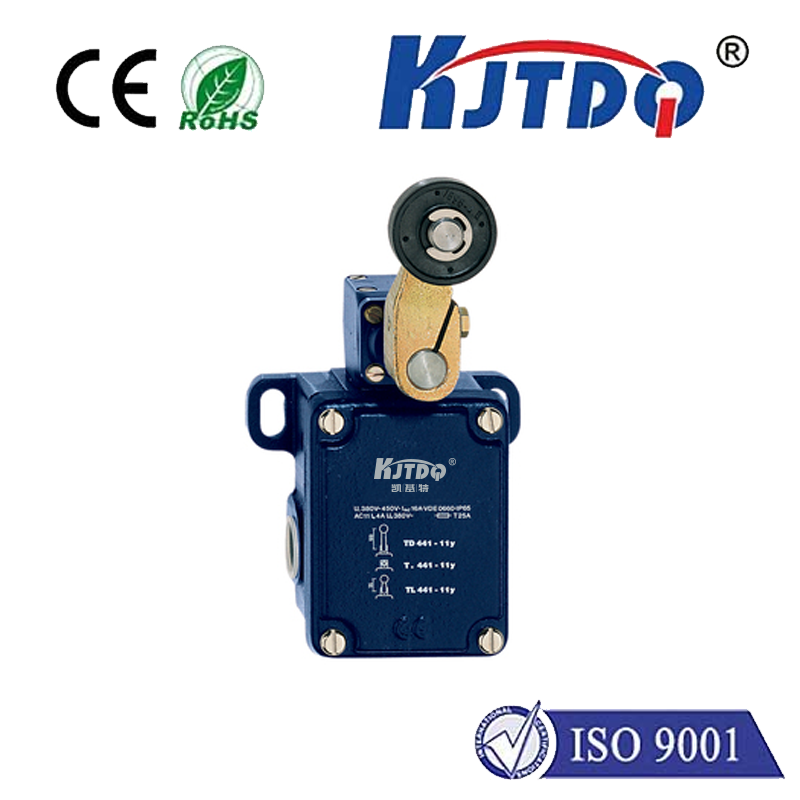
A limit switch is an electromechanical device designed to detect the presence or absence of an object, or to monitor the position of a machine part. It operates by having an actuator lever, plunger, or roller that, when moved by the target object, triggers a change in the state of its electrical contacts. The "24VDC" specification refers to its operating voltage—24 Volts of Direct Current. This voltage level has become a de facto standard in industrial control panels and programmable logic controller (PLC) systems due to its optimal balance between safety and performance.
The primary function of a 24VDC limit switch is to provide a definitive signal to a control system. For instance, it can confirm that a robotic arm has reached its home position, a safety guard is properly closed, or a conveyor belt pallet is in place for the next operation. This binary signal—on or off—forms the basis for sequential logic, interlocking, and safety routines within an automated process. Without these precise signals, complex automation would be unreliable and potentially hazardous.
Choosing a 24VDC power specification offers several compelling benefits. First and foremost is enhanced safety. Compared to higher AC voltages, 24VDC is considered a low voltage, significantly reducing the risk of severe electrical shock during installation, maintenance, or in the event of a fault. This makes it safer for personnel and often simplifies compliance with stringent international safety standards. Secondly, 24VDC systems are less susceptible to electrical noise and interference, which are common in industrial environments filled with motors, drives, and welding equipment. This results in cleaner, more reliable signal transmission to sensitive PLC inputs, minimizing false triggers and system errors.
Furthermore, 24VDC is highly compatible with the vast ecosystem of modern industrial electronics. Most sensors, PLC input modules, and control relays are designed to operate seamlessly with this voltage. This compatibility streamlines system design, reduces the need for additional signal converters or power supplies, and simplifies troubleshooting. The efficiency of DC power also translates to lower heat generation within control cabinets, contributing to improved longevity of all components.
When selecting a 24VDC limit switch for an application, several key factors must be considered. The environmental rating, often denoted by an IP (Ingress Protection) code, is crucial. A switch installed on a machine tool coolant line may require a high IP rating for water and oil resistance, while one in a clean packaging environment may not. The mechanical durability, including the number of operating cycles (often in the millions), and the type of actuator (roller lever, plunger, wobble stick) must match the physical demands of the application. The electrical specifications, such as current rating (amperage) and contact configuration (normally open, normally closed, or both), must align with the load it is controlling.
Installation and maintenance practices are pivotal for maximizing the service life of a 24VDC limit switch. Proper mounting ensures accurate and repeatable actuation. The alignment between the switch's actuator and the target machine part must be precise to avoid undue mechanical stress. Regular inspection for physical damage, wear on the actuator, and accumulation of debris will prevent unexpected downtime. Since these switches are electromechanical, their contacts can wear over time; however, the low-voltage, low-current nature of 24VDC signaling typically results in very long contact life when used within its specifications.
In conclusion, the 24VDC limit switch is far more than a simple component; it is a fundamental interface between the physical motion of machinery and the digital intelligence of the control system. Its adoption of the 24VDC standard provides a blend of safety, noise immunity, and broad compatibility that is essential for today's automated factories and processes. For system designers and maintenance engineers, understanding and correctly applying these reliable devices is key to building automation systems that are not only intelligent but also safe, durable, and efficient. By making the informed choice to integrate high-quality 24VDC limit switches, you invest in the seamless and uninterrupted flow of your production line.