check

check

check

check

check

check
In industrial automation and control systems, limit switches play a crucial role in monitoring and controlling the movement of machinery. Among the various configurations, the "Normally Open" (NO) function is a fundamental concept. A limit switch designated as NO has contacts that are open in its resting, non-actuated state. This means the electrical circuit is incomplete, and no current flows through the switch under normal conditions. When the switch is actuated—typically by a machine part making physical contact—the contacts close, completing the circuit and allowing current to flow to send a signal or control a process.
The primary advantage of a Normally Open limit switch lies in its safety and logic design. In many safety-critical applications, an open circuit in the default state is preferred. It ensures that a failure, such as a wire break or loss of power, results in a "safe" open state, often stopping a machine to prevent hazardous operation. For instance, on a conveyor belt system, an NO limit switch might be positioned at the end of the line. If no object is present to actuate the switch, the circuit remains open. When an object reaches the end and presses the switch, the contacts close, signaling the control system to stop the conveyor or activate a diverter arm. This fail-safe design is integral to preventing over-travel, jams, or damage to equipment.
Selecting between a Normally Open (NO) and a Normally Closed (NC) configuration depends entirely on the control logic required. NO switches are commonly used for initiating an action or providing a "start" or "on" signal. Their operation is intuitive: action occurs upon actuation. In ladder logic diagrams for Programmable Logic Controllers (PLCs), an NO contact symbol is used to represent a condition that must be met (the switch being pressed) to allow power to flow through the rung. This makes them straightforward to implement in circuits designed to trigger events, such as starting a motor when a part is in position or counting items as they pass a sensor point.
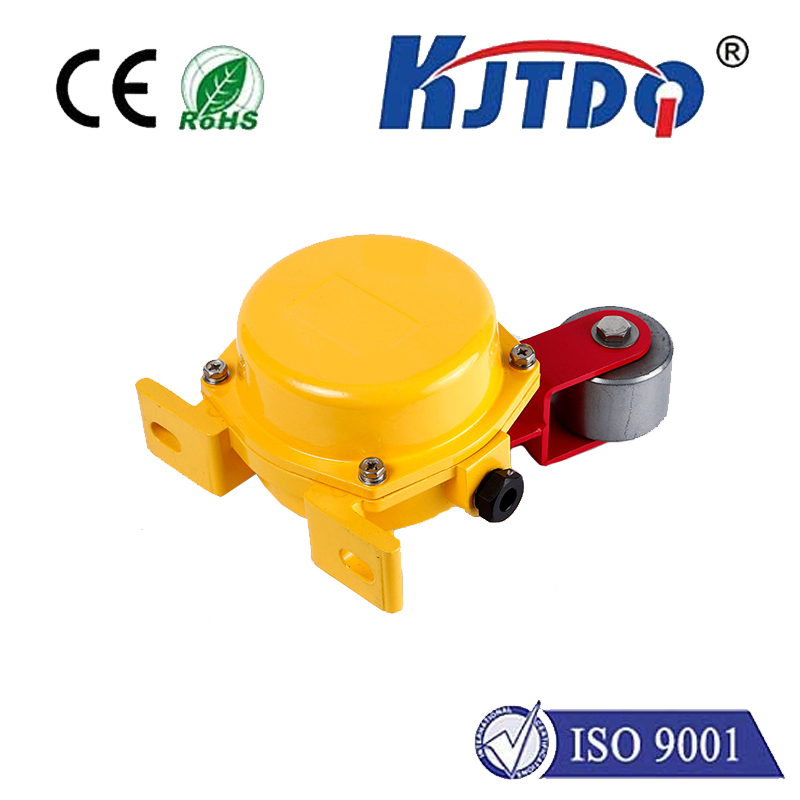
Installation and maintenance of NO limit switches require attention to detail. Proper alignment is critical; the actuator must make positive contact with the target machine part to ensure reliable closure of the contacts. Environmental factors like dust, moisture, and vibration can affect performance, so choosing switches with appropriate ingress protection (IP) ratings is essential. Regular testing is also necessary. A simple check with a multimeter can verify that the switch exhibits high resistance (open circuit) when not actuated and low resistance (closed circuit) when actuated. Any deviation from this behavior indicates potential wear, misalignment, or internal failure.
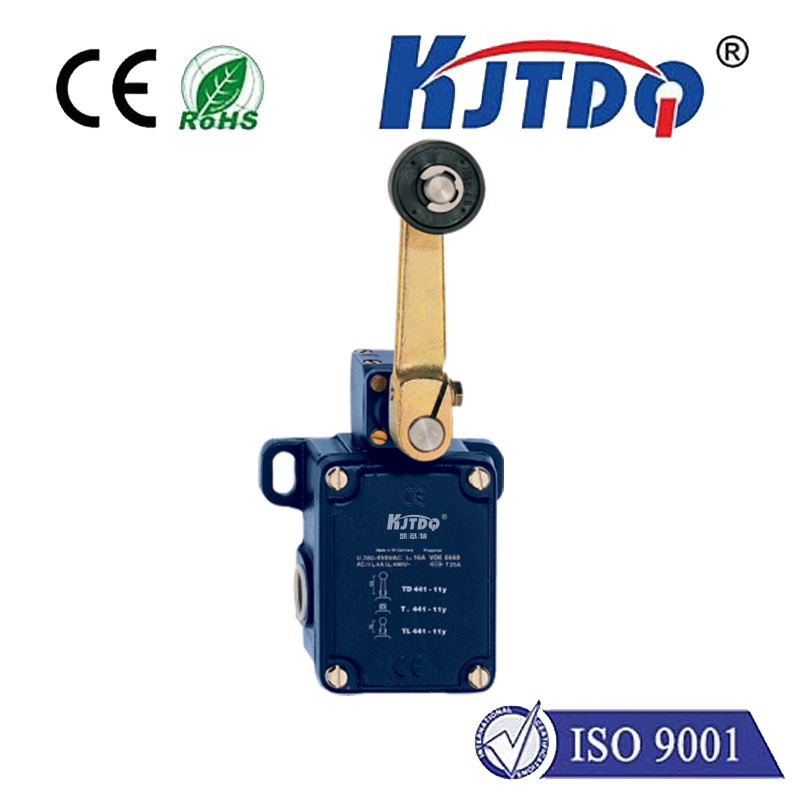
Technological integration has expanded the role of basic mechanical NO limit switches. While traditional lever-arm and plunger-type switches are still widely used, they are now often part of a larger networked sensor system. The reliable digital signal from an NO switch—either "off" (0) or "on" (1)—is easily interpreted by modern controllers and can be integrated with proximity sensors, encoders, and IoT platforms for predictive maintenance and data analytics. This blend of simple electromechanical reliability with advanced system connectivity underscores the enduring value of the NO configuration.
In summary, the Limit Switch NO is more than just a simple component; it is a deliberate design choice for safety, control initiation, and logical clarity in automated systems. Its normally open state provides a clear, fail-safe default condition, making it indispensable for applications ranging from manufacturing and packaging to robotics and material handling. Understanding its function and proper application is key to designing efficient, reliable, and safe control circuits that form the backbone of modern industrial operations.