check

check

check

check

check

check
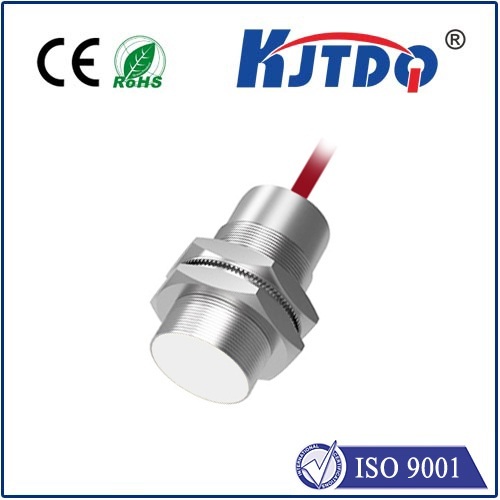
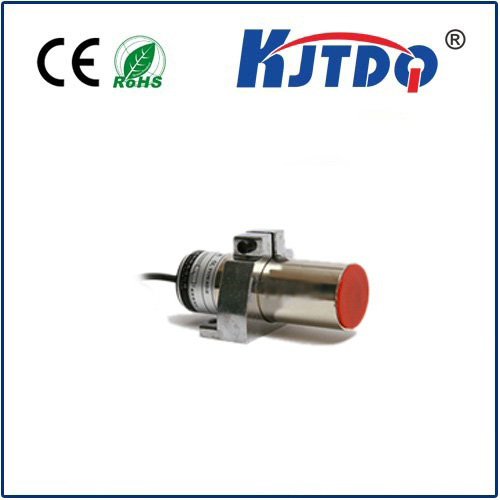
In the world of industrial automation, precision, reliability, and durability are non-negotiable. Traditional mechanical limit switches, while effective, come with inherent limitations like physical wear, contact bounce, and sensitivity to environmental contaminants. This is where the capacitive limit switch emerges as a transformative solution, offering a non-contact, highly reliable method for position detection and object sensing. Unlike its mechanical or even inductive counterparts, a capacitive limit switch detects objects based on their dielectric constant, allowing it to sense a vast range of materials—metals, plastics, glass, wood, and even liquids through non-metallic containers.
The core principle of a capacitive sensor involves an oscillator circuit that creates an electrostatic field. When a target object enters this sensing field, it causes a measurable change in capacitance. The switch's internal circuitry detects this shift and triggers a solid-state output signal. This fundamental operating method eliminates moving parts, drastically reducing maintenance needs and extending service life even in demanding environments filled with dust, oil, or moisture. The absence of physical contact means no mechanical stress on either the switch or the target, ensuring consistent performance over millions of cycles.
One of the standout features of modern capacitive limit switches is their exceptional adjustability. Most models are equipped with a sensitivity potentiometer. This allows technicians to fine-tune the sensing range and precisely calibrate the switch to ignore background interference or detect specific materials. For instance, it can be set to detect a filled plastic bottle on a conveyor belt while ignoring an empty one, or to sense the level of a liquid inside a tank without direct contact. This versatility makes it indispensable in packaging, food and beverage, material handling, and woodworking industries.
Installation and integration are remarkably straightforward. These switches typically come in robust housings rated for IP67 or higher, protecting against water and dust ingress. They can be easily mounted in tight spaces and connected directly to PLCs (Programmable Logic Controllers) or other control systems using standard M12 or M8 connectors. Their consistent switching point, unaffected by speed or approach angle, provides reliable data for process control, ensuring accurate positioning of robotic arms, end-of-travel detection for gates and doors, or precise counting of products on a line.
When selecting a capacitive limit switch, key specifications to consider include the sensing range, housing material (often stainless steel or PBT plastic), output type (PNP/NPN, NO/NC), and supply voltage. It is crucial to ensure the chosen model's sensing distance and environmental ratings match the application's requirements. Proper installation is also vital; maintaining the recommended clearance from surrounding metal objects prevents false triggering and guarantees optimal performance.
In conclusion, the capacitive limit switch represents a significant leap forward in sensing technology. By providing non-contact detection of almost any material with high precision and minimal maintenance, it solves numerous challenges faced in automated systems. For engineers and system integrators seeking to enhance reliability, reduce downtime, and add sophisticated sensing capabilities to their machinery, integrating capacitive limit switches is a forward-thinking, smart investment that drives efficiency and operational excellence on the factory floor.