check

check

check

check

check

check
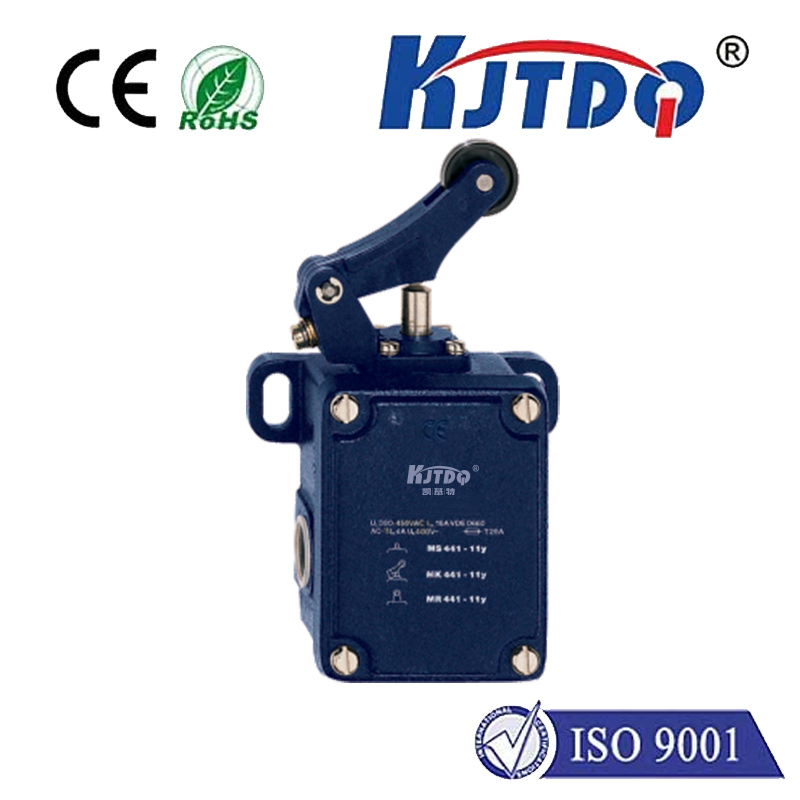
In industrial automation and machinery control, precision and safety are non-negotiable. This is where the horizontal limit switch, a fundamental yet critical component, comes into play. A horizontal limit switch is an electromechanical device designed to detect the presence or absence of an object, or to monitor and control the movement of a machine along a horizontal plane. It acts as a sentinel, ensuring operations stay within predefined physical boundaries, thereby preventing damage, enhancing efficiency, and safeguarding personnel.
The core function of a horizontal limit switch is to make or break an electrical circuit when a machine part or object reaches a specific point in its horizontal travel. Typically, it consists of an actuator—often a lever, roller, or plunger—mechanically linked to a set of contacts. When the actuator is displaced by the moving object, it triggers the internal contacts to change state, sending a signal to the control system to stop, start, or change the operation. This simple, robust mechanism makes it indispensable in applications ranging from conveyor systems and automated assembly lines to crane travel limits and garage door operations.
Why is the orientation—horizontal—so significant? Horizontal mounting is specifically chosen for applications where the critical movement or position to be detected is along a level axis. For instance, in a sliding gate or a milling table that moves side-to-side, a horizontal limit switch is optimally positioned to be actuated by that linear motion. Its design ensures reliable actuation from the intended direction of travel, reducing the risk of false triggers from vertical vibrations or unintended contact. Compared to vertical or rotary limit switches, the horizontal variant offers distinct advantages in space-constrained layouts and for monitoring straightforward linear paths.
The benefits of integrating high-quality horizontal limit switches into a system are manifold. First and foremost is enhanced safety. By physically limiting the travel of heavy machinery, they prevent over-travel collisions that could lead to equipment failure, product damage, or serious workplace accidents. Secondly, they contribute to operational precision and repeatability. Machines can be programmed to consistently stop or reverse at exact locations, which is crucial for processes like packaging, sorting, or precise positioning in manufacturing. This repeatability directly translates to higher product quality and reduced waste. Furthermore, these switches are known for their durability and ability to function in harsh industrial environments—resistant to dust, moisture, and temperature variations when properly housed.
Selecting the right horizontal limit switch requires careful consideration of several technical parameters. The operating force and travel distance of the actuator must match the mechanical force of the target object. Electrical ratings (voltage and current) must be compatible with the control circuit. Environmental factors are critical; switches may need specific Ingress Protection (IP) ratings for wet or dusty conditions. Additionally, the choice of actuator type—lever, roller lever, or push-roller—depends on the speed of the target and the required angle of approach. For high-speed applications, a rugged, low-inertia actuator is essential to ensure long service life and reliable switching.
Modern advancements have expanded the capabilities of traditional mechanical limit switches. While the basic horizontal limit switch remains a cost-effective and reliable workhorse, industries now also utilize non-contact alternatives like proximity sensors for extremely high-speed or non-impact applications. However, the tactile, physical feedback of a mechanical limit switch often provides a fail-safe level of certainty that is still preferred for critical safety interlocks. Many contemporary models also feature improved sealing, self-cleaning contacts, and modular designs for easier maintenance and replacement.
In practice, proper installation and maintenance are key to longevity. The switch must be securely mounted to avoid misalignment due to vibration. The actuator should be positioned so that the target object engages it fully without over-stressing the mechanism. Regular inspection for wear on the actuator arm and periodic checking of electrical continuity are simple yet effective practices that prevent unexpected downtime. A well-chosen and well-maintained horizontal limit switch is not just a component; it is a long-term investment in the smooth, safe, and profitable running of automated systems.
From controlling the simple back-and-forth motion of a transfer car to ensuring the precise stopping point of a robotic arm, the horizontal limit switch proves that sometimes the most effective solutions are elegantly straightforward. Its role in the backbone of industrial automation is both humble and vital, providing the physical intelligence that keeps machines in check and operations on track.