check

check

check

check

check

check
In the intricate world of industrial automation, precision, reliability, and durability are non-negotiable. Among the myriad of components that keep production lines humming and machinery operating safely, one device stands out for its fundamental role in position sensing and control: the inductive limit switch. Unlike its mechanical counterparts, this solid-state sensor operates without physical contact, offering a robust solution for harsh environments. This guide delves into the workings, advantages, and critical applications of inductive limit switches, providing essential insights for engineers and system integrators.
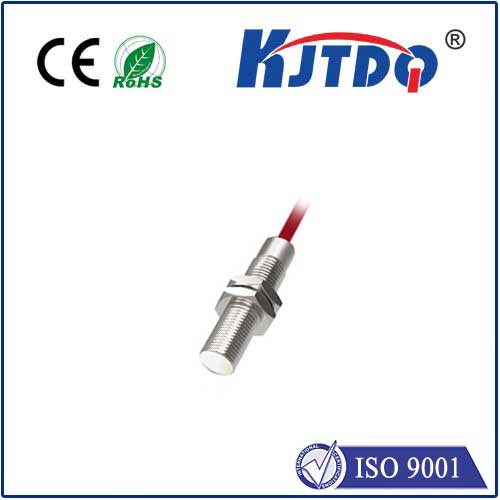
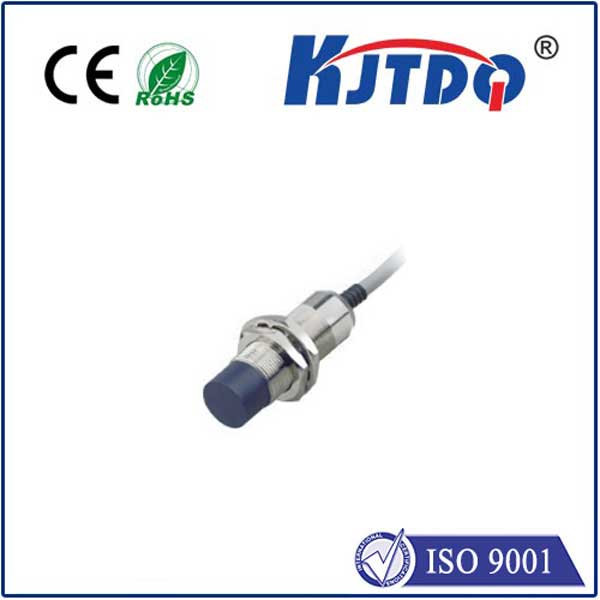
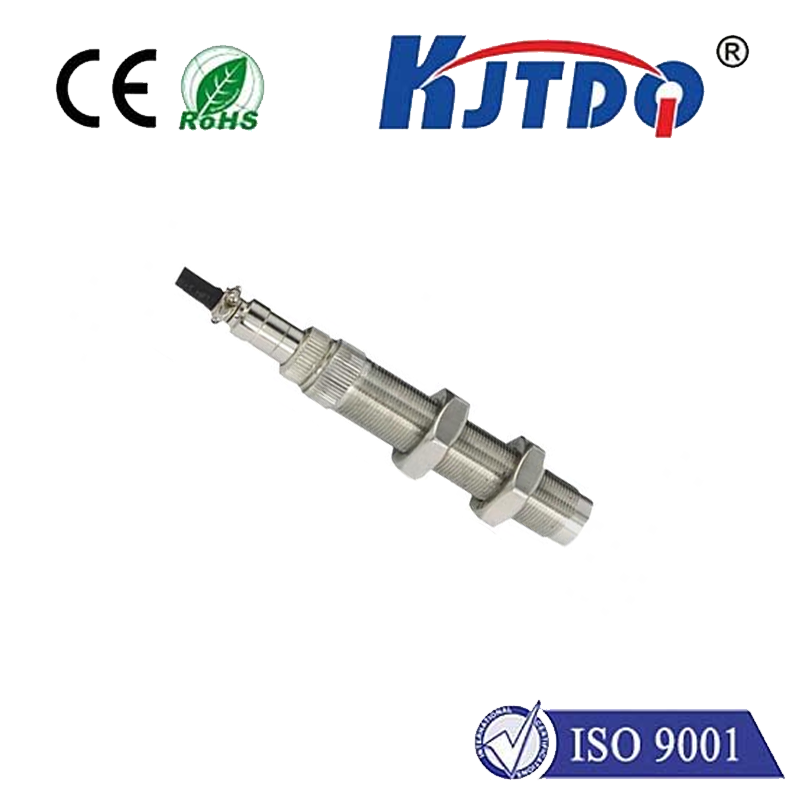
At its core, an inductive limit switch is a type of proximity sensor. It generates an electromagnetic field from a coil inside its sensing face. When a metallic object, known as the target, enters this field, eddy currents are induced on the surface of the metal. This causes a change in the oscillation amplitude within the sensor's circuit. The switch's internal electronics detect this change and trigger a solid-state output signal, effectively indicating the presence or absence of the target. The sensing distance, a key specification, depends on the switch's design and the target material, with factors like size and shape also playing a role.
The shift from traditional mechanical limit switches to inductive models brings a host of operational benefits. The most significant is the absence of physical contact and moving parts. This eliminates mechanical wear, drastically increasing the switch's service life and reducing maintenance downtime. Furthermore, the sealed housing, typically made from materials like nickel-plated brass or stainless steel, provides exceptional resistance to dust, dirt, moisture, oils, and coolants. This makes them ideal for demanding settings such as machine tools, welding equipment, and automated assembly lines where contamination is a constant challenge. Their high switching frequency and repeat accuracy also enable faster cycle times and more precise control in high-speed automation processes.
Selecting the right inductive limit switch requires careful consideration of several parameters. The operating voltage, either DC or AC, must match the control system. Output configuration is another critical choice; options include Normally Open (NO), Normally Closed (NC), or complementary outputs. The sensing distance, often a few millimeters, must be suitable for the application to prevent false triggers. Engineers must also consider the housing style—tubular, rectangular, or slot-style—for proper mounting. Environmental ratings, particularly the Ingress Protection (IP) code, are vital for ensuring performance in wet or dusty conditions. For instance, a switch rated IP67 can withstand temporary immersion, making it suitable for washdown areas in food and beverage processing.
The applications for inductive limit switches are vast and varied across industries. In automotive manufacturing, they are used to verify the position of robotic arms, detect the presence of metal components on conveyors, and serve as end-of-travel stops for actuators. In packaging machinery, they ensure precise positioning of filler heads and confirm the closure of metal gates. Within material handling, these switches monitor the position of crane hooks and provide safety interlocks on automated guided vehicles (AGVs). Their robustness also makes them perfect for metalworking applications, where they can detect tool position on CNC machines or monitor the movement of heavy metal slabs.
Installation and maintenance, while straightforward, demand attention to detail. Mounting must be secure to prevent vibration from altering the sensing gap. It is crucial to ensure that only the intended metal target activates the switch; nearby metal structures or moving parts can cause interference and must be considered during the design phase. While maintenance is minimal, periodic checks for physical damage, buildup of metallic debris on the sensing face, and verification of the output signal are recommended best practices to ensure long-term, trouble-free operation.
As Industry 4.0 and smart manufacturing evolve, inductive limit switches continue to adapt. Modern versions integrate advanced diagnostics and connectivity features, allowing for predictive maintenance and integration into larger Industrial Internet of Things (IIoT) networks. They remain a cornerstone technology, providing the simple, yet critical, binary information—"object present" or "object not present"—that forms the backbone of automated logic control. For any application requiring non-contact detection of metal in tough industrial environments, the inductive limit switch offers an unparalleled combination of resilience, speed, and reliability, proving itself as an indispensable component in the automation engineer's toolkit.