check

check

check

check

check

check
In industrial automation and control systems, the precise and dependable operation of machinery is paramount. Among the myriad components that ensure this reliability, the limit switch stands as a fundamental and critical device. Specifically, configurations denoted as 2NO and 2NC are prevalent in complex control circuits. This article delves into the functionality, applications, and advantages of limit switches with 2NO (Normally Open) and 2NC (Normally Closed) contact arrangements, providing a clear guide for engineers and technicians.
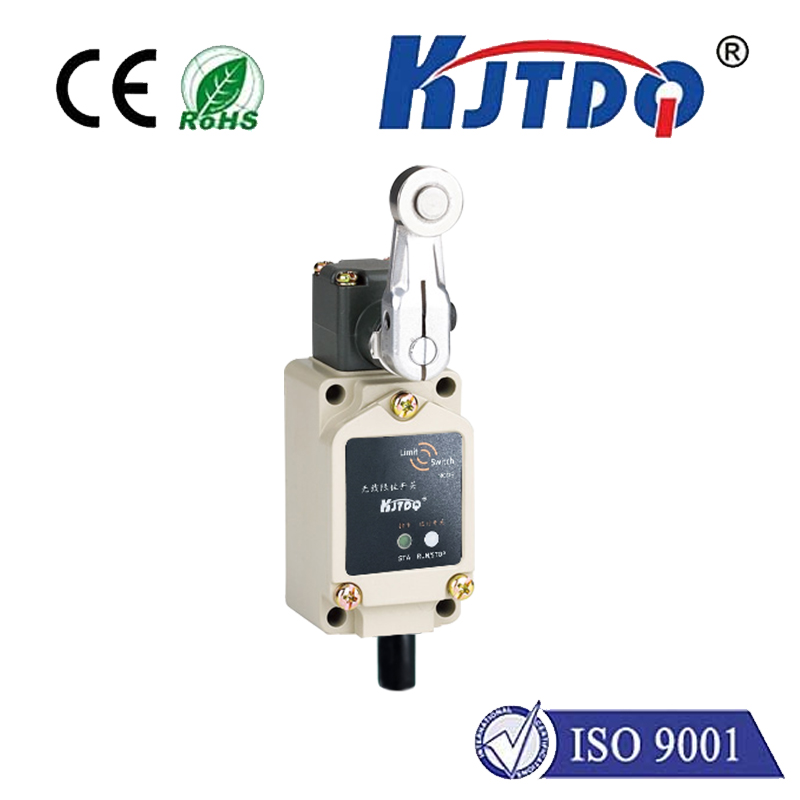
A limit switch is an electromechanical device that converts a mechanical motion into an electrical control signal. It is typically actuated by physical contact with a moving part, such as a machine door, conveyor belt, or robotic arm. The core of its operation lies in its electrical contacts. The terms "Normally Open" (NO) and "Normally Closed" (NC) describe the default state of these contacts when the switch is in its resting, non-actuated position.
A 2NO limit switch contains two separate, independent Normally Open contact circuits. In its default state, these circuits are open, meaning no electrical current flows through them. When the switch's actuator is pressed or triggered by the target object, both NO contacts close simultaneously, completing their respective circuits and sending electrical signals. This configuration is ideal for applications requiring the simultaneous initiation of two separate actions or the energizing of two different control paths upon a single triggering event. For instance, it can be used to start a motor and illuminate a status indicator light at the exact moment a safety guard is properly closed.
Conversely, a 2NC limit switch features two independent Normally Closed contact circuits. In the resting state, these circuits are closed, allowing current to flow. When the switch is actuated, both NC contacts open, breaking the circuits. This design is crucial for safety-critical and monitoring functions. A classic application is in safety interlock systems. Two NC contacts can be wired into a safety circuit; as long as the machine guard door is shut (switch not actuated), the circuit remains closed and the machine can operate. If the door opens, both contacts open instantly, breaking the safety circuit and causing an immediate machine halt. The dual contacts provide redundancy, enhancing safety.
Many modern limit switches offer a combination of contacts, such as 2NO 2NC within a single housing. This versatile configuration provides two normally open and two normally closed contacts. It offers maximum flexibility for control logic design. Engineers can use the NO contacts for "start" or "power-on" functions and the NC contacts for "stop," "alarm," or "safety interlock" functions, all triggered by the same mechanical event. This consolidates components, saves panel space, and simplifies wiring.
The choice between 2NO, 2NC, or a combined 2NO 2NC switch depends entirely on the control logic and safety requirements of the application. Key considerations include the desired action upon actuation (making or breaking a circuit), the need for redundancy, and the specific logic of the programmable logic controller (PLC) or relay circuit. For processes where a trigger must activate multiple devices, 2NO is suitable. For applications where the primary need is to safely interrupt power or signal upon a condition change, 2NC is the standard. The combined 2NO 2NC type offers a comprehensive solution for complex sequencing.
Proper selection, installation, and maintenance are vital. Factors such as actuator type (roller lever, plunger, etc.), electrical rating, ingress protection (IP) rating for environmental conditions, and mechanical life expectancy must be evaluated. Regular inspection for wear, proper alignment, and clean contacts ensures long-term reliability and prevents unexpected downtime.
In summary, understanding the distinction and application of 2NO and 2NC contact configurations in limit switches is essential for designing robust and safe automated systems. These switches provide the fundamental interface between mechanical movement and electrical control, with the dual-contact designs offering enhanced functionality, safety redundancy, and design flexibility. By specifying the correct contact arrangement, engineers can build more efficient, reliable, and secure control systems for a wide range of industrial machinery.