check

check

check

check

check

check
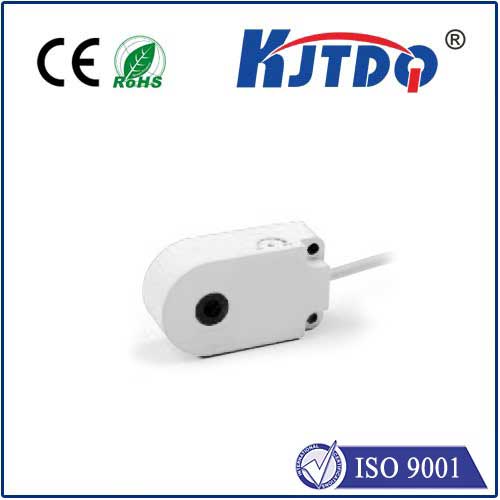
In the world of industrial automation and precision control, the demand for reliable, accurate, and durable sensing solutions is paramount. Among the array of technologies available, the switch proximity built-in photoelectric sensor stands out as a cornerstone component for countless applications. This integrated device combines the non-contact detection principle of photoelectric sensing with the robust form factor of a proximity switch, creating a versatile and powerful tool for engineers and system integrators.
At its core, a photoelectric sensor operates by emitting a beam of light, typically from an LED or laser diode, and detecting changes in the received light. The "built-in" or "integrated" design refers to the fact that the light emitter and receiver are housed within a single, compact unit, often resembling a traditional proximity switch. This configuration is commonly used in the diffuse reflective mode, where the sensor detects light reflected back from the target object itself. The key advantage here is the simplified installation, as it only requires wiring on one side, much like a standard proximity sensor, eliminating the need for a separate reflector or receiver unit.
The term "switch" in its name highlights its primary function: to provide a discrete on/off output signal. When the emitted light beam strikes an object within its sensing range and sufficient light is reflected back to the receiver, the sensor's internal circuitry triggers, changing its output state. This digital signal is then used to control machinery, count objects, detect presence or absence, and monitor positioning with high repeatability. The sensing distance, while typically shorter than through-beam sensors, is precisely defined and stable for diffuse models, making it ideal for applications where the target object's color, texture, or reflectivity can be accounted for.
Why choose a switch proximity built-in photoelectric sensor over other types? The benefits are significant. First, its non-contact nature means there is no physical wear and tear from touching the target, leading to exceptionally long service life and reduced maintenance. It can detect a wide variety of materials—plastic, wood, glass, and most metals—as long as they reflect light. This versatility is a major strength. Second, the response time is extremely fast, allowing for high-speed counting and detection on fast-moving production lines. Third, the self-contained, switch-like housing offers excellent environmental resistance. Many models are built with robust casings rated IP67 or higher, protecting against dust, water jets, and oil splashes, which are common in industrial settings like packaging, material handling, automotive assembly, and food processing.
When integrating these sensors, several factors require careful consideration to ensure optimal performance. The sensing range is critical and must be selected based on the application's required detection distance. The background and environmental conditions are equally important; highly reflective backgrounds or ambient light interference can cause false triggers. Modern sensors combat this with features like modulated LED light, which makes them immune to ambient light, and precise background suppression technology. The size, color, and surface finish of the target object also affect performance, as dark or matte surfaces reflect less light than shiny, light-colored ones. Proper alignment and mounting are straightforward due to the single-unit design but are still essential for consistent operation.
Looking ahead, the evolution of the switch proximity built-in photoelectric sensor continues. Advancements are leading to sensors with even smaller form factors, longer sensing ranges from compact units, and enhanced intelligence. Features like IO-Link communication are becoming standard, allowing for parameter setting, condition monitoring, and diagnostic data exchange directly from the sensor to the control system, paving the way for predictive maintenance and Industry 4.0 connectivity. Their inherent reliability, adaptability, and precision ensure they will remain an indispensable component in the automated systems of today and the smart factories of the future, providing the essential "eyes" for machines in a demanding industrial world.