check

check

check

check

check

check
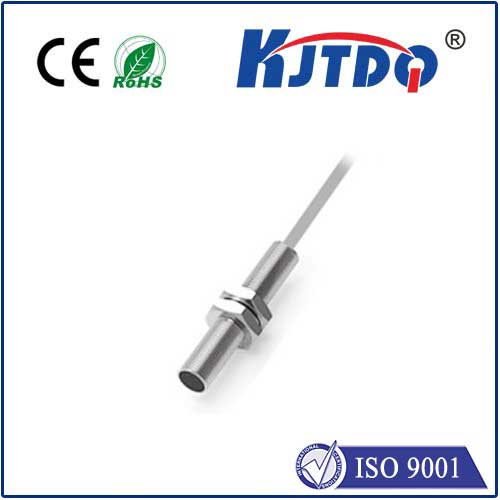
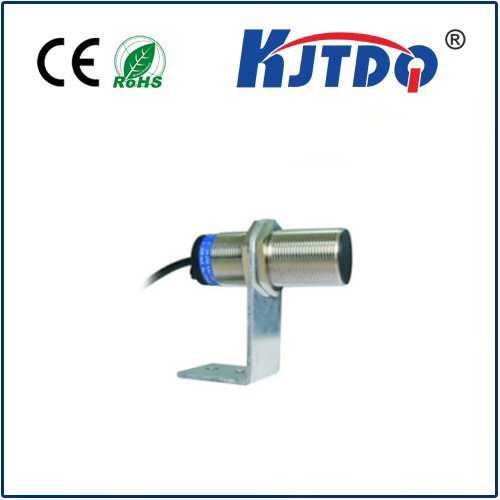
In the dynamic landscape of industrial automation, achieving unparalleled precision in object detection and positioning is paramount. The Background Suppression Photoelectric Sensor stands as a cornerstone technology, engineered to deliver reliable performance in complex environments where traditional sensors falter. Unlike standard diffuse sensors that can be easily confused by reflective or dark backgrounds, this advanced sensor utilizes a precise triangulation method. It focuses a beam of light onto the target and calculates the distance based on the angle of the reflected light, effectively "ignoring" objects beyond a set sensing range. This capability ensures that only the intended object within the specific focal point triggers the sensor, eliminating false triggers from conveyor belts, machine parts, or other background elements.
The operational principle hinges on sophisticated optics and electronics. A focused light emitter, typically a laser or precise LED, projects a spot onto the target. The receiver lens is designed to accept reflected light only from a very specific distance. Objects within the preset "suppression band" are detected, while those outside this band—whether closer or farther—are suppressed. This allows for highly accurate detection independent of the target's color, material, or surface texture, a significant advantage over contrast-based methods. For instance, it can reliably detect a transparent glass bottle on a moving belt or a black rubber component against a dark background, tasks that challenge conventional sensors.
Integration of KJTDQ series Background Suppression Sensors into automated systems brings transformative benefits. Manufacturing lines experience reduced downtime and product waste due to fewer erroneous readings. In packaging and material handling, they enable precise counting, positioning, and height verification. Robotic arms equipped with these sensors achieve more accurate pick-and-place operations, enhancing throughput and quality control. Their robust housing, often rated IP67 or higher, ensures consistent operation despite exposure to dust, moisture, and mechanical vibrations common in industrial settings. Furthermore, many models feature teach-in functionality or potentiometers for easy adjustment of the sensing range on-site, providing flexibility for changing production needs.
Selecting the appropriate background suppression sensor requires careful consideration of key parameters. The sensing range, which can vary from a few millimeters to several hundred millimeters, must match the application. Response time is critical for high-speed production lines. The size of the focal point, or light spot, determines the minimum detectable object size and edge detection accuracy. Environmental factors like ambient light immunity and temperature stability are also crucial for reliable long-term operation. Regular maintenance, primarily keeping the lens clean from obstructions, is simple yet vital for sustained optimal performance.
As Industry 4.0 drives demand for smarter, more adaptable machinery, the role of precise sensing technologies like the background suppression photoelectric sensor becomes increasingly central. It is a key enabler for the flexible, zero-defect manufacturing processes of the future. By providing unwavering detection accuracy amidst variable conditions, these sensors not only protect investments in automation equipment but also pave the way for enhanced efficiency, safety, and innovation across countless industrial applications, from automotive assembly to pharmaceutical production.