check

check

check

check

check

check
In the realm of industrial automation and precise control, the demand for reliable long-range detection solutions is paramount. The 30m distance photoelectric sensor stands as a critical component, enabling machines to perceive and interact with their environment over extended spans without physical contact. This technology, particularly models designated with enhancements like KJTDQ, represents a significant leap in operational efficiency and safety for diverse applications.
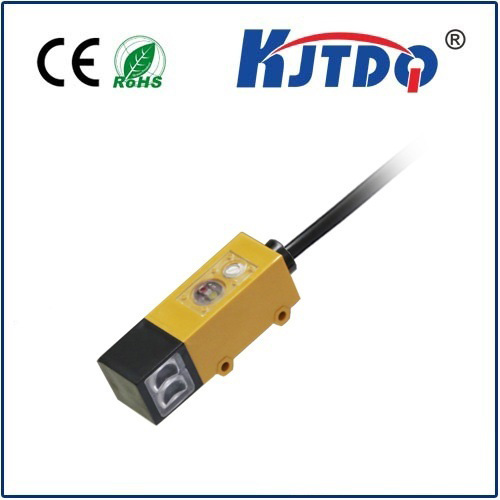
Photoelectric sensors operate by emitting a light beam—typically infrared, visible red, or laser—and detecting changes in the received light signal caused by the presence or absence of a target object. The core challenge for long-range models, such as those capable of 30-meter detection, lies in maintaining signal integrity, accuracy, and stability over such distances. Environmental factors like dust, fog, ambient light, and temperature fluctuations can severely impact performance. Advanced 30m sensors address these challenges through several key technological innovations. They often utilize a highly collimated laser light source, which produces a narrow, intense beam that minimizes dispersion and maintains focus over long distances. Coupled with sophisticated optical lenses and high-sensitivity receivers, these sensors can detect even minute changes in the reflected or transmitted light.
The integration of background suppression or advanced filtering algorithms is another crucial feature. This allows the sensor to effectively ignore distant background objects or ambient light interference, focusing solely on the predefined target within its 30m range. Furthermore, modern versions incorporate robust housings rated for IP67 or higher, ensuring resistance to water, dust, and mechanical shock, which is essential for harsh industrial environments like logistics warehouses, outdoor material handling, and large-scale assembly lines.
The practical applications for a 30m distance photoelectric sensor are vast and impactful. In automated storage and retrieval systems (AS/RS), these sensors provide precise positioning of cranes and shuttles across wide aisles, optimizing inventory management and retrieval speed. In the packaging industry, they monitor material flow on long conveyor belts, detecting jams or shortages well in advance. For outdoor security and perimeter monitoring, they offer a non-contact method for vehicle or personnel detection over large areas. The agricultural sector also benefits, using them for monitoring equipment positions in extensive fields or controlling irrigation systems.
When selecting a 30m photoelectric sensor, several factors require careful consideration. The sensing mode—whether through-beam, retro-reflective, or diffuse-reflective—must match the application. Through-beam models, with separate emitter and receiver units, offer the longest possible range and highest reliability for 30m operations. The response time is critical for high-speed applications; a fast sensor ensures no missed detections on rapidly moving production lines. Output type (NPN/PNP, analog, or IO-Link) must be compatible with the existing control system. Lastly, features like adjustable sensitivity, built-in diagnostics via LED indicators, and easy alignment tools significantly reduce installation time and maintenance efforts.
The evolution towards Industry 4.0 and smart factories further elevates the role of these long-range sensors. Models with advanced communication protocols like IO-Link can transmit not just a simple on/off signal but also detailed diagnostic data—such as signal strength, operating temperature, and contamination levels—to a central control system. This enables predictive maintenance, where potential issues are identified and addressed before causing downtime, thereby maximizing productivity and reducing operational costs.
In conclusion, the 30m distance photoelectric sensor is far more than a simple switch. It is a sophisticated, resilient, and intelligent component that forms the eyes of modern automated systems. By providing reliable, long-range object detection, it eliminates the limitations of shorter-range sensors and mechanical limit switches, paving the way for more expansive, efficient, and safer automated operations. As technology continues to advance, we can expect these sensors to offer even greater ranges, higher precision, and deeper integration with the digital industrial ecosystem, solidifying their status as an indispensable tool for progress.